














Rare Old Manuscript Map of Netherlands by Bowen, 1810: Amsterdam, Rotterdam, The Hague, Rhine, Zuiderzee
In unserer Londoner Werkstatt aus der Originalkarte von 1810 restauriert und in Museumsqualität gedruckt. Vollständige Beschreibung
Das Sammlerangebot
Wählen Sie zwei berechtigte Werke und erhalten Sie auf beide 20 % Rabatt. Wählen Sie drei, und das günstigste ist kostenlos – eine maximale Ersparnis von 33 %.
Kombinieren Sie berechtigte Standardkarten und Kunstdrucke nach Belieben. Kein Code erforderlich; das Angebot wird an der Kasse automatisch angewendet.
Standardmäßige Konfigurationen nach Maßanfertigung sind inbegriffen. Maßgeschneiderte Größen, personalisierte Entwürfe und Auftragsarbeiten sind ausgeschlossen.
Benötigen Sie die Lieferung an unterschiedliche Adressen? Kontaktieren Sie uns vor der Bestellung.Das Sammlerangebot
Wählen Sie zwei berechtigte Werke und erhalten Sie auf beide 20 % Rabatt. Wählen Sie drei, und das günstigste ist kostenlos – eine maximale Ersparnis von 33 %.
Kombinieren Sie berechtigte Standardkarten und Kunstdrucke nach Belieben. Kein Code erforderlich; das Angebot wird an der Kasse automatisch angewendet.
Standardmäßige Konfigurationen nach Maßanfertigung sind inbegriffen. Maßgeschneiderte Größen, personalisierte Entwürfe und Auftragsarbeiten sind ausgeschlossen.
Benötigen Sie die Lieferung an unterschiedliche Adressen? Kontaktieren Sie uns vor der Bestellung.
Aus der Originalkarte von 1810 restauriert und in Museumsqualität gedruckt. Vollständige Beschreibung
Größe wählen
Ausführung wählen


(Mehr Infos)
Geschenkmitteilung & individuelle Ausführung

Wenn Sie eine Geschenkmitteilung oder eine Ausführung (Puzzle, Aluminiumplatte usw.) hinzufügen möchten, die hier nicht verfügbar ist, geben Sie dies bitte in der "Bestellnotiz" beim Checkout an.
Jede Bestellung wird individuell angefertigt. Wenn Sie die Größe leicht anpassen oder auf einem ungewöhnlichen Material drucken lassen möchten, lassen Sie es uns einfach wissen. Wir haben im Laufe der Jahre Tausende von individuellen Bestellungen bearbeitet, daher gibt es (fast) nichts, was wir nicht bewältigen können.
Sie können uns auch kontaktieren, bevor Sie bestellen, wenn Sie möchten!
Ein Stück Geschichte für Ihr Zuhause
Über 8.000 5-Sterne-Bewertungen


The map titled “Netherlands,” created in 1810 by Frances Bowen, captures the Low Countries at a moment of profound European change. Executed...
WeiterlesenThe map titled “Netherlands,” created in 1810 by Frances Bowen, captures the Low Countries at a moment of profound European change. Executed in a lucid, handmade style, it presents a nation defined by water and trade, with regional borders set off by soft watercolor tints and a disciplined web of place names. Its date places it squarely within the Napoleonic era, when administrative identities were under pressure, yet historical provinces and familiar localities still anchored learning. The composition’s tidy geometry, with latitude and longitude marked along the edges, signals a didactic purpose: to teach orientation, relative position, and the language of borders in an age newly attuned to systematic knowledge.
Bowen’s authorship resonates with the educational manuscript tradition practiced by women in the early nineteenth century. Her work, long associated with that of her sister Eliza, reflects a classroom ethos that prized clarity, neat penmanship, and consistent color cues across a suite of maps—an atlas-in-miniature built for repeated reference. The spare elegance of the lines, the consistent treatment of boundaries, and the measured spacing of toponyms reveal an instructor’s logic: reduce complexity without sacrificing accuracy. In this sense, the map is both a lesson and a lens, distilling the Netherlands into a set of learnable relationships that students could retain and recall.
Geographically, the sheet honors the country’s defining waters: the Rhine and its Waal branch threading east to west, the Meuse (Maas) bending through the south, and the IJssel feeding the great inland inlet then known as the Zuiderzee. Zeeland’s lacework of estuaries and islands speaks to centuries of negotiation with sea and silt, while the Wadden fringe suggests shifting shoals and tidal flats. Along the North Sea littoral, a pared-down coast line reflects dunes, dikes, and harbors without fussy ornament. Regional divisions are crisp, allowing provinces to be read at a glance, while the bordering grid of meridians and parallels invites the viewer to situate Dutch space within the wider European frame.
The cartography methodically arrays the principal towns that structure the Dutch landscape. Amsterdam appears as mercantile heart, commanding the IJ and radiating canals; Rotterdam stands athwart the Maas as a rising port; and The Hague is calmly noted as the seat of government and diplomacy. Utrecht holds the country’s center, historically ecclesiastical and strategic. Leiden, with its venerable university, balances Haarlem on the North Holland coast. Breda signals the Brabantine south, while Nijmegen, ancient on the Waal, marks the eastern gate. Groningen anchors the north; and Eindhoven, still modest at the time, represents the evolving fabric of North Brabant. Each name is a fixed point in a network of waterways, trade routes, and provincial identities.
As a document of 1810, the map speaks to a transitional pedagogy and a transitional polity. The Netherlands—caught between inherited provincial structures and Napoleonic reordering—required learners to hold multiple frameworks in mind. Bowen’s neat borders, carefully chosen tints, and measured graticule transform that complexity into graspable form, signaling the early nineteenth century’s drive toward structured geographic education. The manuscript’s balance of precision and restraint—craft and concept—makes it more than a schoolroom exercise. It is a window onto the period’s intellectual discipline, a portrait of a water-shaped nation, and a quietly authoritative guide to Dutch space at the hinge of modern Europe.
Cities and towns on this map
- Amsterdam
- Rotterdam
- The Hague (Den Haag)
- Utrecht
- Eindhoven
- Groningen
- Breda
- Leiden
- Nijmegen
- Haarlem
Notable Features & Landmarks
- Boundaries: Clearly delineated regional borders.
- Place Names: Various identified locations across the map.
- Watercolor Highlights: Aesthetic enhancements that guide the viewer's attention to specific areas.
- Geographic Orientation: Latitude and longitude markings along the edges.
Historical and design context
- Date Made: 1810.
- Mapmaker: Frances Bowen.
- Interesting Context About Mapmaker: Associated with her sister, Eliza, emphasizing the educational purposes common in manuscript maps of the time.
- Design or Style: Tidy layout with precise execution typical of classroom maps; blends functionality with the craft of hand-drawn art.
- Extra Notes: Manuscript map reflecting the handmade style of early nineteenth-century educational cartography; drawn in pen and ink; likely part of a broader atlas project designed to assist education.
- Historical Significance: Emblematic of the transition in educational resources, showcasing the movement toward structured geographic education in the early 1800s.
Please double check the images to make sure that a specific town or place is shown on this map. You can also get in touch and ask us to check the map for you.
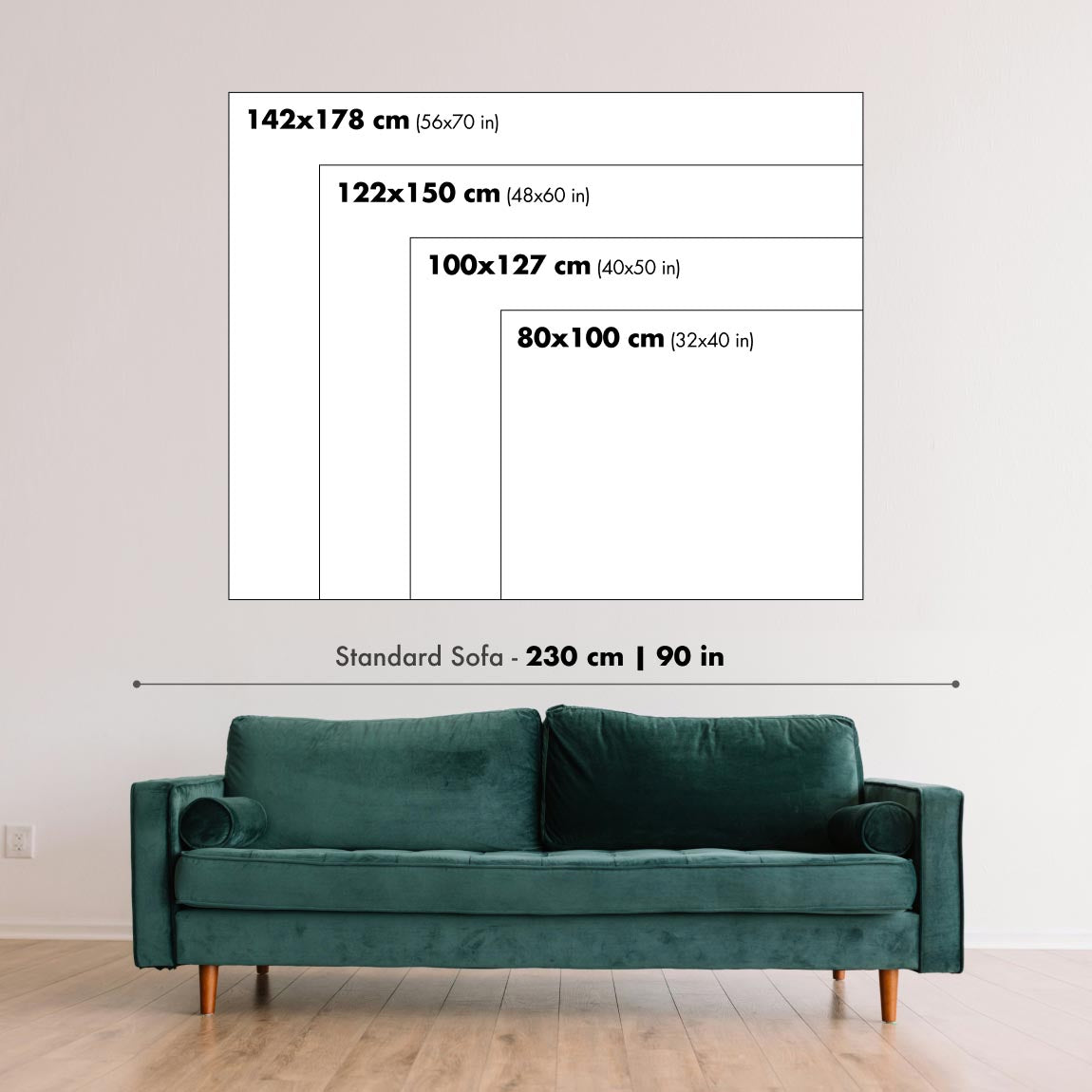
This map looks great at every size, but I always recommend going for a larger size if you have space. That way you can easily make out all of the details.
This map looks amazing at sizes all the way up to 50in (125cm). If you are looking for a larger map, please get in touch.
The model in the listing images is holding the 16x20in (40x50cm) version of this map.
The fifth listing image shows an example of my map personalisation service.
If you’re looking for something slightly different, check out my collection of the best old maps to see if something else catches your eye.
Please contact me to check if a certain location, landmark or feature is shown on this map.
This would make a wonderful birthday, Christmas, Father's Day, work leaving, anniversary or housewarming gift for someone from the areas covered by this map.
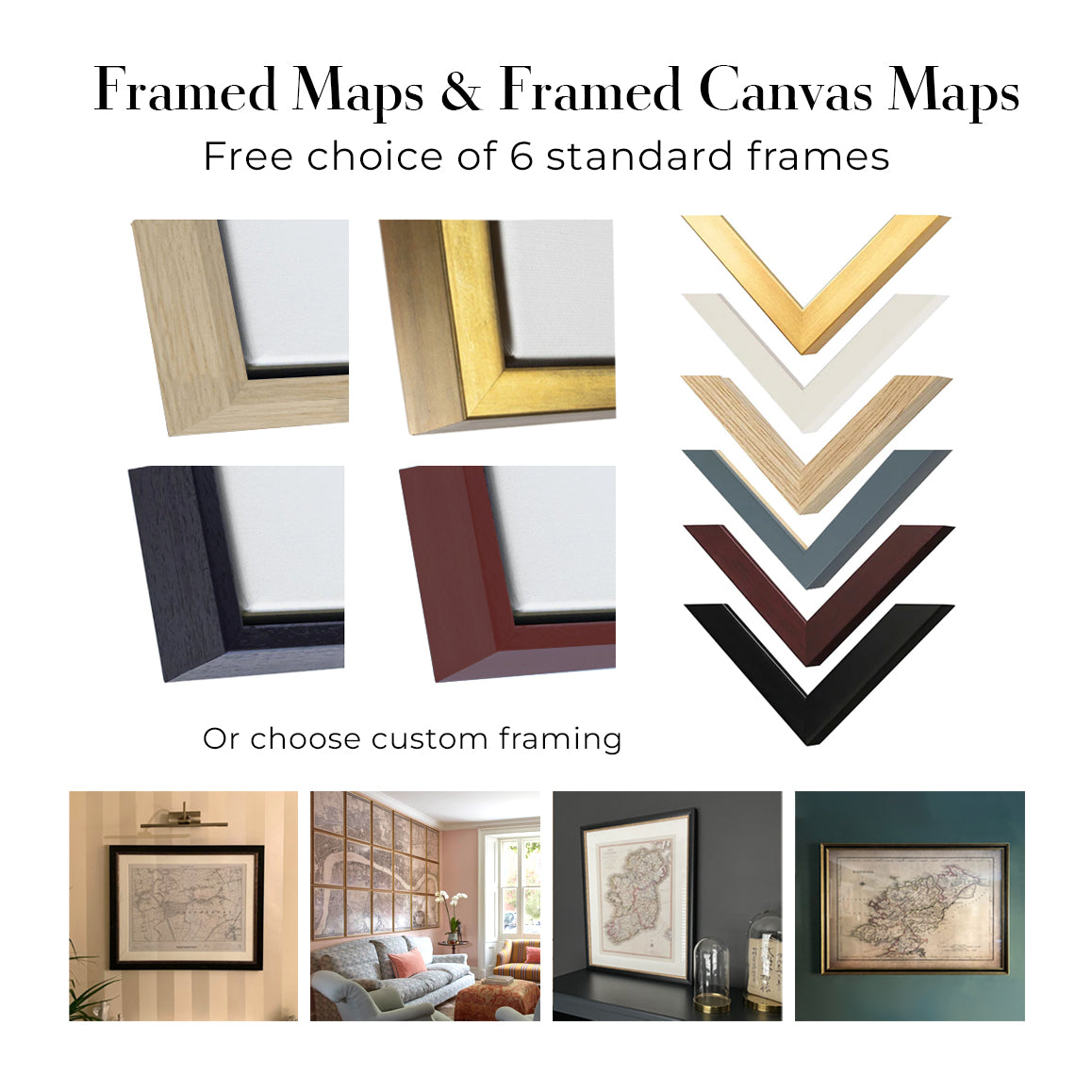
This map is available as a giclée print on acid free archival matte paper, or you can buy it framed. The frame is a nice, simple black frame that suits most aesthetics. Please get in touch if you'd like a different frame colour or material. My frames are glazed with super-clear museum-grade acrylic (perspex/acrylite), which is significantly less reflective than glass, safer, and will always arrive in perfect condition.
This map is also available as a float framed canvas, sometimes known as a shadow gap framed canvas or canvas floater. The map is printed on artist's cotton canvas and then stretched over a handmade box frame. We then "float" the canvas inside a wooden frame, which is available in a range of colours (black, dark brown, oak, antique gold and white). This is a wonderful way to present a map without glazing in front. See some examples of float framed canvas maps and explore the differences between my different finishes.
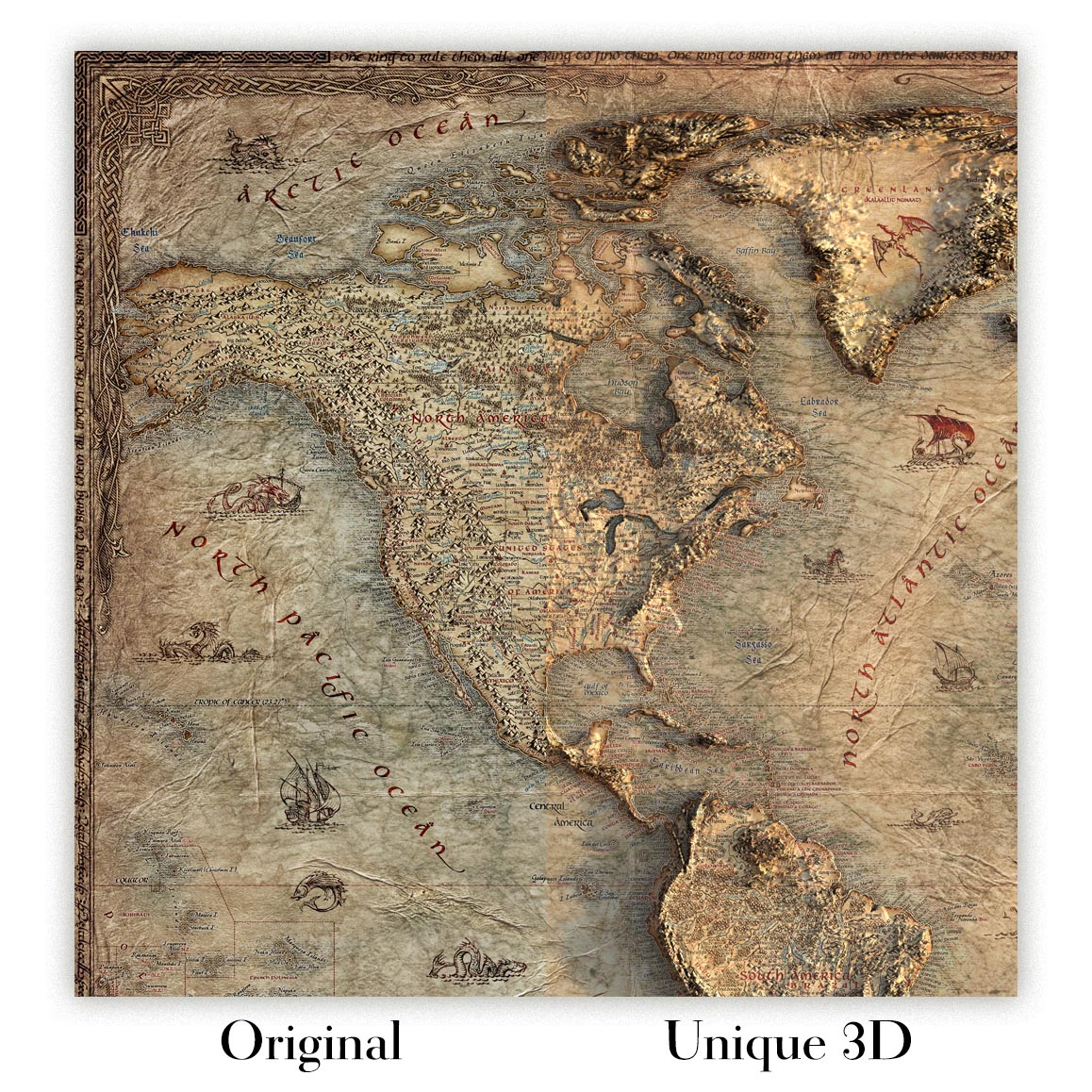
For something truly unique, this map is also available in "Unique 3D", our trademarked process that dramatically transforms the map so that it has a wonderful sense of depth. We combine the original map with detailed topography and elevation data, so that mountains and the terrain really "pop". For more info and examples of 3D maps, check my Unique 3D page.
The map titled “Netherlands,” created in 1810 by Frances Bowen, captures the Low Countries at a moment of profound European change. Executed in a lucid, handmade style, it presents a nation defined by water and trade, with regional borders set off by soft watercolor tints and a disciplined web of place names. Its date places it squarely within the Napoleonic era, when administrative identities were under pressure, yet historical provinces and familiar localities still anchored learning. The composition’s tidy geometry, with latitude and longitude marked along the edges, signals a didactic purpose: to teach orientation, relative position, and the language of borders in an age newly attuned to systematic knowledge.
Bowen’s authorship resonates with the educational manuscript tradition practiced by women in the early nineteenth century. Her work, long associated with that of her sister Eliza, reflects a classroom ethos that prized clarity, neat penmanship, and consistent color cues across a suite of maps—an atlas-in-miniature built for repeated reference. The spare elegance of the lines, the consistent treatment of boundaries, and the measured spacing of toponyms reveal an instructor’s logic: reduce complexity without sacrificing accuracy. In this sense, the map is both a lesson and a lens, distilling the Netherlands into a set of learnable relationships that students could retain and recall.
Geographically, the sheet honors the country’s defining waters: the Rhine and its Waal branch threading east to west, the Meuse (Maas) bending through the south, and the IJssel feeding the great inland inlet then known as the Zuiderzee. Zeeland’s lacework of estuaries and islands speaks to centuries of negotiation with sea and silt, while the Wadden fringe suggests shifting shoals and tidal flats. Along the North Sea littoral, a pared-down coast line reflects dunes, dikes, and harbors without fussy ornament. Regional divisions are crisp, allowing provinces to be read at a glance, while the bordering grid of meridians and parallels invites the viewer to situate Dutch space within the wider European frame.
The cartography methodically arrays the principal towns that structure the Dutch landscape. Amsterdam appears as mercantile heart, commanding the IJ and radiating canals; Rotterdam stands athwart the Maas as a rising port; and The Hague is calmly noted as the seat of government and diplomacy. Utrecht holds the country’s center, historically ecclesiastical and strategic. Leiden, with its venerable university, balances Haarlem on the North Holland coast. Breda signals the Brabantine south, while Nijmegen, ancient on the Waal, marks the eastern gate. Groningen anchors the north; and Eindhoven, still modest at the time, represents the evolving fabric of North Brabant. Each name is a fixed point in a network of waterways, trade routes, and provincial identities.
As a document of 1810, the map speaks to a transitional pedagogy and a transitional polity. The Netherlands—caught between inherited provincial structures and Napoleonic reordering—required learners to hold multiple frameworks in mind. Bowen’s neat borders, carefully chosen tints, and measured graticule transform that complexity into graspable form, signaling the early nineteenth century’s drive toward structured geographic education. The manuscript’s balance of precision and restraint—craft and concept—makes it more than a schoolroom exercise. It is a window onto the period’s intellectual discipline, a portrait of a water-shaped nation, and a quietly authoritative guide to Dutch space at the hinge of modern Europe.
Cities and towns on this map
- Amsterdam
- Rotterdam
- The Hague (Den Haag)
- Utrecht
- Eindhoven
- Groningen
- Breda
- Leiden
- Nijmegen
- Haarlem
Notable Features & Landmarks
- Boundaries: Clearly delineated regional borders.
- Place Names: Various identified locations across the map.
- Watercolor Highlights: Aesthetic enhancements that guide the viewer's attention to specific areas.
- Geographic Orientation: Latitude and longitude markings along the edges.
Historical and design context
- Date Made: 1810.
- Mapmaker: Frances Bowen.
- Interesting Context About Mapmaker: Associated with her sister, Eliza, emphasizing the educational purposes common in manuscript maps of the time.
- Design or Style: Tidy layout with precise execution typical of classroom maps; blends functionality with the craft of hand-drawn art.
- Extra Notes: Manuscript map reflecting the handmade style of early nineteenth-century educational cartography; drawn in pen and ink; likely part of a broader atlas project designed to assist education.
- Historical Significance: Emblematic of the transition in educational resources, showcasing the movement toward structured geographic education in the early 1800s.
Please double check the images to make sure that a specific town or place is shown on this map. You can also get in touch and ask us to check the map for you.
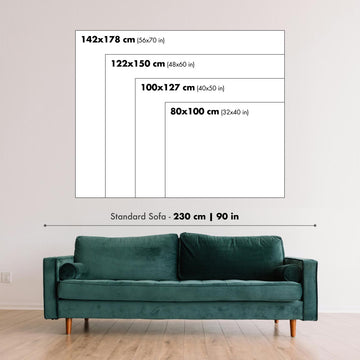
This map looks great at every size, but I always recommend going for a larger size if you have space. That way you can easily make out all of the details.
This map looks amazing at sizes all the way up to 50in (125cm). If you are looking for a larger map, please get in touch.
The model in the listing images is holding the 16x20in (40x50cm) version of this map.
The fifth listing image shows an example of my map personalisation service.
If you’re looking for something slightly different, check out my collection of the best old maps to see if something else catches your eye.
Please contact me to check if a certain location, landmark or feature is shown on this map.
This would make a wonderful birthday, Christmas, Father's Day, work leaving, anniversary or housewarming gift for someone from the areas covered by this map.
This map is available as a giclée print on acid free archival matte paper, or you can buy it framed. The frame is a nice, simple black frame that suits most aesthetics. Please get in touch if you'd like a different frame colour or material. My frames are glazed with super-clear museum-grade acrylic (perspex/acrylite), which is significantly less reflective than glass, safer, and will always arrive in perfect condition.
This map is also available as a float framed canvas, sometimes known as a shadow gap framed canvas or canvas floater. The map is printed on artist's cotton canvas and then stretched over a handmade box frame. We then "float" the canvas inside a wooden frame, which is available in a range of colours (black, dark brown, oak, antique gold and white). This is a wonderful way to present a map without glazing in front. See some examples of float framed canvas maps and explore the differences between my different finishes.
For something truly unique, this map is also available in "Unique 3D", our trademarked process that dramatically transforms the map so that it has a wonderful sense of depth. We combine the original map with detailed topography and elevation data, so that mountains and the terrain really "pop". For more info and examples of 3D maps, check my Unique 3D page.
Viele unserer Karten und Kunstdrucke werden als durchdachte Geschenke für Wohnungen, Büros, Arbeitszimmer und bedeutungsvolle Orte ausgewählt.
Wählen Sie eine gerahmte Option als das einfachste, fertig zum Aufhängen gelieferte Geschenk, oder entscheiden Sie sich für einen ungerahmten Druck, wenn der Empfänger seinen eigenen Rahmen lieber selbst auswählen möchte.
Wir fertigen Bestellungen lokal in 23 Ländern weltweit, sodass Geschenke oft in der Nähe des Empfängers produziert werden können. Das trägt dazu bei, dass sie schneller ankommen, sicherer transportiert werden und Überraschungen durch Zoll oder Einfuhrabgaben vermieden werden.
- Wir können direkt an den Empfänger liefern
- Gerahmte Werke werden fertig zum Aufhängen geliefert
- Ungerahmte Drucke werden sorgfältig in einer stabilen Schutzhülle versandt
- Nahezu jede Bestellung wird lokal gefertigt – für schnelleres und sichereres Schenken
- 90 Tage Rückgaberecht geben dem Empfänger Zeit für seine Entscheidung
Wenn Sie nicht sicher sind, was Sie wählen sollen, kontaktieren Sie uns bitte. Wir helfen Ihnen gern dabei, die passende Karte, Größe, Ausführung oder Lieferoption auszuwählen.
Für die meisten Bestellungen beträgt die Lieferzeit etwa 3 Werktage. Personalisierte und maßgeschneiderte Produkte benötigen länger, da ich die Personalisierung durchführen und sie Ihnen zur Genehmigung zusenden muss, was normalerweise 1 oder 2 Tage dauert.
Bitte beachten Sie, dass sehr große gerahmte Bestellungen in der Regel länger für die Herstellung und Lieferung benötigen.
Wenn Sie möchten, dass Ihre Bestellung bis zu einem bestimmten Datum ankommt, bitte kontaktieren Sie mich, bevor Sie bestellen, damit wir den besten Weg finden können, um sicherzustellen, dass Sie Ihre Bestellung rechtzeitig erhalten.
Ich drucke und rahme Karten und Kunstwerke in 23 Ländern weltweit. Das bedeutet, dass Ihre Bestellung lokal gefertigt wird, was die Lieferzeit verkürzt und sicherstellt, dass sie während der Lieferung nicht beschädigt wird. Sie zahlen nie Zoll oder Einfuhrgebühren, und wir stoßen weniger CO2 in die Luft aus.
Alle meine Karten und Kunstdrucke sind gut verpackt und werden in einem robusten Rohr versendet, wenn sie ungerahmt sind, oder von Schaum umgeben, wenn sie gerahmt sind.
Ich versuche, alle Bestellungen innerhalb von 1 oder 2 Tagen nach Erhalt Ihrer Bestellung zu versenden, obwohl einige Produkte (wie Gesichtsmasken, Tassen und Tragetaschen) länger zur Herstellung benötigen können.
Wenn Sie Express-Lieferung an der Kasse auswählen, priorisieren wir Ihre Bestellung und versenden sie per 1-Tages-Kurier (Fedex, DHL, UPS, Parcelforce).
Nächster Tag Lieferung ist auch in einigen Ländern verfügbar (USA, UK, Singapur, VAE), aber bitte versuchen Sie, früh am Tag zu bestellen, damit wir es rechtzeitig versenden können.
Lesen Sie meinen vollständigen Leitfaden zur Lieferung und lokalen Produktion
Mein Standardrahmen ist ein Galerie-Stil-Rahmen aus schwarzem Eschenholz. Er ist einfach und sieht ziemlich modern aus. Mein Standardrahmen ist etwa 20 mm (0,8 Zoll) breit.
Ich verwende super-klares Acryl (Plexiglas/Acrylt) für das Glas des Rahmens. Es ist leichter und sicherer als Glas – und es sieht besser aus, da die Reflexion geringer ist.
Sechs Standardrahmenfarben sind kostenlos erhältlich (schwarz, dunkelbraun, dunkelgrau, Eiche, weiß und antikgold).
Die meisten Karten, Kunstwerke und Illustrationen sind auch als gerahmte Leinwand erhältlich. Wir verwenden matte (nicht glänzende) Baumwollleinwand, spannen sie über einen nachhaltig beschafften Buchenrahmen und 'schweben' dann das Stück innerhalb eines Holzrahmens. Das Endergebnis ist ziemlich schön, und es gibt keine Verglasung, die im Weg ist.
Alle Rahmen werden "bereit zum Aufhängen" geliefert, entweder mit einer Schnur oder Halterungen auf der Rückseite. Sehr große Rahmen haben schwere Aufhängeplatten und/oder eine Montageschiene. Wenn Sie Fragen haben, können Sie bitte Kontakt aufnehmen.
Sehen Sie sich einige Beispiele meiner gerahmten Karten und gerahmten Leinwandkarten an.
Alternativ kann ich auch alte Karten und Kunstwerke auf Leinwand, Schaumstoffplatten, Baumwollrag und andere Materialien liefern.
Wenn Sie Ihre Karte oder Ihr Kunstwerk selbst rahmen möchten, lesen Sie bitte zuerst meinen Größenleitfaden.
Wir arbeiten mit Innenarchitekten, Unternehmen aus dem Gastgewerbe, Immobilienfachleuten, Büros und Firmenkunden an Einzelstücken sowie an größeren, abgestimmten Projekten.
Diese Karte kann an eine bestimmte Wand, einen Raum oder ein Projekt angepasst werden, und unsere Werkstatt unterstützt Sie vor der Produktion bei der Abstimmung von Abmessungen, Material und Rahmung.
- Exakte, übergroße und maßgefertigte Abmessungen
- Individuelle Rahmung, Montage und alternative Materialien
- Abgestimmte Stücke für mehrere Räume oder Standorte
- Personalisierung der Karte, um wichtige Orte zu markieren oder zusätzliche Details hinzuzufügen
- Beratung zu Karte und Rahmung durch unsere Werkstatt
- Lokale Produktion für Projekte in aller Welt
Besprechen Sie dieses Werk mit unserem Team für Trade & Projects
Meine Karten sind äußerst hochwertige Reproduktionen von Originalkarten.
Ich beziehe originale, seltene Karten aus Bibliotheken, Auktionshäusern und Privatsammlungen auf der ganzen Welt, restauriere sie in meiner Londoner Werkstatt und erstelle dann mit speziellen Giclée-Tinten und -Druckern wunderschöne Karten, die sogar noch besser aussehen als das Original.
Meine Karten werden auf säurefreiem, mattem Archivpapier (nicht glänzend) gedruckt, das sich sehr hochwertig anfühlt und fast wie Karton aussieht. Technisch gesehen beträgt das Papiergewicht/die Papierdicke 10mil/200g/m². Es eignet sich perfekt zum Einrahmen.
Ich drucke mit UV-lichtbeständigen Ultrachrome-Giclée-Pigmenttinten von Epson – einige der besten Tinten, die Sie finden können.
Ich kann auch machen Karten auf Leinwand, Baumwolllappen und andere exotische Materialien.
Erfahren Sie mehr über The Unique Maps Co.
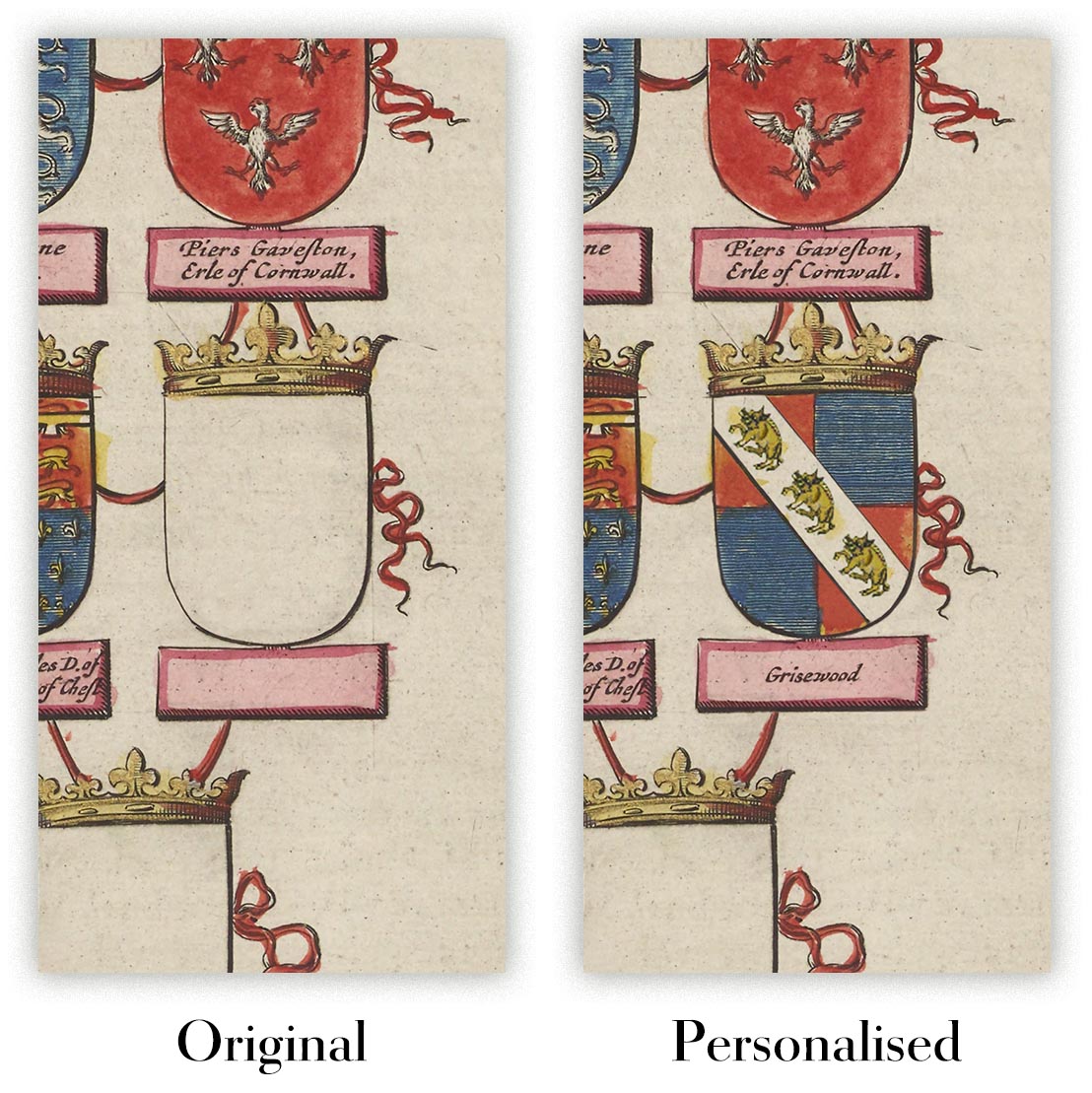
Kartenpersonalisierung
Wenn Sie nach dem perfekten Geschenk zum Jahrestag oder zur Einweihung suchen, kann ich Ihre Karte personalisieren, um sie wirklich einzigartig zu machen. Ich kann beispielsweise eine kurze Nachricht hinzufügen, einen wichtigen Ort hervorheben oder das Wappen Ihrer Familie hinzufügen.
Die Möglichkeiten sind nahezu unbegrenzt. Bitte sehen Sie sich meine Kartenpersonalisierungsseite für einige wunderbare Beispiele dessen, was möglich ist.
Um eine personalisierte Karte zu bestellen, wählen Sie „Personalisieren Sie Ihre Karte“, bevor Sie sie in den Warenkorb legen.
In Kontakt kommen wenn Sie nach komplexeren Anpassungen und Personalisierungen suchen.
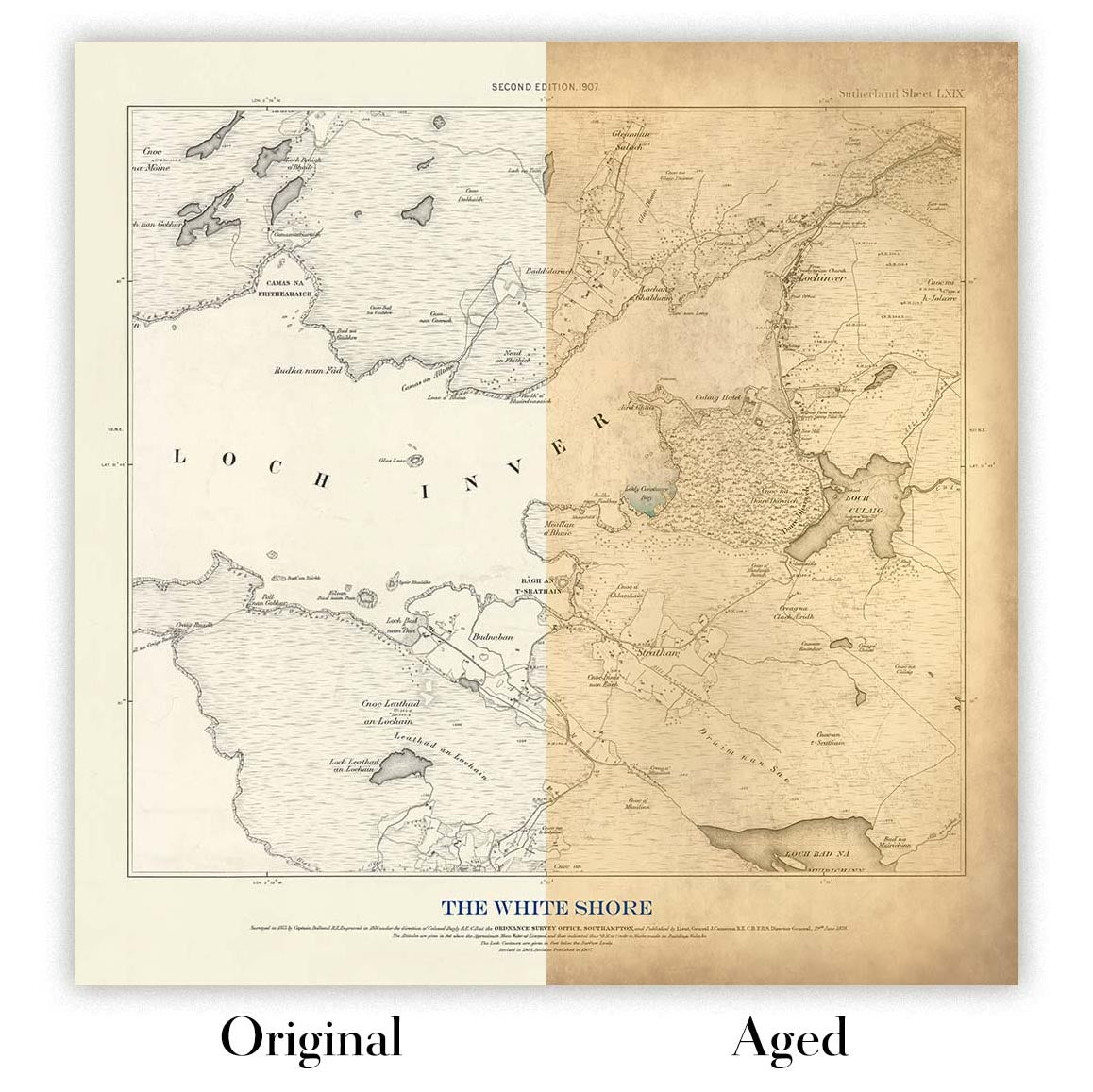
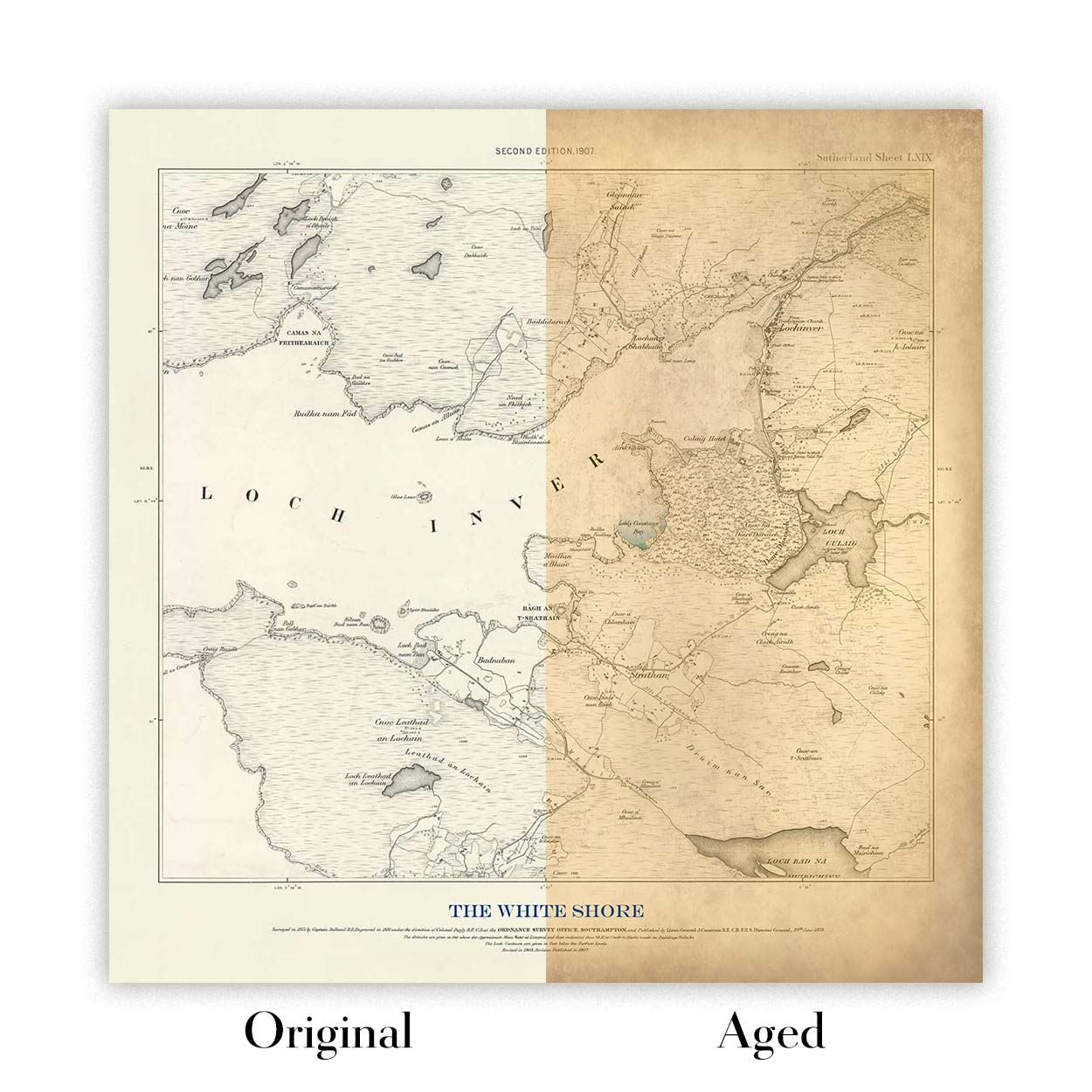
Kartenalterung
Im Laufe der Jahre wurde ich von Kunden hunderte Male gefragt, ob sie eine Karte kaufen könnten, die noch älter.
Nun, jetzt können Sie das, indem Sie „Alter“ auswählen, bevor Sie eine Karte in Ihren Warenkorb legen.
Alle Produktfotos, die Sie auf dieser Seite sehen, zeigen die Karte in ihrer Originalform. So sieht die Karte heute aus.
Wenn Sie „Gealtert“ auswählen, werde ich Ihre Karte von Hand altern lassen. Dazu verwende ich ein spezielles und einzigartiges Verfahren, das ich durch jahrelanges Studium alter Karten und Gespräche mit Forschern zum Verständnis der Chemie alternder Papiere entwickelt habe, und natürlich ... viel Übung!
Wenn Sie sich nicht sicher sind, bleiben Sie bei der Originalfarbe der Karte. Wenn Sie etwas Dunkleres und älter Wenn Sie auf der Suche sind, entscheiden Sie sich für „Aged“.
Sehen Sie einige erstaunliche Beispiele für gealterte Karten.
Seit 1984 restaurieren und fertigen wir Karten und Kunstdrucke an, und wir stehen hinter jedem einzelnen Stück.
Jede Bestellung ist durch unsere 10-Jahres-Garantie und unsere Garantie für beschädigungsfreie Lieferung abgesichert. Sollte Ihr Stück beschädigt bei Ihnen ankommen, ersetzen oder reproduzieren wir es kostenlos. Sollte sonst etwas nicht in Ordnung sein, kontaktieren Sie unser Werkstatt-Team, und wir kümmern uns umgehend darum.
Ausführliche Informationen finden Sie in unseren Rückgabe- und Erstattungsrichtlinien.


