














Mapa antiguo de África Central y Oriental de Bartholomew, 1922: mandatos posteriores a la Primera Guerra Mundial; Grandes Lagos; ferrocarril y telégrafo
Restaurado en nuestro taller de Londres a partir del mapa original de 1922 e impreso en calidad museo. Descripción completa
La oferta del coleccionista
Elija dos obras elegibles y obtenga un 20 % de descuento en ambas. Elija tres y la de menor precio será gratuita, con un ahorro máximo del 33 %.
Combine y mezcle mapas estándar elegibles y reproducciones de bellas artes. No se requiere código; la oferta se aplica automáticamente al finalizar la compra.
Se incluyen las configuraciones estándar hechas por encargo. Quedan excluidos los tamaños a medida, los diseños personalizados y los trabajos por encargo.
¿Necesita entrega en diferentes direcciones? Contáctenos antes de realizar el pedido.La oferta del coleccionista
Elija dos obras elegibles y obtenga un 20 % de descuento en ambas. Elija tres y la de menor precio será gratuita, con un ahorro máximo del 33 %.
Combine y mezcle mapas estándar elegibles y reproducciones de bellas artes. No se requiere código; la oferta se aplica automáticamente al finalizar la compra.
Se incluyen las configuraciones estándar hechas por encargo. Quedan excluidos los tamaños a medida, los diseños personalizados y los trabajos por encargo.
¿Necesita entrega en diferentes direcciones? Contáctenos antes de realizar el pedido.
Restaurado a partir del mapa original de 1922 e impreso en calidad museo. Descripción completa
Elige el formato
Elige el acabado


(Más información)
Mensaje de regalo y acabado personalizado

Si deseas agregar un mensaje de regalo, o un acabado (rompecabezas, tablero de aluminio, etc.) que no esté disponible aquí, por favor solicítalo en la "nota del pedido" cuando realices la compra.
Cada pedido es hecho a medida, así que si necesitas que el tamaño se ajuste ligeramente, o que se imprima en un material inusual, háznoslo saber. Hemos realizado miles de pedidos personalizados a lo largo de los años, así que hay (casi) nada que no podamos gestionar.
También puedes contactarnos antes de hacer tu pedido, ¡si lo prefieres!
Llévate a casa un pedazo de historia
Más de 8.000 reseñas de 5 estrellas


África Central y Oriental (1922) de John Bartholomew es un retrato nítido de un continente en transición en el amanecer de la...
Seguir leyendoÁfrica Central y Oriental (1922) de John Bartholomew es un retrato nítido de un continente en transición en el amanecer de la era de entreguerras. Creado por uno de los cartógrafos más exigentes de Gran Bretaña, reúne una inmensa extensión de territorio—Territorio de Tanganica, Ruanda-Urundi, África Oriental Británica (Kenia), Uganda, Congo Belga, Angola y Rodesia del Norte—en una composición disciplinada a 1:4.000.000. Bartholomew emplea tintes hipsométricos para traducir el relieve en color, guiando la vista desde las tierras bajas verdes hasta las tierras altas púrpura-marrones y aclarando de inmediato la relación entre el terreno, las cuencas hidrográficas y el poblamiento. Los límites políticos están trazados con una precisión inconfundible, pero nunca abruman la geografía; el resultado es un mapa que equilibra autoridad y legibilidad, capturando el orden administrativo y la estructura natural de la zona central de África en 1922.
Publicado poco después de que el Tratado de Versalles redefiniera el atlas político de África, el mapa representa con sobria claridad el paisaje posterior a la etapa alemana. Tanganica aparece como un mandato británico surgido del África Oriental Alemana, mientras que Ruanda-Urundi se muestra bajo administración belga junto al vasto Congo Belga. Al este, África Oriental Británica (Kenia) y Uganda afianzan los intereses imperiales a lo largo del océano Índico y del alto Nilo, con Rodesia del Norte y Angola delimitando los horizontes meridional y occidental. Bartholomew marca los centros administrativos en un rojo decidido—Nairobi, Kampala, Dar es Salaam, Lusaka y Leopoldville—y luego los enlaza con ferrocarriles, carreteras y líneas telegráficas. Estas redes esbozan los nervios del gobierno y del comercio, revelando corredores de movimiento que seguían los ríos, bordeaban escarpes y tendían puentes sobre las fronteras coloniales.
La geografía física está representada con la contención de un científico y el ojo de un artista. El Congo, el Nilo y el Zambeze aparecen claramente delineados, con sus afluentes deshilachándose en cabeceras pálidas que ascienden, tono a tono, hacia el espinazo del continente. Los Grandes Lagos—Victoria, Tanganica, Alberto y Nyasa—se alzan como mares interiores, orientando tanto el clima como el comercio. El color hipsométrico construye un modelo legible del relieve: las llanuras de inundación verdes se intensifican pasando por ocres hasta mesetas púrpura-marrones, mientras las Tierras Altas de Etiopía y los escarpes del Valle del Rift se señalan con una tonalidad enfática. Los centinelas volcánicos—el monte Kilimanjaro y el monte Kenia—se elevan desde las tierras altas flanqueadas por el Rift como puntos de referencia nombrados, mientras que las divisorias de aguas sugieren por qué ciertas rutas prosperaron y por qué otras se sometieron a los dictados del terreno.
La simbología de Bartholomew es económica y exigente, un estilo de la casa que privilegia la claridad sin sacrificar matices. A escala 1:4.000.000 del mapa, los nombres de lugar se jerarquizan para distinguir los centros principales de las estaciones menores; los núcleos administrativos en rojo punctúan el lienzo, mientras una fina y firme línea para ferrocarriles, carreteras y telégrafos se superpone a la fisiografía. El efecto es analítico: se ve cómo las vías férreas bordean las zonas pantanosas, cómo las carreteras ascienden por espolones más suaves hasta coronar el escarpe, cómo las líneas telegráficas saltan de ciudad en ciudad a través de distancias interiores disciplinadas por las curvas de los ríos y las orillas de los lagos. Los límites políticos se perciben como membranas decisivas pero permeables, permitiendo al lector leer primero la tierra y después las jurisdicciones, una seña distintiva de la mejor obra de Bartholomew.
Como documento histórico, el mapa fija un instante decisivo en el que se redefinieron fronteras, se declararon mandatos y se tendieron infraestructuras para proyectar poder y extraer posibilidades. Muestra Tanganyika y Ruanda‑Urundi bajo nueva tutela, el África Oriental Británica y Uganda estructurados por ferrocarriles hacia Nairobi y Kampala, y la esfera belga cohesionándose en torno a Leopoldville y el Congo. Sin embargo, es igualmente una lección de geografía en gran formato: los lagos como encrucijadas interiores, las Tierras Altas de Etiopía como fuente del Nilo, y el Rift como corredor y barrera a la vez. En manos de Bartholomew, los relatos político y físico se entrelazan, dando lugar a una obra que recompensa por igual la lectura atenta de historiadores, geógrafos y estetas.
Países y regiones en este mapa
- Territorio de Tanganyika
- Ruanda-Urundi
- África Oriental Británica (Kenia)
- Uganda
- Congo Belga
- Angola
- Rodesia del Norte
- Tierras Altas de Etiopía
- Escarpes del Valle del Rift
- Monte Kilimanjaro
- Monte Kenia
Características destacadas y puntos de interés
- Fronteras políticas claramente delineadas para diversos territorios.
- La elevación se indica mediante tintes hipsométricos, con las tierras bajas verdes que transicionan hacia las tierras altas marrón violáceas.
- Los principales sistemas fluviales trazados de forma destacada: Congo, Nilo y Zambeze.
- Los Grandes Lagos de la región claramente definidos: Victoria, Tanganyika, Alberto y Nyasa.
- Ciudades y centros administrativos marcados en rojo, incluidos Leopoldville (Kinshasa), Nairobi, Kampala, Dar es Salaam y Lusaka.
- Superposición de ferrocarriles, carreteras y líneas telegráficas que ilustra las rutas logísticas.
Contexto histórico y de diseño
- Año de creación: 1922 (primer período de entreguerras).
- Cartógrafo: John Bartholomew, un destacado cartógrafo conocido por su atención al detalle en una época de importantes cambios geopolíticos.
- Temas: fronteras políticas, infraestructura colonial y geografía física de África Central y Oriental.
- Importancia histórica: publicada en el apogeo del control colonial europeo; ilustra la dinámica posterior a la Primera Guerra Mundial y los cambios territoriales del Tratado de Versalles, incluidos los desplazamientos de antiguos territorios alemanes.
- Diseño y estilo: resalta los rasgos geográficos con notable claridad para su escala (1:4.000.000).
Por favor, compruebe detenidamente las imágenes para asegurarse de que una ciudad o lugar concreto aparece en este mapa. También puede ponerse en contacto con nosotros y pedirnos que revisemos el mapa por usted.
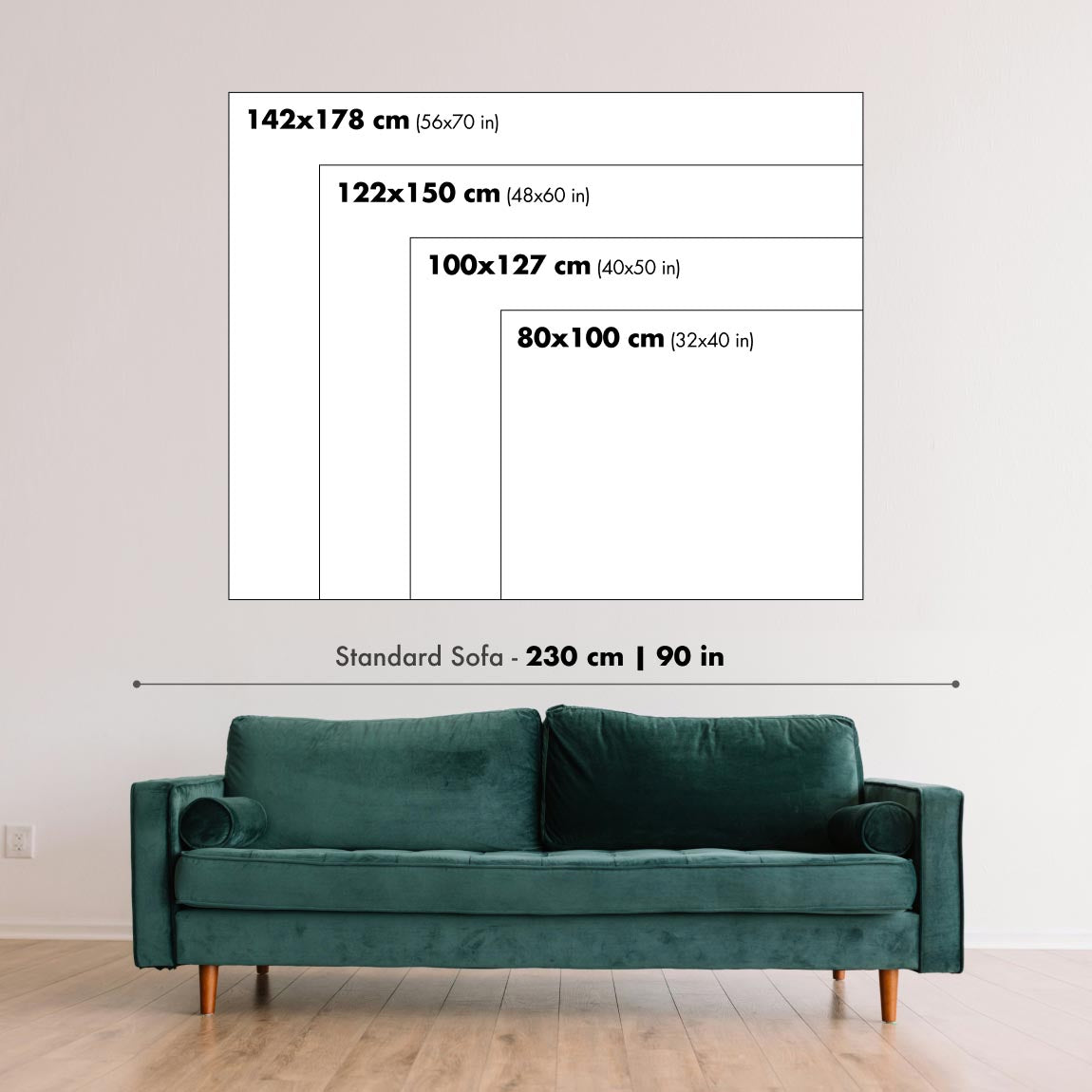
Este mapa luce magnífico en cualquier tamaño, pero siempre recomiendo elegir un tamaño mayor si dispone de espacio. Así podrá apreciar fácilmente todos los detalles.
Este mapa se ve increíble en tamaños de hasta 100in (250cm). Si busca un mapa más grande, por favor póngase en contacto.
Nota: las etiquetas de este mapa son difíciles de leer si pide un mapa de 20in (50cm) o menos. El mapa sigue siendo muy atractivo, pero si desea leerlo con facilidad, por favor compre un tamaño mayor.
La modelo de las imágenes del anuncio sostiene la versión de 18x24in (45x60cm) de este mapa.
La quinta imagen del anuncio muestra un ejemplo de mi servicio de personalización de mapas.
Si busca algo ligeramente diferente, consulte mi colección de los mejores mapas antiguos para ver si algo más le llama la atención.
Por favor contácteme para comprobar si una determinada ubicación, hito o característica aparece en este mapa.
Esto sería un maravilloso regalo de cumpleaños, Navidad, Día del Padre, despedida laboral, aniversario o inauguración de casa para alguien de las zonas cubiertas por este mapa.
Este mapa está disponible como impresión giclée en papel mate de archivo libre de ácido, o puede adquirirlo enmarcado. El marco es un bonito y sencillo marco negro que se adapta a la mayoría de las estéticas. Póngase en contacto si desea un color o material de marco diferente. Mis marcos llevan un acristalamiento de acrílico de calidad museo, supertransparente (perspex/acrylite), que es considerablemente menos reflectante que el vidrio, más seguro, y siempre llegará en perfectas condiciones.
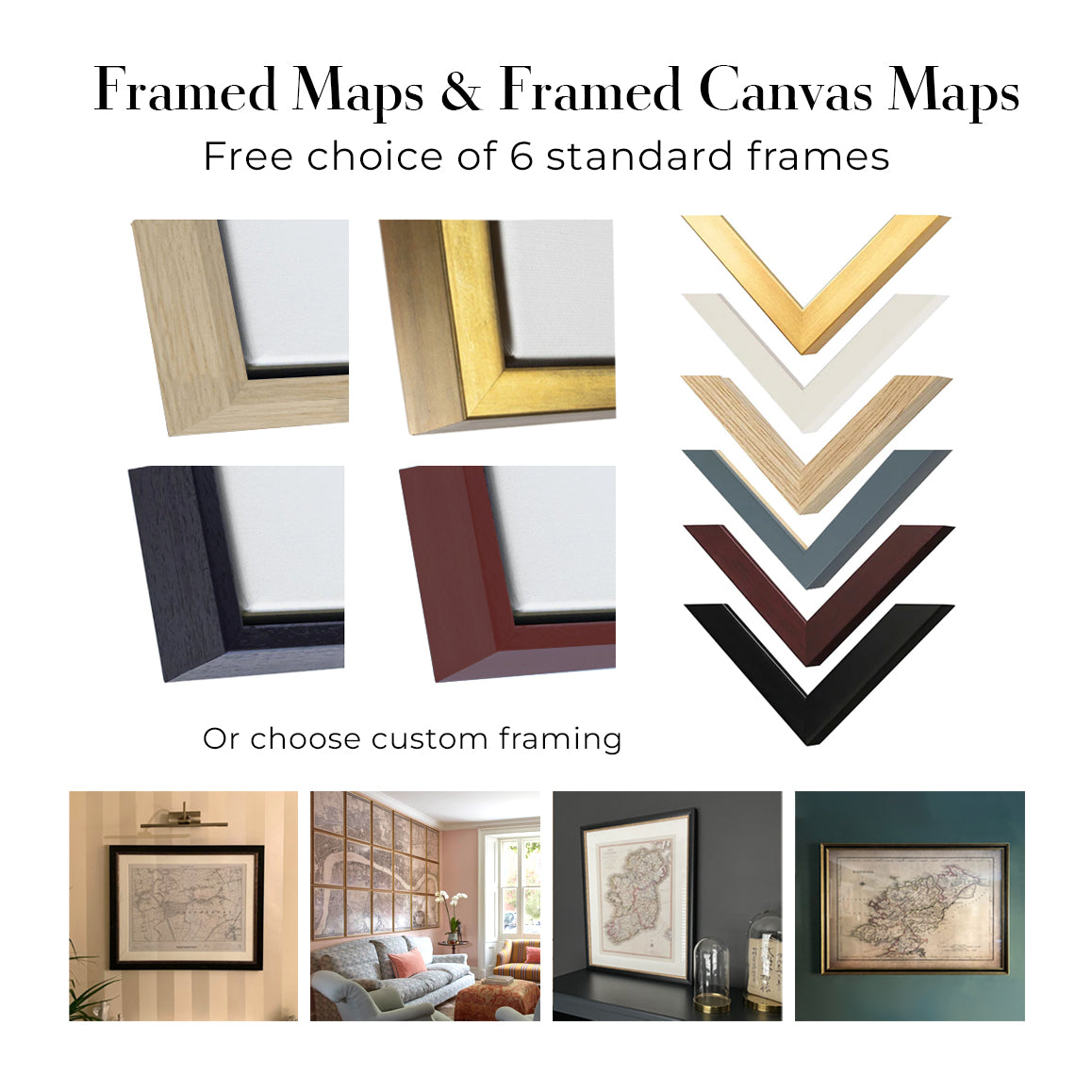
This map is also available as a float framed canvas, sometimes known as a shadow gap framed canvas or canvas floater. The map is printed on artist's cotton canvas and then stretched over a handmade box frame. We then "float" the canvas inside a wooden frame, which is available in a range of colours (black, dark brown, oak, antique gold and white). This is a wonderful way to present a map without glazing in front. See some examples of float framed canvas maps and explore the differences between my different finishes.
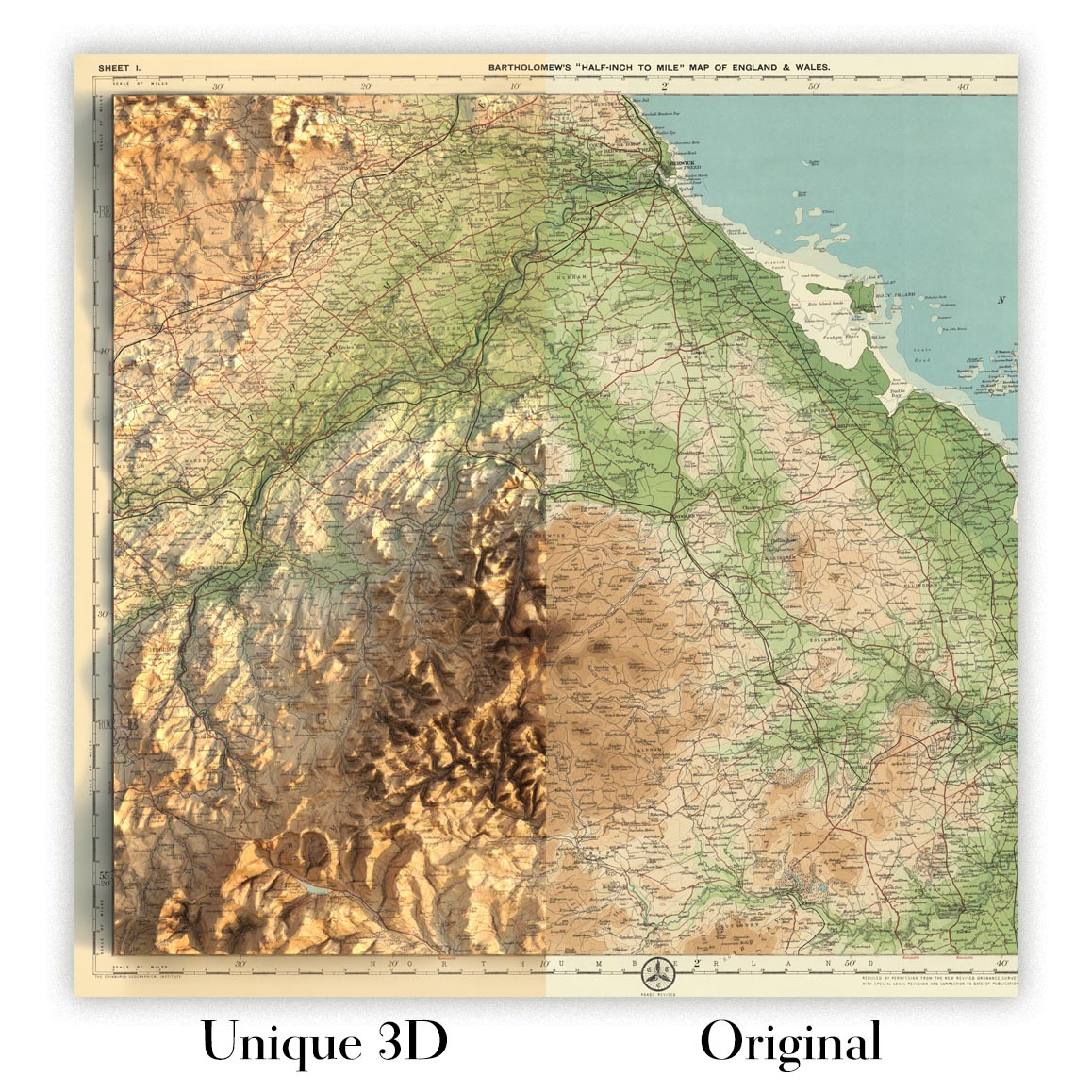
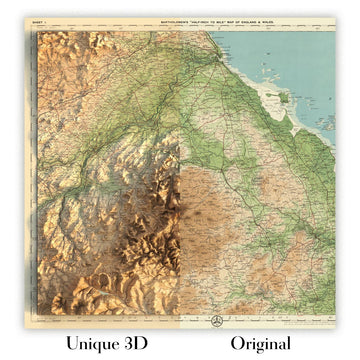
For something truly unique, this map is also available in "Unique 3D", our trademarked process that dramatically transforms the map so that it has a wonderful sense of depth. We combine the original map with detailed topography and elevation data, so that mountains and the terrain really "pop". For more info and examples of 3D maps, check my Unique 3D page.
África Central y Oriental (1922) de John Bartholomew es un retrato nítido de un continente en transición en el amanecer de la era de entreguerras. Creado por uno de los cartógrafos más exigentes de Gran Bretaña, reúne una inmensa extensión de territorio—Territorio de Tanganica, Ruanda-Urundi, África Oriental Británica (Kenia), Uganda, Congo Belga, Angola y Rodesia del Norte—en una composición disciplinada a 1:4.000.000. Bartholomew emplea tintes hipsométricos para traducir el relieve en color, guiando la vista desde las tierras bajas verdes hasta las tierras altas púrpura-marrones y aclarando de inmediato la relación entre el terreno, las cuencas hidrográficas y el poblamiento. Los límites políticos están trazados con una precisión inconfundible, pero nunca abruman la geografía; el resultado es un mapa que equilibra autoridad y legibilidad, capturando el orden administrativo y la estructura natural de la zona central de África en 1922.
Publicado poco después de que el Tratado de Versalles redefiniera el atlas político de África, el mapa representa con sobria claridad el paisaje posterior a la etapa alemana. Tanganica aparece como un mandato británico surgido del África Oriental Alemana, mientras que Ruanda-Urundi se muestra bajo administración belga junto al vasto Congo Belga. Al este, África Oriental Británica (Kenia) y Uganda afianzan los intereses imperiales a lo largo del océano Índico y del alto Nilo, con Rodesia del Norte y Angola delimitando los horizontes meridional y occidental. Bartholomew marca los centros administrativos en un rojo decidido—Nairobi, Kampala, Dar es Salaam, Lusaka y Leopoldville—y luego los enlaza con ferrocarriles, carreteras y líneas telegráficas. Estas redes esbozan los nervios del gobierno y del comercio, revelando corredores de movimiento que seguían los ríos, bordeaban escarpes y tendían puentes sobre las fronteras coloniales.
La geografía física está representada con la contención de un científico y el ojo de un artista. El Congo, el Nilo y el Zambeze aparecen claramente delineados, con sus afluentes deshilachándose en cabeceras pálidas que ascienden, tono a tono, hacia el espinazo del continente. Los Grandes Lagos—Victoria, Tanganica, Alberto y Nyasa—se alzan como mares interiores, orientando tanto el clima como el comercio. El color hipsométrico construye un modelo legible del relieve: las llanuras de inundación verdes se intensifican pasando por ocres hasta mesetas púrpura-marrones, mientras las Tierras Altas de Etiopía y los escarpes del Valle del Rift se señalan con una tonalidad enfática. Los centinelas volcánicos—el monte Kilimanjaro y el monte Kenia—se elevan desde las tierras altas flanqueadas por el Rift como puntos de referencia nombrados, mientras que las divisorias de aguas sugieren por qué ciertas rutas prosperaron y por qué otras se sometieron a los dictados del terreno.
La simbología de Bartholomew es económica y exigente, un estilo de la casa que privilegia la claridad sin sacrificar matices. A escala 1:4.000.000 del mapa, los nombres de lugar se jerarquizan para distinguir los centros principales de las estaciones menores; los núcleos administrativos en rojo punctúan el lienzo, mientras una fina y firme línea para ferrocarriles, carreteras y telégrafos se superpone a la fisiografía. El efecto es analítico: se ve cómo las vías férreas bordean las zonas pantanosas, cómo las carreteras ascienden por espolones más suaves hasta coronar el escarpe, cómo las líneas telegráficas saltan de ciudad en ciudad a través de distancias interiores disciplinadas por las curvas de los ríos y las orillas de los lagos. Los límites políticos se perciben como membranas decisivas pero permeables, permitiendo al lector leer primero la tierra y después las jurisdicciones, una seña distintiva de la mejor obra de Bartholomew.
Como documento histórico, el mapa fija un instante decisivo en el que se redefinieron fronteras, se declararon mandatos y se tendieron infraestructuras para proyectar poder y extraer posibilidades. Muestra Tanganyika y Ruanda‑Urundi bajo nueva tutela, el África Oriental Británica y Uganda estructurados por ferrocarriles hacia Nairobi y Kampala, y la esfera belga cohesionándose en torno a Leopoldville y el Congo. Sin embargo, es igualmente una lección de geografía en gran formato: los lagos como encrucijadas interiores, las Tierras Altas de Etiopía como fuente del Nilo, y el Rift como corredor y barrera a la vez. En manos de Bartholomew, los relatos político y físico se entrelazan, dando lugar a una obra que recompensa por igual la lectura atenta de historiadores, geógrafos y estetas.
Países y regiones en este mapa
- Territorio de Tanganyika
- Ruanda-Urundi
- África Oriental Británica (Kenia)
- Uganda
- Congo Belga
- Angola
- Rodesia del Norte
- Tierras Altas de Etiopía
- Escarpes del Valle del Rift
- Monte Kilimanjaro
- Monte Kenia
Características destacadas y puntos de interés
- Fronteras políticas claramente delineadas para diversos territorios.
- La elevación se indica mediante tintes hipsométricos, con las tierras bajas verdes que transicionan hacia las tierras altas marrón violáceas.
- Los principales sistemas fluviales trazados de forma destacada: Congo, Nilo y Zambeze.
- Los Grandes Lagos de la región claramente definidos: Victoria, Tanganyika, Alberto y Nyasa.
- Ciudades y centros administrativos marcados en rojo, incluidos Leopoldville (Kinshasa), Nairobi, Kampala, Dar es Salaam y Lusaka.
- Superposición de ferrocarriles, carreteras y líneas telegráficas que ilustra las rutas logísticas.
Contexto histórico y de diseño
- Año de creación: 1922 (primer período de entreguerras).
- Cartógrafo: John Bartholomew, un destacado cartógrafo conocido por su atención al detalle en una época de importantes cambios geopolíticos.
- Temas: fronteras políticas, infraestructura colonial y geografía física de África Central y Oriental.
- Importancia histórica: publicada en el apogeo del control colonial europeo; ilustra la dinámica posterior a la Primera Guerra Mundial y los cambios territoriales del Tratado de Versalles, incluidos los desplazamientos de antiguos territorios alemanes.
- Diseño y estilo: resalta los rasgos geográficos con notable claridad para su escala (1:4.000.000).
Por favor, compruebe detenidamente las imágenes para asegurarse de que una ciudad o lugar concreto aparece en este mapa. También puede ponerse en contacto con nosotros y pedirnos que revisemos el mapa por usted.
Este mapa luce magnífico en cualquier tamaño, pero siempre recomiendo elegir un tamaño mayor si dispone de espacio. Así podrá apreciar fácilmente todos los detalles.
Este mapa se ve increíble en tamaños de hasta 100in (250cm). Si busca un mapa más grande, por favor póngase en contacto.
Nota: las etiquetas de este mapa son difíciles de leer si pide un mapa de 20in (50cm) o menos. El mapa sigue siendo muy atractivo, pero si desea leerlo con facilidad, por favor compre un tamaño mayor.
La modelo de las imágenes del anuncio sostiene la versión de 18x24in (45x60cm) de este mapa.
La quinta imagen del anuncio muestra un ejemplo de mi servicio de personalización de mapas.
Si busca algo ligeramente diferente, consulte mi colección de los mejores mapas antiguos para ver si algo más le llama la atención.
Por favor contácteme para comprobar si una determinada ubicación, hito o característica aparece en este mapa.
Esto sería un maravilloso regalo de cumpleaños, Navidad, Día del Padre, despedida laboral, aniversario o inauguración de casa para alguien de las zonas cubiertas por este mapa.
Este mapa está disponible como impresión giclée en papel mate de archivo libre de ácido, o puede adquirirlo enmarcado. El marco es un bonito y sencillo marco negro que se adapta a la mayoría de las estéticas. Póngase en contacto si desea un color o material de marco diferente. Mis marcos llevan un acristalamiento de acrílico de calidad museo, supertransparente (perspex/acrylite), que es considerablemente menos reflectante que el vidrio, más seguro, y siempre llegará en perfectas condiciones.
This map is also available as a float framed canvas, sometimes known as a shadow gap framed canvas or canvas floater. The map is printed on artist's cotton canvas and then stretched over a handmade box frame. We then "float" the canvas inside a wooden frame, which is available in a range of colours (black, dark brown, oak, antique gold and white). This is a wonderful way to present a map without glazing in front. See some examples of float framed canvas maps and explore the differences between my different finishes.
For something truly unique, this map is also available in "Unique 3D", our trademarked process that dramatically transforms the map so that it has a wonderful sense of depth. We combine the original map with detailed topography and elevation data, so that mountains and the terrain really "pop". For more info and examples of 3D maps, check my Unique 3D page.
Muchos de nuestros mapas y reproducciones de arte se eligen como regalos considerados para hogares, oficinas, despachos y lugares significativos.
Elija una opción enmarcada para el regalo más sencillo, listo para colgar, o elija una lámina sin enmarcar si el destinatario prefiere seleccionar su propio marco.
Producimos los pedidos localmente en 23 países de todo el mundo, por lo que a menudo los regalos pueden realizarse cerca del destinatario. Esto ayuda a que lleguen más rápido, viajen de forma más segura y eviten sorpresas por aduanas o aranceles de importación.
- Podemos entregar directamente al destinatario
- Las piezas enmarcadas llegan listas para colgar
- Las láminas sin enmarcar se embalan cuidadosamente en un resistente tubo protector
- Casi todos los pedidos se producen localmente, para regalar de forma más rápida y segura
- Las devoluciones de 90 días dan al destinatario tiempo para decidir
Si no está seguro de qué elegir, por favor contáctenos. Podemos ayudarle a escoger el mapa, tamaño, acabado u opción de entrega adecuados.
Para la mayoría de los pedidos, el tiempo de entrega es de aproximadamente 3 días laborables. Los productos personalizados y a medida tardan más, ya que tengo que hacer la personalización y enviártelo para su aprobación, lo cual suele tardar 1 o 2 días.
Tenga en cuenta que los pedidos enmarcados muy grandes suelen tardar más en fabricarse y entregarse.
Si necesitas que tu pedido llegue para una fecha determinada, por favor contáctame antes de hacer el pedido para que podamos encontrar la mejor manera de asegurarnos de que recibas tu pedido a tiempo.
Imprimo y enmarco mapas y obras de arte en 23 países alrededor del mundo. Esto significa que tu pedido se fabricará localmente, lo que reduce el tiempo de entrega y asegura que no se dañe durante el envío. Nunca pagarás aranceles de aduana o impuestos de importación, y pondremos menos CO2 en el aire.
Todos mis mapas y impresiones artísticas están bien empaquetados y enviados en un tubo resistente si no están enmarcados, o rodeados de espuma si están enmarcados.
Intento enviar todos los pedidos dentro de 1 o 2 días después de recibir tu pedido, aunque algunos productos (como mascarillas, tazas y bolsas de tela) pueden tardar más en fabricarse.
Si seleccionas Entrega Exprés al finalizar la compra, priorizaremos tu pedido y lo enviaremos por mensajería de 1 día (Fedex, DHL, UPS, Parcelforce).
La entrega al día siguiente también está disponible en algunos países (EE. UU., Reino Unido, Singapur, EAU), pero por favor intenta hacer tu pedido temprano en el día para que podamos enviarlo a tiempo.
Mi marco estándar es un marco de madera de fresno negro estilo galería. Es simple y tiene un aspecto bastante moderno. Mi marco estándar tiene alrededor de 20 mm (0.8 in) de ancho.
Utilizo acrílico super claro (perspex/acrylite) para el vidrio del marco. Es más ligero y seguro que el vidrio, y se ve mejor, ya que la reflectividad es menor.
Seis colores de marco estándar están disponibles de forma gratuita (negro, marrón oscuro, gris oscuro, roble, blanco y oro antiguo).El enmarcado y montaje/matizado personalizado está disponible si buscas algo diferente.
La mayoría de los mapas, arte e ilustraciones también están disponibles como un lienzo enmarcado. Utilizamos lienzo de algodón mate (no brillante), lo estiramos sobre un marco de madera de caja de origen sostenible, y luego 'flotamos' la pieza dentro de un marco de madera. El resultado final es bastante hermoso, y no hay cristal que se interponga.
Todos los marcos se proporcionan "listos para colgar", con una cuerda o soportes en la parte posterior. Los marcos muy grandes tendrán placas de colgar de alta resistencia y/o un listón de montaje. Si tienes alguna pregunta, por favor ponte en contacto.
Mira algunos ejemplos de mis mapas enmarcados y mapas en lienzo enmarcados.
Alternativamente, también puedo proporcionar mapas antiguos y obras de arte en lienzo, tablero de espuma, papel de algodón y otros materiales.
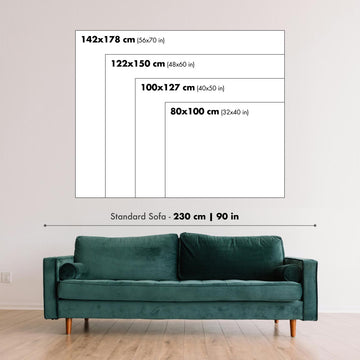
Si deseas enmarcar tu mapa o obra de arte tú mismo, por favor lee mi guía de tamaños primero.
Trabajamos con diseñadores de interiores, negocios de hostelería, profesionales del sector inmobiliario, oficinas y compradores corporativos tanto en piezas individuales como en proyectos coordinados de mayor envergadura.
Este mapa puede adaptarse a una pared, estancia o proyecto concretos, y nuestro taller puede ayudar a coordinar las dimensiones, el material y el enmarcado antes de la producción.
- Dimensiones exactas, de gran formato y a medida
- Enmarcado, montaje y materiales alternativos personalizados
- Piezas coordinadas para varias habitaciones o ubicaciones
- Personalización del mapa para señalar ubicaciones importantes o añadir detalles adicionales
- Asesoramiento sobre el mapa y el enmarcado por parte de nuestro taller
- Producción local para proyectos en todo el mundo
Mis mapas son reproducciones de mapas originales de altísima calidad.
Obtengo mapas originales y raros de bibliotecas, casas de subastas y colecciones privadas de todo el mundo, los restauro en mi taller de Londres y luego uso tintas e impresoras giclée especializadas para crear hermosos mapas que lucen incluso mejor que el original.
Mis mapas están impresos en papel de archivo mate (no brillante) sin ácido que se siente de muy alta calidad y casi como una tarjeta. En términos técnicos, el peso/grosor del papel es de 10 mil/200 g/m². Es perfecto para enmarcar.
Imprimo con tintas pigmentadas Epson ultrachrome giclée UV resistentes a la decoloración, algunas de las mejores tintas que puedes encontrar.
yo también puedo hacer mapas sobre lienzo, trapo de algodón y otros materiales exóticos.
Obtenga más información sobre The Unique Maps Co..
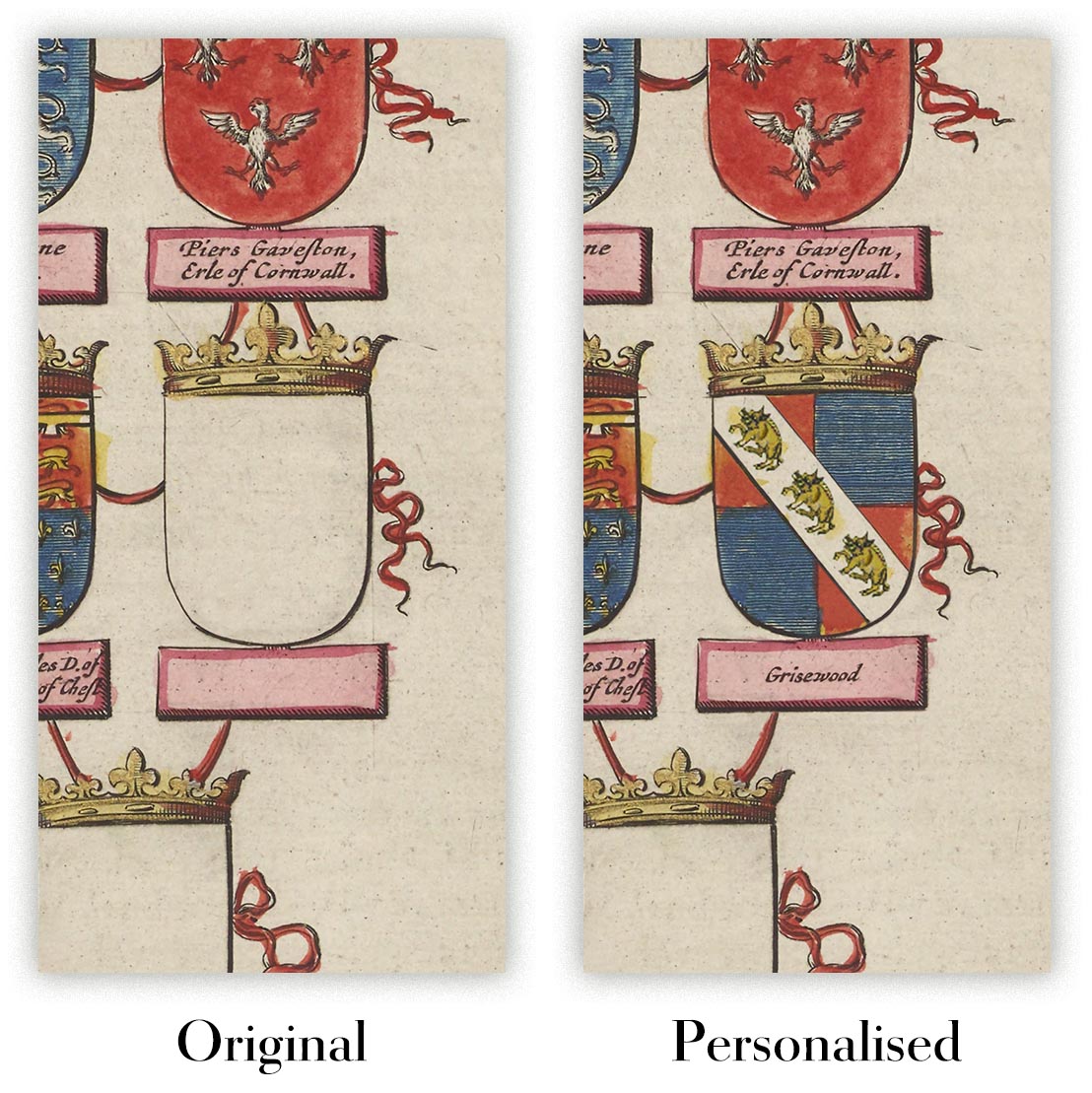
Personalización de mapas
Si está buscando el regalo perfecto de aniversario o inauguración de la casa, puedo personalizar su mapa para hacerlo verdaderamente único. Por ejemplo, puedo agregar un mensaje corto, resaltar una ubicación importante o agregar el escudo de armas de su familia.
Las opciones son casi infinitas. Por favor mira mi página de personalización de mapas para ver algunos maravillosos ejemplos de lo que es posible.
Para pedir un mapa personalizado, seleccione "personalizar su mapa" antes de agregarlo a su carrito.
Ponerse en contacto si buscas personalizaciones y personalizaciones más complejas.
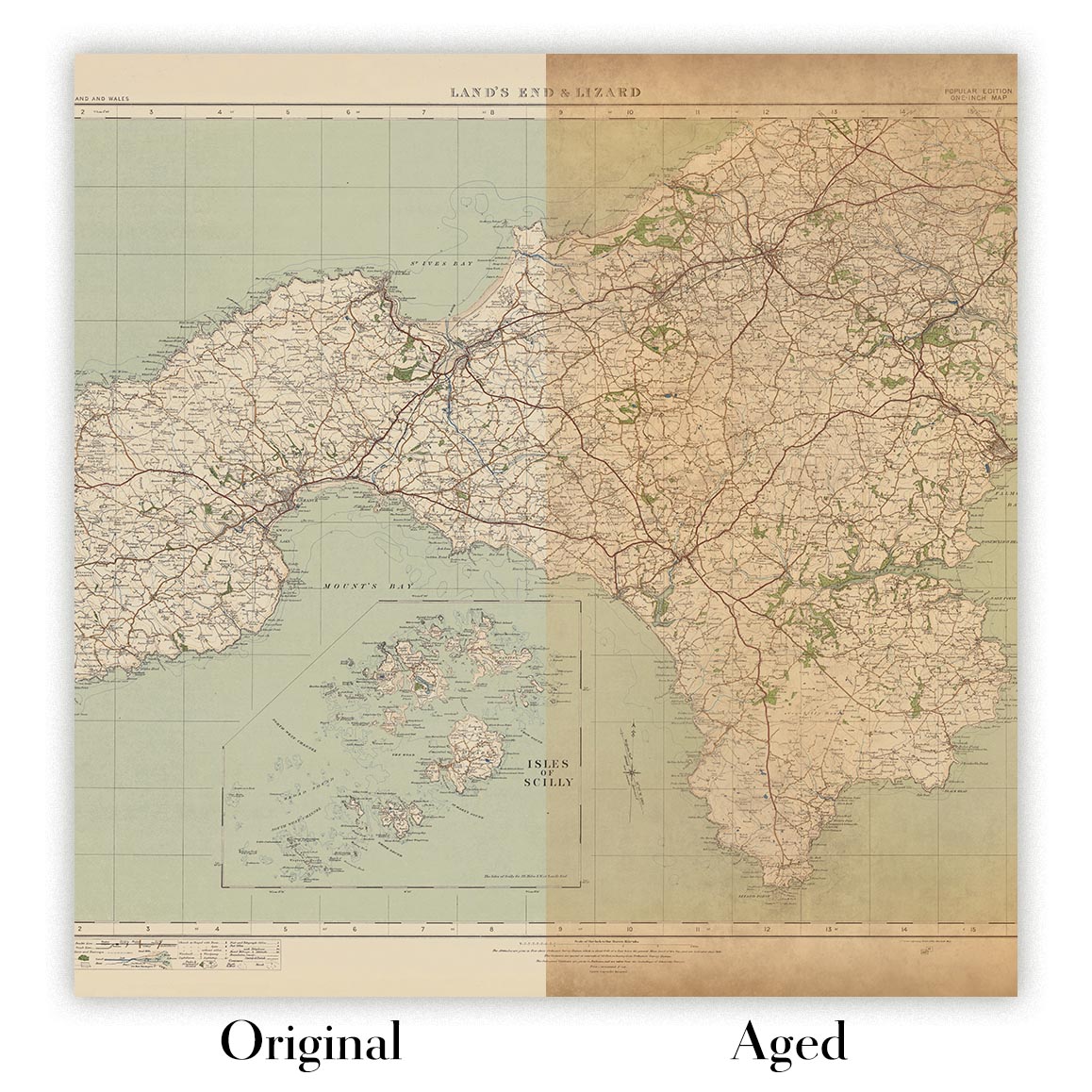
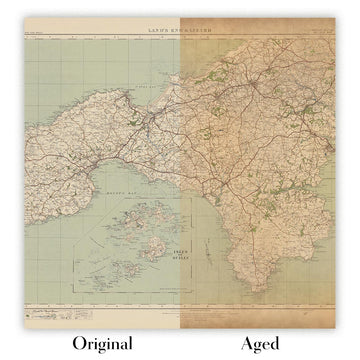
Envejecimiento del mapa
A lo largo de los años, los clientes me han preguntado cientos de veces si podían comprar un mapa que se viera uniforme. más viejo.
Bueno, ahora puedes hacerlo seleccionando Envejecido antes de agregar un mapa a tu carrito.
Todas las fotografías de productos que ve en esta página muestran el mapa en su forma original. Así es como se ve el mapa hoy.
Si selecciona Envejecido, envejeceré su mapa a mano, usando un proceso especial y único desarrollado a través de años de estudiar mapas antiguos, hablar con investigadores para comprender la química del envejecimiento del papel y, por supuesto... ¡mucha práctica!
Si no estás seguro, quédate con el color original del mapa. Si quieres algo un poco más oscuro y más viejo buscando, opte por Envejecido.
Llevamos restaurando y produciendo mapas y láminas artísticas desde 1984, y respondemos por cada pieza.
Todos los pedidos están cubiertos por nuestra garantía de 10 años y nuestra garantía de entrega sin daños. Si su pieza llega dañada, la sustituiremos o la volveremos a producir sin cargo alguno. Si cualquier otro aspecto no es correcto, contacte con nuestro equipo de taller y lo resolveremos con prontitud.
Consulte nuestra política de devoluciones y reembolsos para conocer todos los detalles.


