












Dandelion (Plate 35) by Pierre Joseph Redouté, 1805
Opera d’arte autentica
L’opera d’arte che stampiamo è fedelmente restaurata dalla fonte originale - solitamente un museo, una biblioteca o una collezione privata. Non sostituiamo mai, ridisegniamo o inventiamo l’opera dell’artista usando l’IA generativa.
Restaurata nel nostro laboratorio di Londra dall’opera originale del 1805 e stampata in qualità museale. Descrizione completa
L’offerta del Collezionista
Scegli due opere idonee e ricevi il 20% di sconto su entrambe. Scegline tre e quella al prezzo più basso è in omaggio, con un risparmio massimo del 33%.
Abbina liberamente mappe standard idonee e stampe d’arte fine art. Non è richiesto alcun codice; l’offerta viene applicata automaticamente al checkout.
Sono incluse le configurazioni standard su ordinazione. Sono esclusi formati su misura, design personalizzati e lavori su commissione.
Hai bisogno di consegne a indirizzi diversi? Contattaci prima di effettuare l’ordine.L’offerta del Collezionista
Scegli due opere idonee e ricevi il 20% di sconto su entrambe. Scegline tre e quella al prezzo più basso è in omaggio, con un risparmio massimo del 33%.
Abbina liberamente mappe standard idonee e stampe d’arte fine art. Non è richiesto alcun codice; l’offerta viene applicata automaticamente al checkout.
Sono incluse le configurazioni standard su ordinazione. Sono esclusi formati su misura, design personalizzati e lavori su commissione.
Hai bisogno di consegne a indirizzi diversi? Contattaci prima di effettuare l’ordine.
Opera d’arte autentica
L’opera d’arte che stampiamo è fedelmente restaurata dalla fonte originale - solitamente un museo, una biblioteca o una collezione privata. Non sostituiamo mai, ridisegniamo o inventiamo l’opera dell’artista usando l’IA generativa.
Restaurata dall’opera originale del 1805 e stampata in qualità museale. Descrizione completa
Scegli il formato
Scegli la finitura


(Maggiori informazioni)
Gift message & custom finish

If you want to add a gift message, or a finish (jigsaw, aluminium board, etc.) that is not available here, please request it in the "order note" when you check out.
Every order is custom made, so if you need the size adjusted slightly, or printed on an unusual material, just let us know. We've done thousands of custom orders over the years, so there's (almost) nothing we can't manage.
You can also contact us before you order, if you prefer!
La scelta di collezionisti, designer e di chi cerca un regalo speciale
Oltre 8.000 recensioni a 5 stelle


Pierre-Joseph Redouté’s La botanique de J. J. Rousseau, Plate 35, published in 1805, studies the dandelion at two conspicuously different moments: one...
Continua a leggerePierre-Joseph Redouté’s La botanique de J. J. Rousseau, Plate 35, published in 1805, studies the dandelion at two conspicuously different moments: one stem carries a compact yellow flower, while another supports a pale, spherical seed head. Their pairing turns a familiar plant into a concise account of transformation. Against the warm cream ground, the yellow, white and varied greens remain exceptionally clear, while the tall stems give the composition an elegant upward rhythm.
Redouté was among the most celebrated botanical artists of the late eighteenth and early nineteenth centuries, admired for reconciling scientific observation with compositional refinement. This plate belongs to a culture deeply engaged in describing and classifying the natural world through illustrated publications. Such images were not merely decorative accompaniments: their clarity helped botanical knowledge circulate among scholars, collectors and interested general readers. Produced in 1805, the study carries forward the Enlightenment conviction that close looking could be both intellectually useful and aesthetically rewarding.
A closer look
The flowering head occupies the upper left of the arrangement, its densely gathered petals forming a vivid disc of golden yellow. The colour is not entirely uniform: slight tonal shifts towards the petal tips prevent the bloom from appearing flat, while a gentle shadow beneath the head gives it weight. Its stem changes subtly from green to a paler tone as it approaches the flower, a modest detail that lends the structure convincing delicacy.
To the right, the seed head provides a softer counterpoint. Fine radiating lines build its rounded, almost weightless form, with individual seeds distinguishable within the white halo. Redouté sets this intricate structure apart from the flower rather than allowing the two forms to overlap heavily. The intervening cream space is therefore active: it isolates each stage for comparison while preserving the airy balance of the whole plate.
Below, sharply indented leaves spread out from the plant’s base. Their jagged silhouettes are more forceful than the slender stems above, anchoring the composition close to the lower edge. Pale veins thread through the green surfaces, accompanied by minute textural marks that suggest the leaves’ slightly coarse character. The eye travels naturally from this broad, grounded foliage upwards to the contrasting circular forms of bloom and seed head.
Context and significance
Botanical illustration depends upon selection as much as accuracy. Here, Redouté suppresses any distracting setting and gives the specimen ample negative space, allowing growth habit, leaf form and reproductive stages to be read almost at a glance. Yet the arrangement never feels like a diagram alone. The offset heads, curving stems and outward-reaching leaves create a measured visual cadence, demonstrating how scientific description and graceful design could coexist on the same page.
The choice of a dandelion is particularly engaging because it subjects an ordinary, easily overlooked plant to the same sustained attention traditionally afforded rarer specimens. Seen at this scale, its familiar features become newly intricate: the crowded architecture of the yellow bloom, the deeply cut foliage and the fragile geometry of the seed head. The plate’s enduring appeal lies in that union of recognition and discovery—a common plant made strange again through disciplined observation.
Choosing the right size and finish
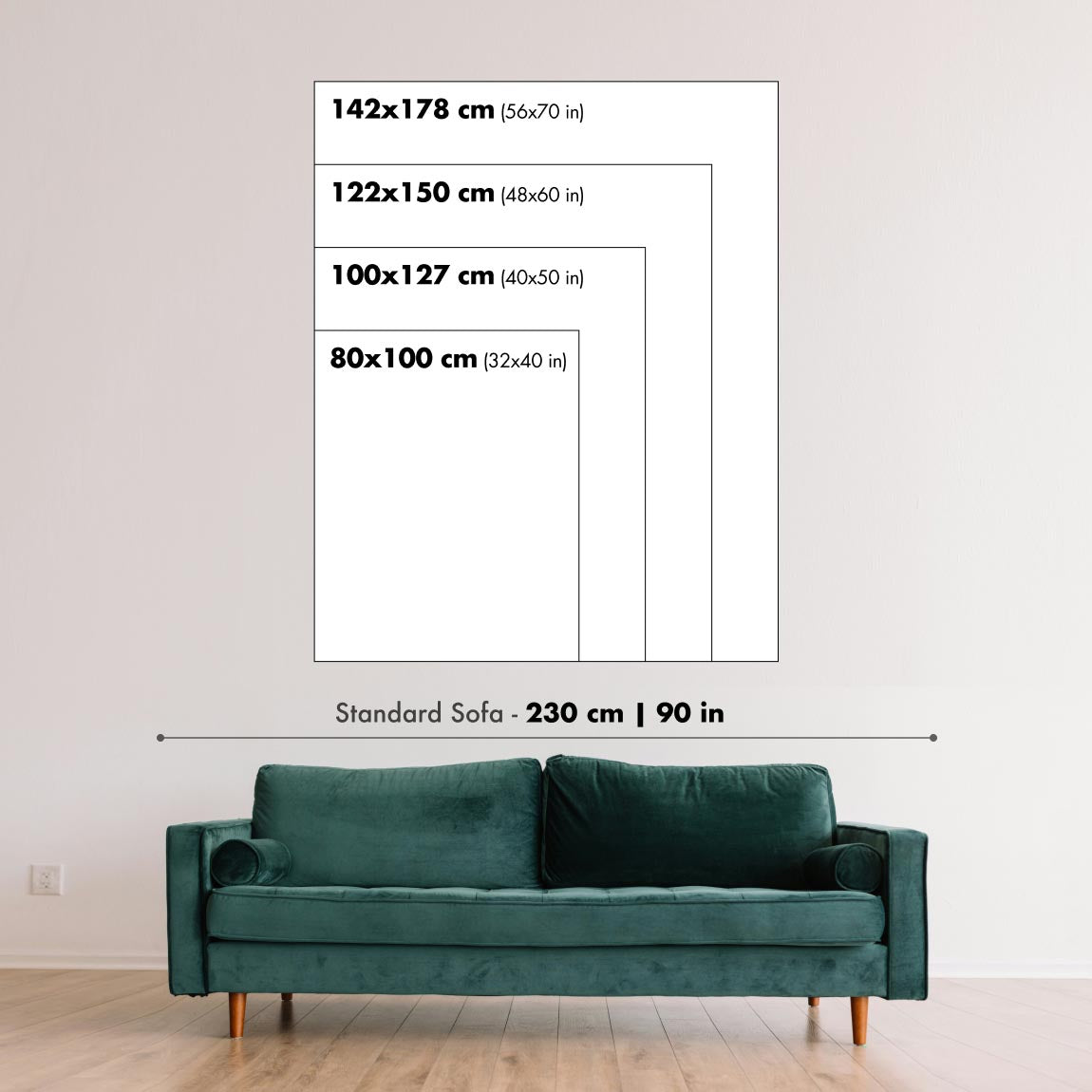
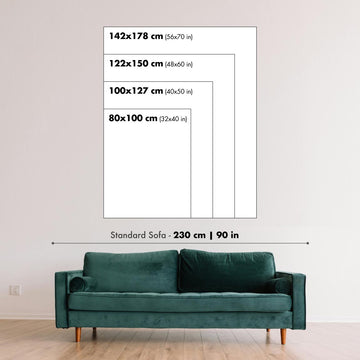
Artwork can feel intimate at smaller sizes and dramatically more architectural at larger ones. Use the room preview, model image and size guide to see how the proportions and scale will work in your space.
If you need an exact size, specialist framing or help planning a larger display, ask our workshop for advice.
The model in the listing images is holding the 18x24in (45x60cm) version of this art print.
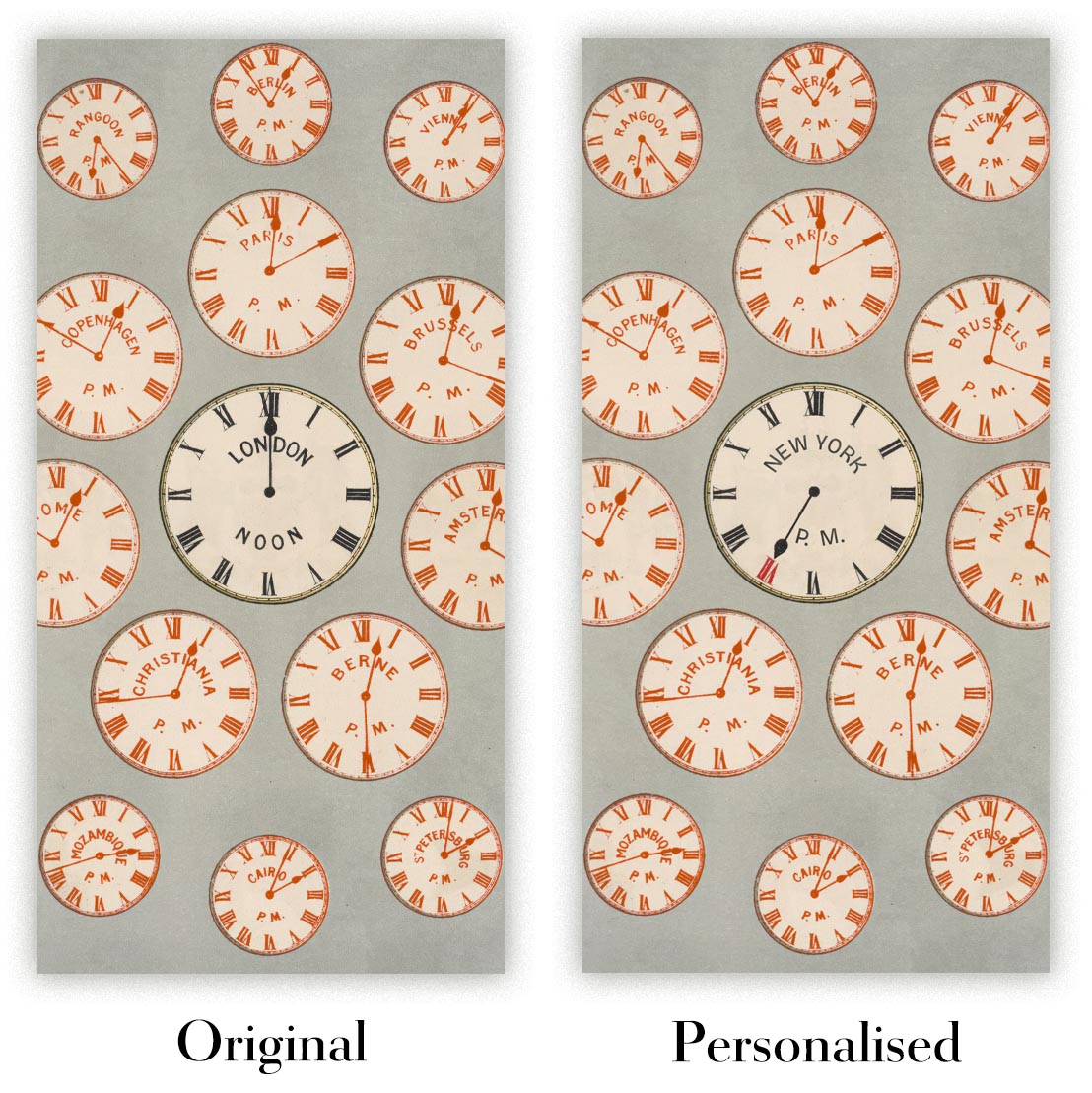
Where personalisation is available, you can add a short title or dedication, or one considered visual detail. See examples of personalised artwork.
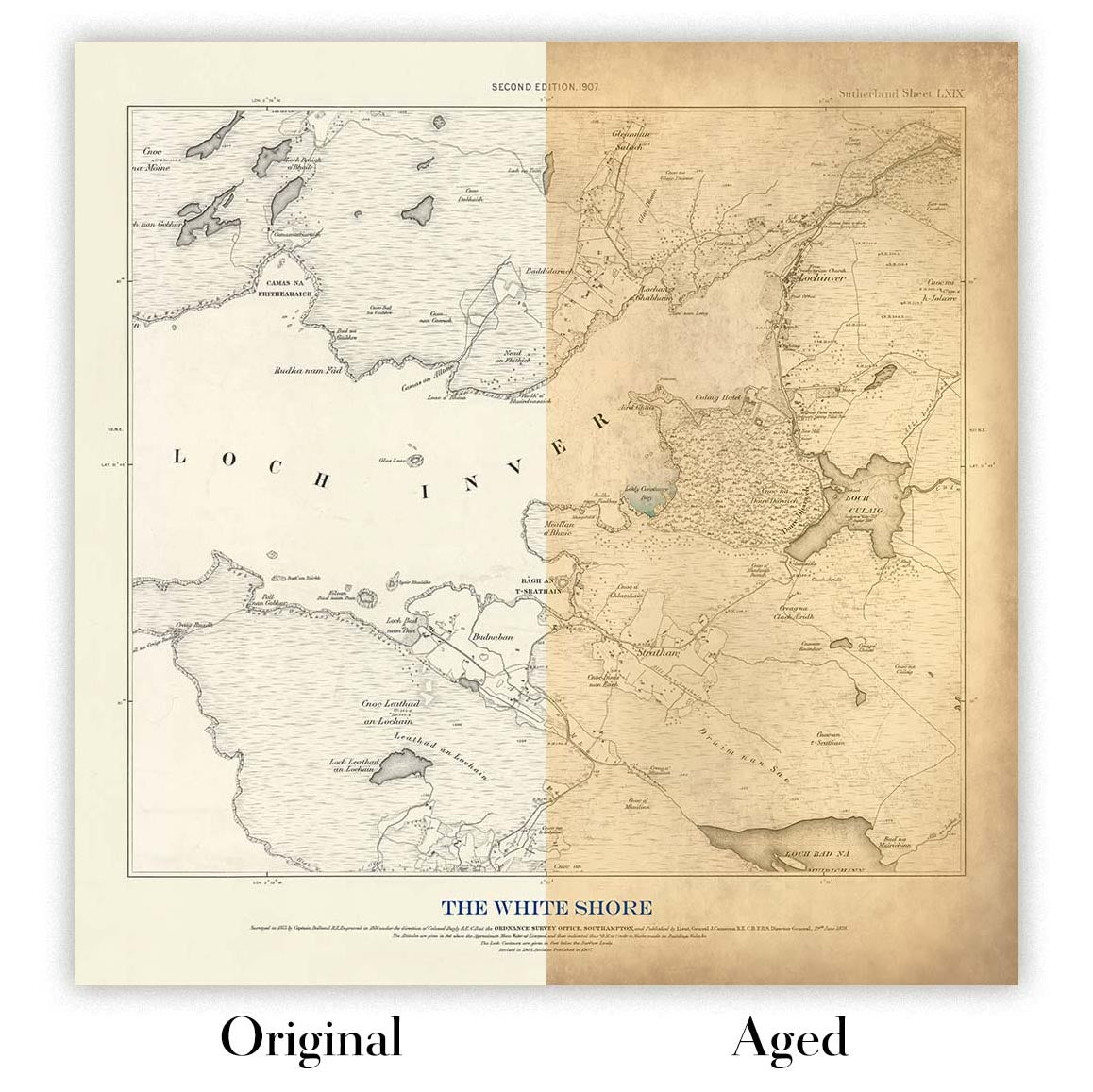
Choose Original to retain the colour and character of the source artwork, or Aged for a warmer, more antique appearance. See examples of our Aged artwork.
Every piece is produced to archival standards using fade-resistant pigment inks on acid-free matte art paper. Choose an art print, framed art print or framed canvas using the finish options above.
Framed art prints use crystal-clear optical acrylic for excellent clarity, lower weight and safer delivery than glass. Each piece arrives professionally framed and ready to hang.
Selected artworks can be produced at statement sizes up to 3 metres (10ft). Custom sizing and specialist framing are also available. If the exact option you need is not listed, contact our workshop.
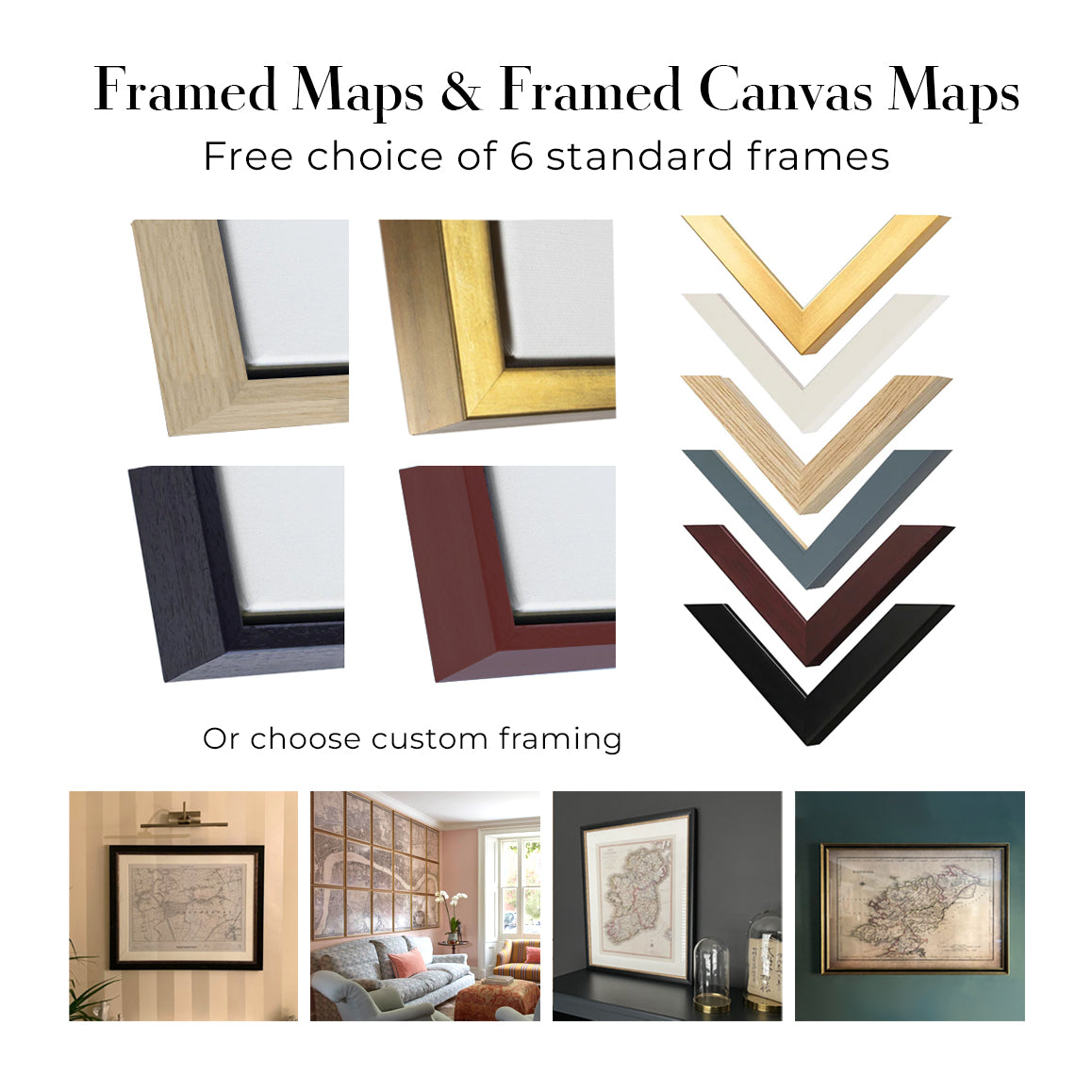
This artwork is also available as a float framed canvas, sometimes known as a shadow gap framed canvas or canvas floater. The work is printed on artist's cotton canvas and then stretched over a handmade box frame. We then "float" the canvas inside a wooden frame, which is available in a range of colours (black, dark brown, oak, antique gold and white). This is a wonderful way to present an art print without glazing in front. See some examples of float framed canvas art and explore the differences between my different finishes.
Pierre-Joseph Redouté’s La botanique de J. J. Rousseau, Plate 35, published in 1805, studies the dandelion at two conspicuously different moments: one stem carries a compact yellow flower, while another supports a pale, spherical seed head. Their pairing turns a familiar plant into a concise account of transformation. Against the warm cream ground, the yellow, white and varied greens remain exceptionally clear, while the tall stems give the composition an elegant upward rhythm.
Redouté was among the most celebrated botanical artists of the late eighteenth and early nineteenth centuries, admired for reconciling scientific observation with compositional refinement. This plate belongs to a culture deeply engaged in describing and classifying the natural world through illustrated publications. Such images were not merely decorative accompaniments: their clarity helped botanical knowledge circulate among scholars, collectors and interested general readers. Produced in 1805, the study carries forward the Enlightenment conviction that close looking could be both intellectually useful and aesthetically rewarding.
A closer look
The flowering head occupies the upper left of the arrangement, its densely gathered petals forming a vivid disc of golden yellow. The colour is not entirely uniform: slight tonal shifts towards the petal tips prevent the bloom from appearing flat, while a gentle shadow beneath the head gives it weight. Its stem changes subtly from green to a paler tone as it approaches the flower, a modest detail that lends the structure convincing delicacy.
To the right, the seed head provides a softer counterpoint. Fine radiating lines build its rounded, almost weightless form, with individual seeds distinguishable within the white halo. Redouté sets this intricate structure apart from the flower rather than allowing the two forms to overlap heavily. The intervening cream space is therefore active: it isolates each stage for comparison while preserving the airy balance of the whole plate.
Below, sharply indented leaves spread out from the plant’s base. Their jagged silhouettes are more forceful than the slender stems above, anchoring the composition close to the lower edge. Pale veins thread through the green surfaces, accompanied by minute textural marks that suggest the leaves’ slightly coarse character. The eye travels naturally from this broad, grounded foliage upwards to the contrasting circular forms of bloom and seed head.
Context and significance
Botanical illustration depends upon selection as much as accuracy. Here, Redouté suppresses any distracting setting and gives the specimen ample negative space, allowing growth habit, leaf form and reproductive stages to be read almost at a glance. Yet the arrangement never feels like a diagram alone. The offset heads, curving stems and outward-reaching leaves create a measured visual cadence, demonstrating how scientific description and graceful design could coexist on the same page.
The choice of a dandelion is particularly engaging because it subjects an ordinary, easily overlooked plant to the same sustained attention traditionally afforded rarer specimens. Seen at this scale, its familiar features become newly intricate: the crowded architecture of the yellow bloom, the deeply cut foliage and the fragile geometry of the seed head. The plate’s enduring appeal lies in that union of recognition and discovery—a common plant made strange again through disciplined observation.
Choosing the right size and finish
Artwork can feel intimate at smaller sizes and dramatically more architectural at larger ones. Use the room preview, model image and size guide to see how the proportions and scale will work in your space.
If you need an exact size, specialist framing or help planning a larger display, ask our workshop for advice.
The model in the listing images is holding the 18x24in (45x60cm) version of this art print.
Where personalisation is available, you can add a short title or dedication, or one considered visual detail. See examples of personalised artwork.
Choose Original to retain the colour and character of the source artwork, or Aged for a warmer, more antique appearance. See examples of our Aged artwork.
Every piece is produced to archival standards using fade-resistant pigment inks on acid-free matte art paper. Choose an art print, framed art print or framed canvas using the finish options above.
Framed art prints use crystal-clear optical acrylic for excellent clarity, lower weight and safer delivery than glass. Each piece arrives professionally framed and ready to hang.
Selected artworks can be produced at statement sizes up to 3 metres (10ft). Custom sizing and specialist framing are also available. If the exact option you need is not listed, contact our workshop.
This artwork is also available as a float framed canvas, sometimes known as a shadow gap framed canvas or canvas floater. The work is printed on artist's cotton canvas and then stretched over a handmade box frame. We then "float" the canvas inside a wooden frame, which is available in a range of colours (black, dark brown, oak, antique gold and white). This is a wonderful way to present an art print without glazing in front. See some examples of float framed canvas art and explore the differences between my different finishes.
Molte delle nostre mappe e stampe d’arte vengono scelte come regali premurosi per case, uffici, studi e luoghi significativi.
Scegli un’opzione incorniciata per il regalo più semplice, pronto da appendere, oppure scegli una stampa non incorniciata se il destinatario preferisce selezionare la propria cornice.
Realizziamo gli ordini localmente in 23 paesi in tutto il mondo, così i regali possono spesso essere prodotti vicino al destinatario. Questo li aiuta ad arrivare più rapidamente, a viaggiare in maggiore sicurezza e a evitare sorprese legate a dazi doganali o di importazione.
- Possiamo consegnare direttamente al destinatario
- I pezzi incorniciati arrivano pronti da appendere
- Le stampe non incorniciate sono accuratamente imballate in un robusto tubo protettivo
- Quasi ogni ordine viene realizzato localmente, per regali più rapidi e sicuri
- Il reso entro 90 giorni dà al destinatario il tempo di decidere
Se non sei sicuro di cosa scegliere, ti invitiamo a contattarci. Possiamo aiutarti a scegliere la mappa, il formato, la finitura o l’opzione di consegna più adatti.
Most orders are made locally and delivered in around 2–3 working days, depending on the product, size and destination.
We print and frame maps and artwork in 24 countries around the world, so your order is usually made close to you or your recipient. That means faster delivery, less time in transit, and no customs or import duty surprises.
Personalised and customised pieces usually take an extra 1–2 working days, because we prepare your design and send it to you for approval before printing.
Very large framed orders can take a little longer, as they need extra care in production and delivery.
Every order is carefully packaged: unframed prints are sent in a strong protective tube, while framed pieces are securely packed with protective materials around the frame.
If you need your order by a particular date, please contact us before ordering. We’ll check the best production route and delivery option for your location.
Express delivery is available at checkout for most countries. Next-day delivery is available in the UK, US, Singapore and the UAE.
Your order is covered by our 90-day returns policy and 10-year guarantee.
Our standard frame is a gallery-style black ash hardwood frame, with a simple, modern look. It is approximately 20mm (0.8in) wide. You can also view some lovely customer photos of framed maps and art.
We use super-clear acrylic glazing, also known as Perspex or Acrylite, instead of traditional glass. It is lighter, safer, and has lower reflectivity, giving the artwork a clearer, cleaner appearance.
Six standard frame colours are available at no extra cost: black, dark brown, dark grey, oak, white, and antique gold. Custom framing and mounting/matting is also available for customers looking for something more specific.
Most maps, art prints, and illustrations are also available as a framed canvas. We use matte cotton canvas, stretch it over a sustainably sourced wooden box frame, and then float the piece within a wooden outer frame. The finished result is beautifully presented, with no glazing between you and the artwork.
All frames are supplied ready to hang, with either string or brackets fitted to the back. Very large frames will include heavy-duty hanging plates and/or a mounting baton. If you have any questions, please get in touch.
We can also supply old maps and artwork on canvas, foam board, cotton rag, and other materials.
If you would prefer to frame your map or artwork yourself, please read our size guide before ordering.
Lavoriamo con interior designer, realtà del settore hospitality, professionisti del settore immobiliare, uffici e acquirenti aziendali per singoli pezzi e progetti coordinati di più ampia portata.
Quest'opera può essere adattata a una specifica parete, stanza o progetto e il nostro laboratorio può aiutare a coordinare dimensioni, materiale e incorniciatura prima della produzione.
- Dimensioni precise, extra-large e su misura
- Incorniciatura personalizzata, montaggio e materiali alternativi
- Pezzi coordinati per più stanze o sedi
- Personalizzazione dell'opera, per regolarne il colore e lo stile
- Consulenza su arte e incorniciatura da parte del nostro laboratorio
- Produzione locale per progetti in tutto il mondo
Ogni stampa artistica restaurata inizia dall’opera originale dell’artista—mai da una sostituzione generata dall’IA.
Il nostro studio di Londra lavora a partire da materiali di origine accuratamente selezionati da musei, biblioteche, archivi e collezioni private. Restauriamo i danni dovuti all’età, i colori sbiaditi e le imperfezioni di riproduzione, preservando al contempo la composizione, il tratto del pennello, il segno, la texture e il carattere d’epoca dell’artista.
Non utilizziamo l’IA generativa per ridisegnare, reinterpretare o inventare l’opera. Il restauro digitale viene impiegato solo per recuperare e riprodurre l’opera originale nel modo più fedele possibile.
Una volta restaurata, l’opera master viene preparata per il formato e la finitura da te scelti. Il tuo pezzo viene quindi stampato e, se selezionato, incorniciato vicino alla destinazione di consegna.
Le nostre stampe artistiche giclée utilizzano carta opaca archivistica senza acidi da 200 g/m² e inchiostri pigmentati resistenti allo sbiadimento, per una finitura ricca e di qualità museale. Le stampe artistiche incorniciate utilizzano acrilico ottico cristallino e arrivano pronte da appendere.
Sono disponibili anche tele incorniciate ed edizioni speciali su cotone-rag. Scopri di più sui nostri materiali e finiture.
Restauriamo e produciamo mappe e stampe d’arte dal 1984, e garantiamo personalmente ogni pezzo.
Ogni ordine è coperto dalla nostra garanzia di 10 anni e dalla garanzia di consegna senza danni. Se il vostro pezzo arriva danneggiato, lo sostituiremo o lo rifaremo gratuitamente. Se qualsiasi altro aspetto non fosse conforme, contattate il nostro team di laboratorio e provvederemo tempestivamente a risolvere il problema.
Per tutti i dettagli, consultate la nostra politica su resi e rimborsi.


