












Antica carta forestale della Virginia Occidentale di Sargent, 1882: Charleston, Huntington, fiume Ohio, Allegheny, Spruce Knob
Restaurata nel nostro laboratorio di Londra dalla mappa originale del 1882 e stampata in qualità museale. Descrizione completa
L’offerta del Collezionista
Scegli due opere idonee e ricevi il 20% di sconto su entrambe. Scegline tre e quella al prezzo più basso è in omaggio, con un risparmio massimo del 33%.
Abbina liberamente mappe standard idonee e stampe d’arte fine art. Non è richiesto alcun codice; l’offerta viene applicata automaticamente al checkout.
Sono incluse le configurazioni standard su ordinazione. Sono esclusi formati su misura, design personalizzati e lavori su commissione.
Hai bisogno di consegne a indirizzi diversi? Contattaci prima di effettuare l’ordine.L’offerta del Collezionista
Scegli due opere idonee e ricevi il 20% di sconto su entrambe. Scegline tre e quella al prezzo più basso è in omaggio, con un risparmio massimo del 33%.
Abbina liberamente mappe standard idonee e stampe d’arte fine art. Non è richiesto alcun codice; l’offerta viene applicata automaticamente al checkout.
Sono incluse le configurazioni standard su ordinazione. Sono esclusi formati su misura, design personalizzati e lavori su commissione.
Hai bisogno di consegne a indirizzi diversi? Contattaci prima di effettuare l’ordine.Restaurata dalla mappa originale del 1882 e stampata in qualità museale. Descrizione completa
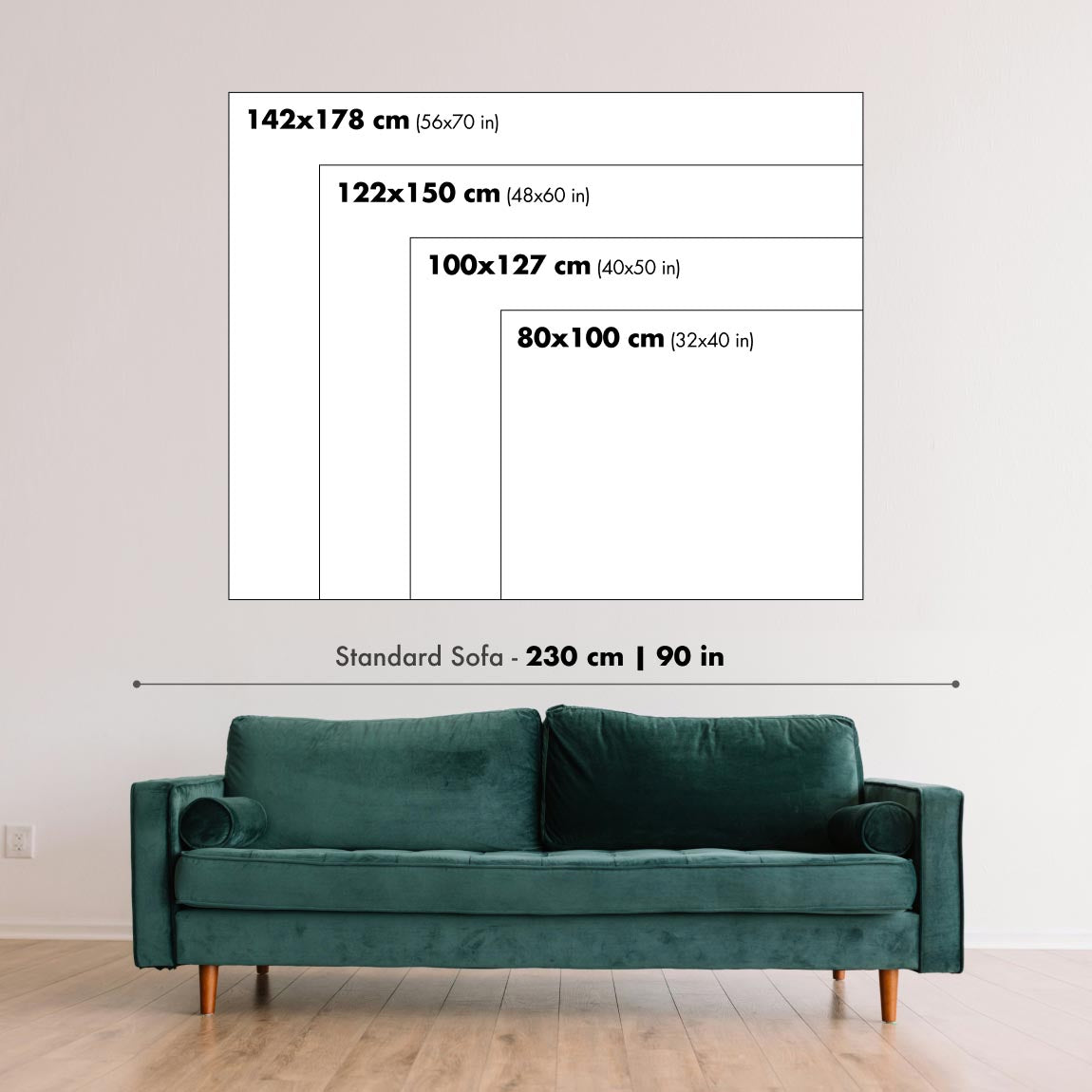
Scegli il formato
Scegli la finitura


(Maggiori informazioni)
Gift message & custom finish

If you want to add a gift message, or a finish (jigsaw, aluminium board, etc.) that is not available here, please request it in the "order note" when you check out.
Every order is custom made, so if you need the size adjusted slightly, or printed on an unusual material, just let us know. We've done thousands of custom orders over the years, so there's (almost) nothing we can't manage.
You can also contact us before you order, if you prefer!
Porta a casa un pezzo di storia
Oltre 8.000 recensioni a 5 stelle

Mappa del West Virginia: Showing the Distribution of Forests è un luminoso ritratto dello Stato del 1882 concepito da Charles S. Sargent...
Continua a leggereMappa del West Virginia: Showing the Distribution of Forests è un luminoso ritratto dello Stato del 1882 concepito da Charles S. Sargent per il Census Office del Department of the Interior e stampato da Julius Bien & Co. Lith. Una tavolozza rigorosa suddivide i monti in zone di pino, abete rosso e latifoglie, ciascuna tonalità richiamata in una leggenda limpida che rende la selvicoltura immediatamente leggibile. Isolinee quasi di tipo altimetrico conferiscono profondità al rilievo, guidando lo sguardo lungo gli spartiacque e oltre la spettacolare muraglia degli Allegheny. I confini delle contee, un blocco del titolo schietto e una scala pratica coniugano ordine amministrativo e intenti scientifici. Più che una guida per gli estimatori del legname, questa è una lettura sinottica di una comunità montuosa, colta in un momento di svolta della sua ascesa industriale.
Charles Sprague Sargent—pioniere della dendrologia e primo sostenitore della conservazione—utilizzò il Decimo Censimento per quantificare le foreste americane con un rigore senza precedenti, e questa mappa distilla le evidenze del West Virginia di quel programma. Il suo metodo traduce relazioni di campo e conoscenze locali in categorie ampie e intellegibili che bilanciano precisione ed economia cartografica. La collaborazione con Julius Bien, maestro dell’epoca nella litografia a colori per i rilievi federali, produce una chiarezza notevole: linee nitide, campiture uniformi e simbologia leggibile che premiano tanto lo studio quanto l’esposizione. Quale strumento di politica e diagramma scientifico, occupava la frontiera pratica in cui le statistiche incontravano il paesaggio, orientando le decisioni in materia di disboscamento, trasporti e tutela, mentre affinava la comprensione pubblica di una risorsa fragile.
Ecologia e fisiografia si intrecciano strettamente lungo questo foglio. Ampie latifoglie ricoprono le pianure dell’Ohio River e gli altopiani dissezionati del centro, mentre il pino segue le creste di arenaria che scendono a gradini verso ovest dal versante dell’Allegheny Front e si ondulano attraverso la Ridge-and-Valley. In alto, su Cheat Mountain e attorno a Spruce Knob, enclavi di abete rosso coronano le cime più fredde, la loro distribuzione evidenziata in concentrazioni intense di colore. Le isolinee si leggono come un modello di rilievo, delineando la cerniera in cui lo Stato passa dalle sorgenti del Potomac ai bacini del Monongahela, del Kanawha e del New River. I principali fiumi—the Ohio, Kanawha, Monongahela, Gauley, Elk, Greenbrier e Potomac—scavano corridoi che hanno plasmato sia gli spostamenti sia la macinazione, mentre la precisa griglia delle contee colloca questi sistemi naturali entro i confini civici.
Su questo fondale fisiografico, la mappa colloca i centri in crescita del West Virginia e i corridoi del commercio. Charleston ancora le risorse di latifoglie della valle del Kanawha; Huntington, nata da ferrovia e fiume, convoglia il legname lungo l’Ohio; Wheeling e Parkersburg si presentano come più antichi empori fluviali; Morgantown e Fairmont, sul Monongahela, intrecciano le foreste dell’altopiano con l’industria del Nord; e Weirton segna il canale del Panhandle stretto verso i mercati di Pittsburgh. Le aree di minore copertura forestale sono evidenziate con chiarezza laddove asce, fattorie e miniere convergono lungo i fondovalle e i terrazzi coltivati. La scala calibrata e il dettaglio delle contee consentivano ai boscaioli di stimare appezzamenti e percorsi, mentre i riformatori leggevano la stessa simbologia come un monito precoce, alludendo ai costi di un prelievo incontrollato.
Storicamente, il foglio cattura un momento immediatamente precedente il taglio più intensivo della regione, preservando una base di riferimento rispetto alla quale la trasformazione successiva può essere misurata. La sua logica cromatica guida l’occhio dai ricchi latifoglie delle baie alle chiome di abete rosso battute dal vento, mentre le isoipse traducono la pendenza in strategia, rivelando perché alcuni versanti rimasero boscosi e altri cedettero a ferrovia e segheria. In quanto strumento federale reso con finezza artigianale, esso fa da ponte tra scienza e arte del governo, enumerando la ricchezza naturale pur implicandone la finitezza. Oggi si presenta come documento primario nelle intrecciate storie industriali e ambientali del West Virginia: una mappa chiarificatrice delle foreste, un argomentato tributo al loro valore e una testimonianza di montagne che plasmano ogni progetto umano.
Città e località su questa mappa
- Charleston
- Huntington
- Morgantown
- Parkersburg
- Wheeling
- Weirton
- Fairmont
Caratteristiche e punti di riferimento notevoli
- Legenda che indica i tipi di alberi (pino, abete rosso, latifoglie)
- Isoipse che rappresentano la profondità topografica
- Aree di ridotta copertura forestale
- Codifica cromatica per distinguere facilmente tra i tipi di foresta
- Riquadro del titolo con lo scopo della mappa
- Scala per il contesto di distanza e area
- Dettagli cartografici che mostrano i confini delle contee e gli elementi geografici
Contesto storico e di design
- Realizzata nel 1882 come litografia a colori stampata da Julius Bien & Co. Lith.
- Compilata da Charles S. Sargent sotto il Census Office del Department of the Interior; notevole per il lavoro forestale e di conservazione di fine XIX secolo.
- La vivace colorazione delimita i diversi tipi di foresta; le isoipse valorizzano la rappresentazione topografica.
- Enfatizza la distribuzione forestale legata all’industria del legname e alla conservazione ecologica.
- Documenta le risorse naturali del West Virginia e l’impatto dell’industria del legname, mettendo in luce lo sviluppo economico della fine del XIX secolo.
- Si concentra sullo stato del West Virginia e sulla sua variegata copertura forestale.
Si prega di controllare attentamente le immagini per assicurarsi che su questa mappa sia mostrata una specifica città o località. Potete anche contattarci e chiedere di verificare la mappa per voi.
Questa mappa è bellissima in qualsiasi formato, ma consiglio sempre di scegliere una dimensione maggiore se avete spazio. In questo modo potrete distinguere facilmente tutti i dettagli.
Questa mappa è straordinaria fino a dimensioni di 50in (125cm). Se state cercando una mappa più grande, per favore contattateci.
Il modello nelle immagini dell’inserzione tiene in mano la versione 16x20in (40x50cm) di questa mappa.
La quinta immagine dell’inserzione mostra un esempio del mio servizio di personalizzazione delle mappe.
Se state cercando qualcosa di leggermente diverso, date un’occhiata alla mia collezione delle migliori mappe antiche per vedere se qualcos’altro attira la vostra attenzione.
Per favore contattatemi per verificare se una certa località, punto di riferimento o caratteristica è mostrata su questa mappa.
Questo sarebbe un meraviglioso regalo di compleanno, Natale, Festa del Papà, per un collega che lascia il lavoro, anniversario o inaugurazione casa per qualcuno proveniente dalle aree coperte da questa mappa.
Questa mappa è disponibile come stampa giclée su carta opaca archivistica senza acidi, oppure può essere acquistata già incorniciata. La cornice è una semplice e piacevole cornice nera che si adatta alla maggior parte degli ambienti. Vi preghiamo di contattarci se desiderate un colore o un materiale diverso per la cornice. Le mie cornici sono protette con acrilico museale ultra-trasparente (perspex/acrylite), molto meno riflettente del vetro, più sicuro e che arriverà sempre in perfette condizioni.
This map is also available as a float framed canvas, sometimes known as a shadow gap framed canvas or canvas floater. The map is printed on artist's cotton canvas and then stretched over a handmade box frame. We then "float" the canvas inside a wooden frame, which is available in a range of colours (black, dark brown, oak, antique gold and white). This is a wonderful way to present a map without glazing in front. See some examples of float framed canvas maps and explore the differences between my different finishes.
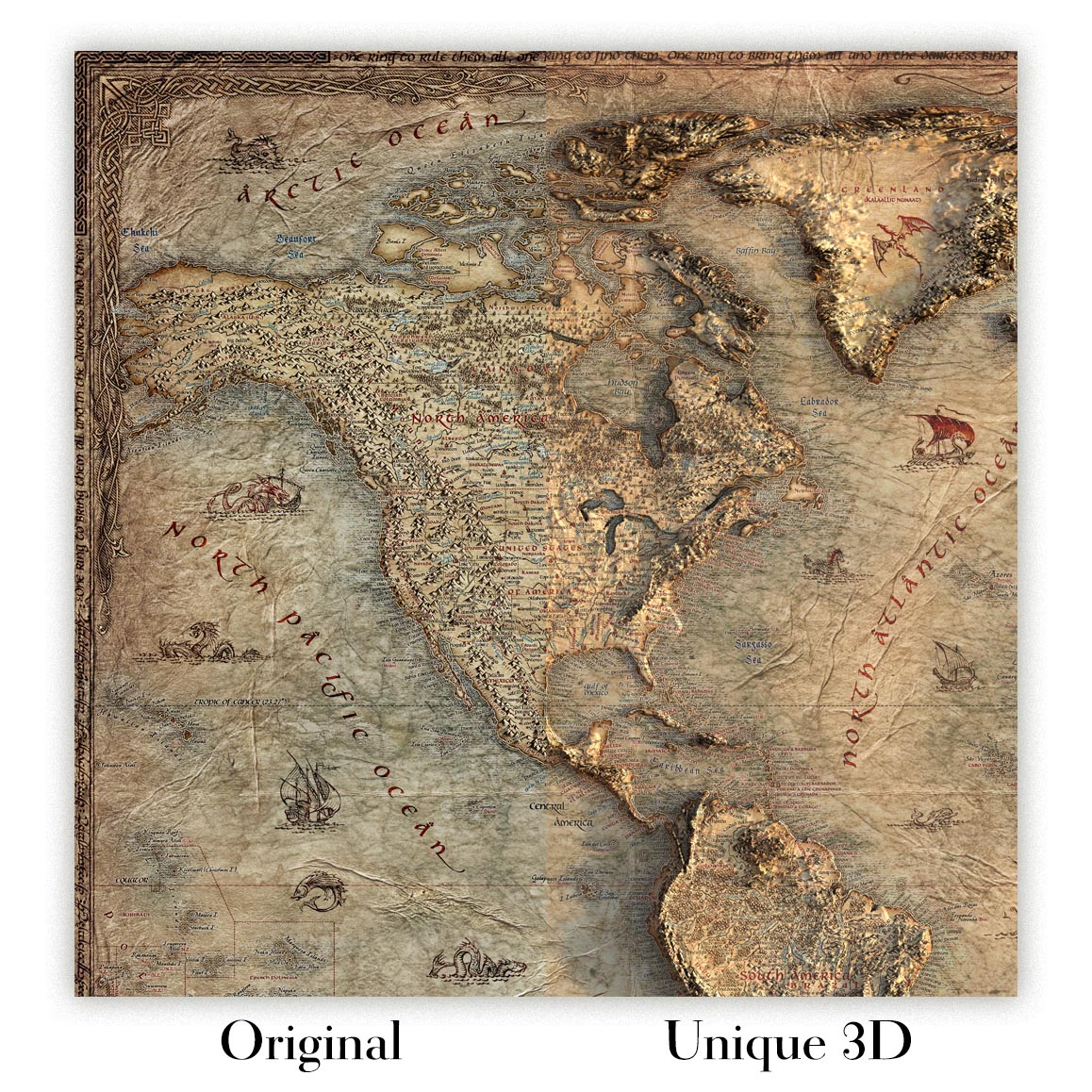
For something truly unique, this map is also available in "Unique 3D", our trademarked process that dramatically transforms the map so that it has a wonderful sense of depth. We combine the original map with detailed topography and elevation data, so that mountains and the terrain really "pop". For more info and examples of 3D maps, check my Unique 3D page.
Mappa del West Virginia: Showing the Distribution of Forests è un luminoso ritratto dello Stato del 1882 concepito da Charles S. Sargent per il Census Office del Department of the Interior e stampato da Julius Bien & Co. Lith. Una tavolozza rigorosa suddivide i monti in zone di pino, abete rosso e latifoglie, ciascuna tonalità richiamata in una leggenda limpida che rende la selvicoltura immediatamente leggibile. Isolinee quasi di tipo altimetrico conferiscono profondità al rilievo, guidando lo sguardo lungo gli spartiacque e oltre la spettacolare muraglia degli Allegheny. I confini delle contee, un blocco del titolo schietto e una scala pratica coniugano ordine amministrativo e intenti scientifici. Più che una guida per gli estimatori del legname, questa è una lettura sinottica di una comunità montuosa, colta in un momento di svolta della sua ascesa industriale.
Charles Sprague Sargent—pioniere della dendrologia e primo sostenitore della conservazione—utilizzò il Decimo Censimento per quantificare le foreste americane con un rigore senza precedenti, e questa mappa distilla le evidenze del West Virginia di quel programma. Il suo metodo traduce relazioni di campo e conoscenze locali in categorie ampie e intellegibili che bilanciano precisione ed economia cartografica. La collaborazione con Julius Bien, maestro dell’epoca nella litografia a colori per i rilievi federali, produce una chiarezza notevole: linee nitide, campiture uniformi e simbologia leggibile che premiano tanto lo studio quanto l’esposizione. Quale strumento di politica e diagramma scientifico, occupava la frontiera pratica in cui le statistiche incontravano il paesaggio, orientando le decisioni in materia di disboscamento, trasporti e tutela, mentre affinava la comprensione pubblica di una risorsa fragile.
Ecologia e fisiografia si intrecciano strettamente lungo questo foglio. Ampie latifoglie ricoprono le pianure dell’Ohio River e gli altopiani dissezionati del centro, mentre il pino segue le creste di arenaria che scendono a gradini verso ovest dal versante dell’Allegheny Front e si ondulano attraverso la Ridge-and-Valley. In alto, su Cheat Mountain e attorno a Spruce Knob, enclavi di abete rosso coronano le cime più fredde, la loro distribuzione evidenziata in concentrazioni intense di colore. Le isolinee si leggono come un modello di rilievo, delineando la cerniera in cui lo Stato passa dalle sorgenti del Potomac ai bacini del Monongahela, del Kanawha e del New River. I principali fiumi—the Ohio, Kanawha, Monongahela, Gauley, Elk, Greenbrier e Potomac—scavano corridoi che hanno plasmato sia gli spostamenti sia la macinazione, mentre la precisa griglia delle contee colloca questi sistemi naturali entro i confini civici.
Su questo fondale fisiografico, la mappa colloca i centri in crescita del West Virginia e i corridoi del commercio. Charleston ancora le risorse di latifoglie della valle del Kanawha; Huntington, nata da ferrovia e fiume, convoglia il legname lungo l’Ohio; Wheeling e Parkersburg si presentano come più antichi empori fluviali; Morgantown e Fairmont, sul Monongahela, intrecciano le foreste dell’altopiano con l’industria del Nord; e Weirton segna il canale del Panhandle stretto verso i mercati di Pittsburgh. Le aree di minore copertura forestale sono evidenziate con chiarezza laddove asce, fattorie e miniere convergono lungo i fondovalle e i terrazzi coltivati. La scala calibrata e il dettaglio delle contee consentivano ai boscaioli di stimare appezzamenti e percorsi, mentre i riformatori leggevano la stessa simbologia come un monito precoce, alludendo ai costi di un prelievo incontrollato.
Storicamente, il foglio cattura un momento immediatamente precedente il taglio più intensivo della regione, preservando una base di riferimento rispetto alla quale la trasformazione successiva può essere misurata. La sua logica cromatica guida l’occhio dai ricchi latifoglie delle baie alle chiome di abete rosso battute dal vento, mentre le isoipse traducono la pendenza in strategia, rivelando perché alcuni versanti rimasero boscosi e altri cedettero a ferrovia e segheria. In quanto strumento federale reso con finezza artigianale, esso fa da ponte tra scienza e arte del governo, enumerando la ricchezza naturale pur implicandone la finitezza. Oggi si presenta come documento primario nelle intrecciate storie industriali e ambientali del West Virginia: una mappa chiarificatrice delle foreste, un argomentato tributo al loro valore e una testimonianza di montagne che plasmano ogni progetto umano.
Città e località su questa mappa
- Charleston
- Huntington
- Morgantown
- Parkersburg
- Wheeling
- Weirton
- Fairmont
Caratteristiche e punti di riferimento notevoli
- Legenda che indica i tipi di alberi (pino, abete rosso, latifoglie)
- Isoipse che rappresentano la profondità topografica
- Aree di ridotta copertura forestale
- Codifica cromatica per distinguere facilmente tra i tipi di foresta
- Riquadro del titolo con lo scopo della mappa
- Scala per il contesto di distanza e area
- Dettagli cartografici che mostrano i confini delle contee e gli elementi geografici
Contesto storico e di design
- Realizzata nel 1882 come litografia a colori stampata da Julius Bien & Co. Lith.
- Compilata da Charles S. Sargent sotto il Census Office del Department of the Interior; notevole per il lavoro forestale e di conservazione di fine XIX secolo.
- La vivace colorazione delimita i diversi tipi di foresta; le isoipse valorizzano la rappresentazione topografica.
- Enfatizza la distribuzione forestale legata all’industria del legname e alla conservazione ecologica.
- Documenta le risorse naturali del West Virginia e l’impatto dell’industria del legname, mettendo in luce lo sviluppo economico della fine del XIX secolo.
- Si concentra sullo stato del West Virginia e sulla sua variegata copertura forestale.
Si prega di controllare attentamente le immagini per assicurarsi che su questa mappa sia mostrata una specifica città o località. Potete anche contattarci e chiedere di verificare la mappa per voi.
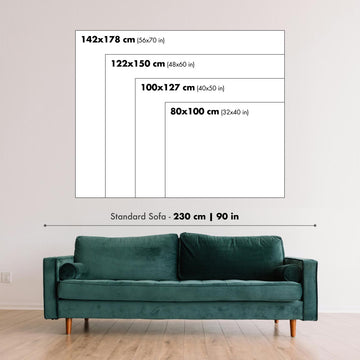
Questa mappa è bellissima in qualsiasi formato, ma consiglio sempre di scegliere una dimensione maggiore se avete spazio. In questo modo potrete distinguere facilmente tutti i dettagli.
Questa mappa è straordinaria fino a dimensioni di 50in (125cm). Se state cercando una mappa più grande, per favore contattateci.
Il modello nelle immagini dell’inserzione tiene in mano la versione 16x20in (40x50cm) di questa mappa.
La quinta immagine dell’inserzione mostra un esempio del mio servizio di personalizzazione delle mappe.
Se state cercando qualcosa di leggermente diverso, date un’occhiata alla mia collezione delle migliori mappe antiche per vedere se qualcos’altro attira la vostra attenzione.
Per favore contattatemi per verificare se una certa località, punto di riferimento o caratteristica è mostrata su questa mappa.
Questo sarebbe un meraviglioso regalo di compleanno, Natale, Festa del Papà, per un collega che lascia il lavoro, anniversario o inaugurazione casa per qualcuno proveniente dalle aree coperte da questa mappa.
Questa mappa è disponibile come stampa giclée su carta opaca archivistica senza acidi, oppure può essere acquistata già incorniciata. La cornice è una semplice e piacevole cornice nera che si adatta alla maggior parte degli ambienti. Vi preghiamo di contattarci se desiderate un colore o un materiale diverso per la cornice. Le mie cornici sono protette con acrilico museale ultra-trasparente (perspex/acrylite), molto meno riflettente del vetro, più sicuro e che arriverà sempre in perfette condizioni.
This map is also available as a float framed canvas, sometimes known as a shadow gap framed canvas or canvas floater. The map is printed on artist's cotton canvas and then stretched over a handmade box frame. We then "float" the canvas inside a wooden frame, which is available in a range of colours (black, dark brown, oak, antique gold and white). This is a wonderful way to present a map without glazing in front. See some examples of float framed canvas maps and explore the differences between my different finishes.
For something truly unique, this map is also available in "Unique 3D", our trademarked process that dramatically transforms the map so that it has a wonderful sense of depth. We combine the original map with detailed topography and elevation data, so that mountains and the terrain really "pop". For more info and examples of 3D maps, check my Unique 3D page.
Molte delle nostre mappe e stampe d’arte vengono scelte come regali premurosi per case, uffici, studi e luoghi significativi.
Scegli un’opzione incorniciata per il regalo più semplice, pronto da appendere, oppure scegli una stampa non incorniciata se il destinatario preferisce selezionare la propria cornice.
Realizziamo gli ordini localmente in 23 paesi in tutto il mondo, così i regali possono spesso essere prodotti vicino al destinatario. Questo li aiuta ad arrivare più rapidamente, a viaggiare in maggiore sicurezza e a evitare sorprese legate a dazi doganali o di importazione.
- Possiamo consegnare direttamente al destinatario
- I pezzi incorniciati arrivano pronti da appendere
- Le stampe non incorniciate sono accuratamente imballate in un robusto tubo protettivo
- Quasi ogni ordine viene realizzato localmente, per regali più rapidi e sicuri
- Il reso entro 90 giorni dà al destinatario il tempo di decidere
Se non sei sicuro di cosa scegliere, ti invitiamo a contattarci. Possiamo aiutarti a scegliere la mappa, il formato, la finitura o l’opzione di consegna più adatti.
Most orders are made locally and delivered in around 2–3 working days, depending on the product, size and destination.
We print and frame maps and artwork in 24 countries around the world, so your order is usually made close to you or your recipient. That means faster delivery, less time in transit, and no customs or import duty surprises.
Personalised and customised pieces usually take an extra 1–2 working days, because we prepare your design and send it to you for approval before printing.
Very large framed orders can take a little longer, as they need extra care in production and delivery.
Every order is carefully packaged: unframed prints are sent in a strong protective tube, while framed pieces are securely packed with protective materials around the frame.
If you need your order by a particular date, please contact us before ordering. We’ll check the best production route and delivery option for your location.
Express delivery is available at checkout for most countries. Next-day delivery is available in the UK, US, Singapore and the UAE.
Your order is covered by our 90-day returns policy and 10-year guarantee.
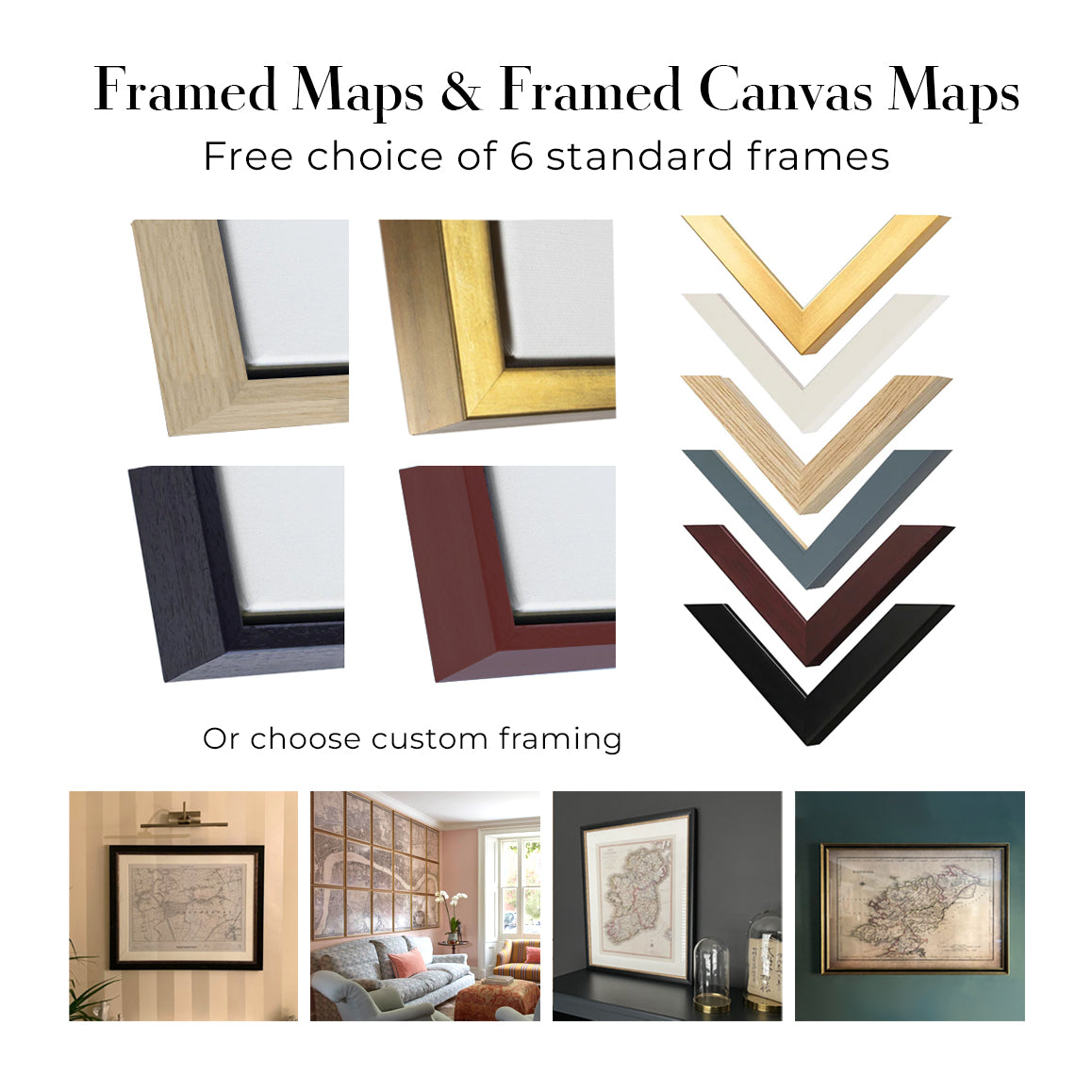
Our standard frame is a gallery-style black ash hardwood frame, with a simple, modern look. It is approximately 20mm (0.8in) wide. You can also view some lovely customer photos of framed maps and art.
We use super-clear acrylic glazing, also known as Perspex or Acrylite, instead of traditional glass. It is lighter, safer, and has lower reflectivity, giving the artwork a clearer, cleaner appearance.
Six standard frame colours are available at no extra cost: black, dark brown, dark grey, oak, white, and antique gold. Custom framing and mounting/matting is also available for customers looking for something more specific.
Most maps, art prints, and illustrations are also available as a framed canvas. We use matte cotton canvas, stretch it over a sustainably sourced wooden box frame, and then float the piece within a wooden outer frame. The finished result is beautifully presented, with no glazing between you and the artwork.
All frames are supplied ready to hang, with either string or brackets fitted to the back. Very large frames will include heavy-duty hanging plates and/or a mounting baton. If you have any questions, please get in touch.
We can also supply old maps and artwork on canvas, foam board, cotton rag, and other materials.
If you would prefer to frame your map or artwork yourself, please read our size guide before ordering.
Lavoriamo con interior designer, strutture ricettive, professionisti del settore immobiliare, uffici e acquirenti aziendali su singoli pezzi e su progetti coordinati di più ampia portata.
Questa mappa può essere adattata a una particolare parete, stanza o progetto, e il nostro laboratorio può aiutare a coordinare dimensioni, materiale e incorniciatura prima della produzione.
- Dimensioni precise, extra-large e su misura
- Incorniciatura, montaggio e materiali alternativi personalizzati
- Pezzi coordinati per più stanze o sedi
- Personalizzazione della mappa, per evidenziare luoghi importanti o aggiungere dettagli supplementari
- Consulenza su mappa e incorniciatura dal nostro laboratorio
- Produzione locale per progetti in tutto il mondo
Every Unique Maps piece begins with an authentic cartographic source or an original design from our London studio.
For our historic maps, we source rare originals from libraries, archives, auction houses and private collections around the world. We carefully restore each map for print—repairing age-related damage, balancing colour and improving clarity while preserving its original detail, texture and character.
Once restored, the map is prepared for your chosen size and finish. Your piece is then printed and, where selected, framed close to its delivery destination.
Our map prints use acid-free 200gsm archival matte paper and fade-resistant pigment inks, creating a rich, non-glossy finish designed to last. Framed maps use crystal-clear optical acrylic and arrive ready to hang.
Canvas, cotton-rag and other specialist presentations are also available. Learn more about our materials and finishes.
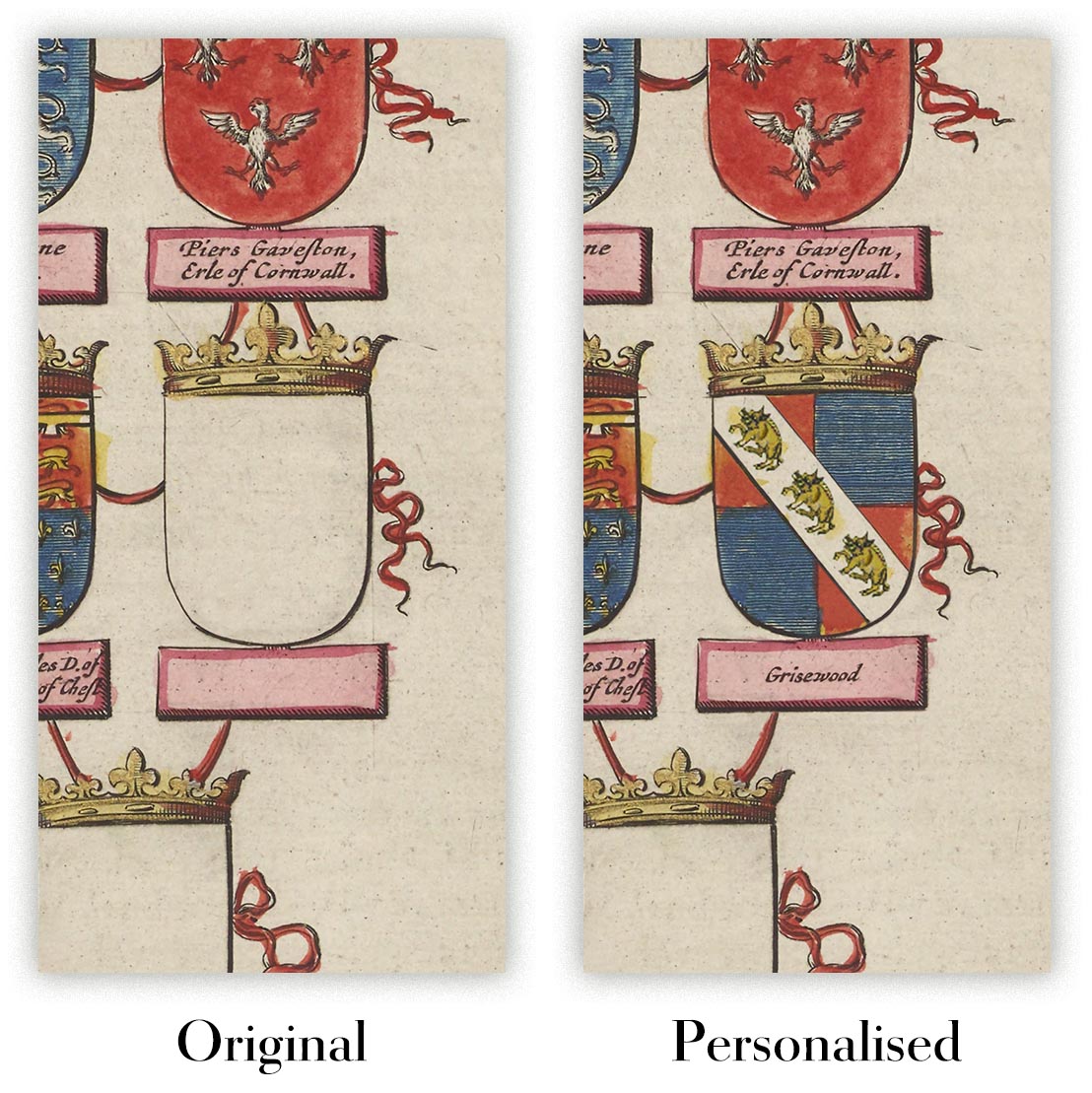
Personalising your map
You can add a short title or dedication, mark one meaningful place, or request one considered visual detail. For personalised designs, we send a proof before printing and you can request changes before approval.
For more complex bespoke commissions, contact our design team.
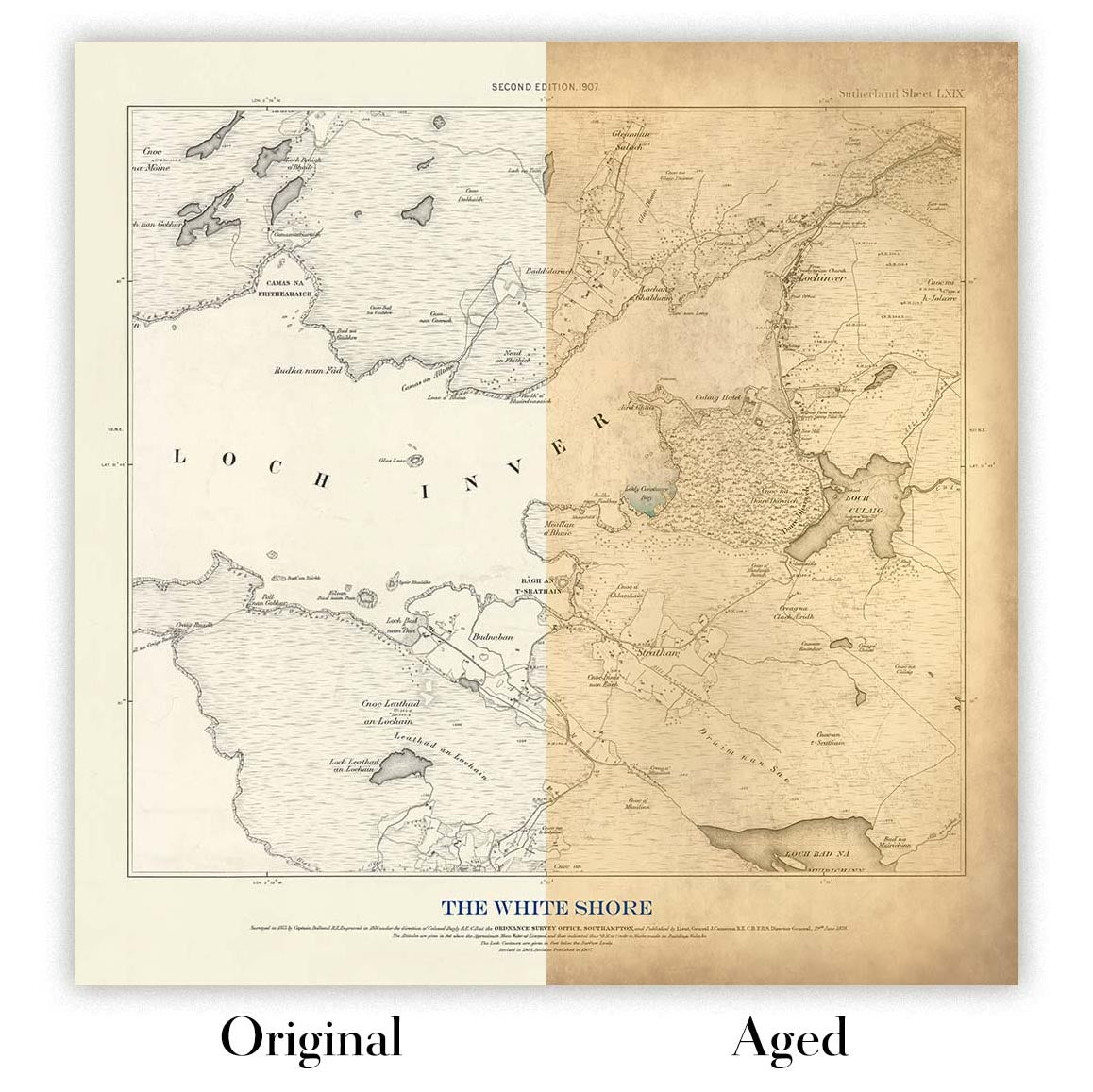
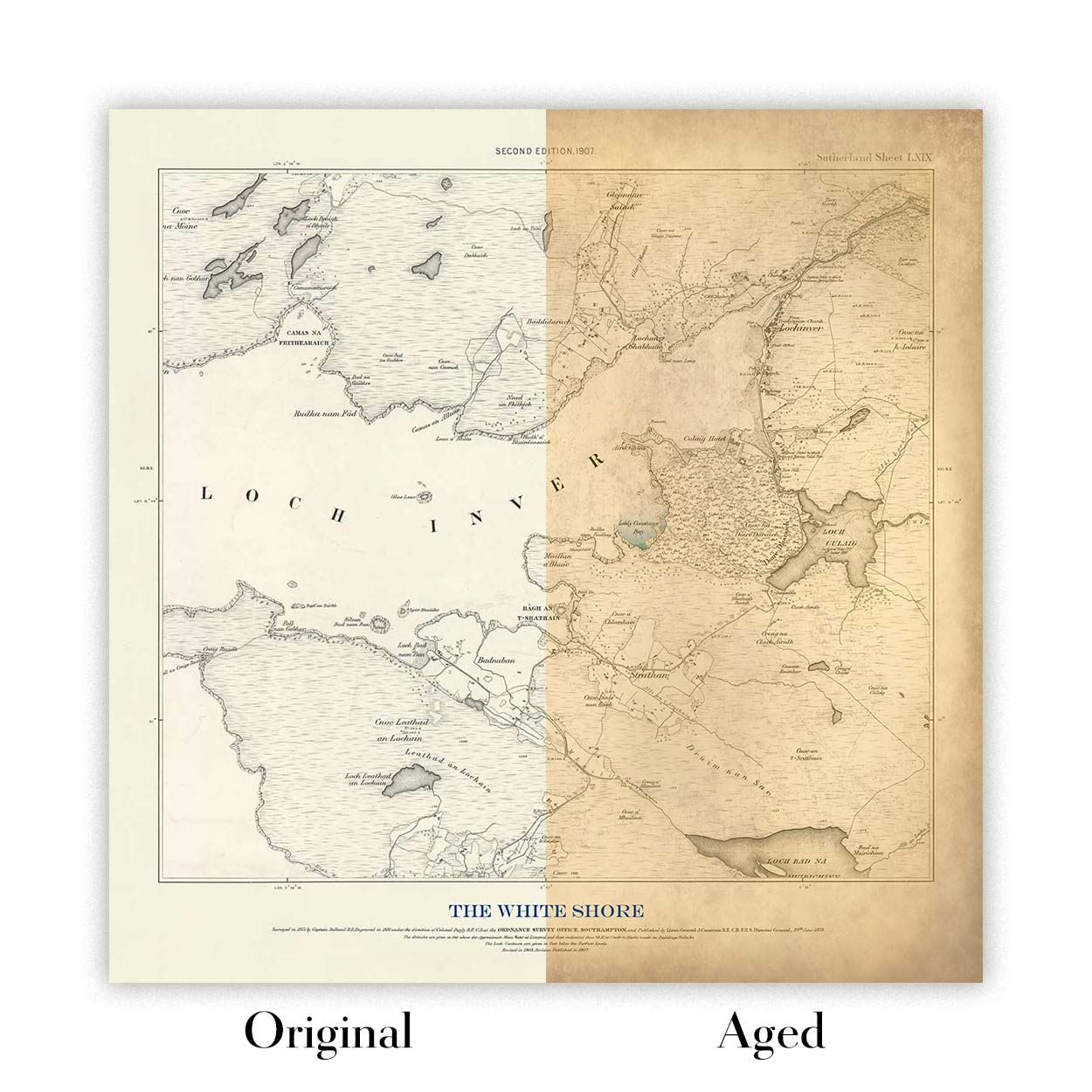
Original or Aged
Choose Original for true-to-source colour, or Aged for a warmer, richer antique character created with our specialist ageing process. See examples of our Aged maps.
Restauriamo e produciamo mappe e stampe d’arte dal 1984, e garantiamo personalmente ogni pezzo.
Ogni ordine è coperto dalla nostra garanzia di 10 anni e dalla garanzia di consegna senza danni. Se il vostro pezzo arriva danneggiato, lo sostituiremo o lo rifaremo gratuitamente. Se qualsiasi altro aspetto non fosse conforme, contattate il nostro team di laboratorio e provvederemo tempestivamente a risolvere il problema.
Per tutti i dettagli, consultate la nostra politica su resi e rimborsi.
Oppure cerca qualcosa nel negozio.


