
















Rare Old Map of Patagonia by Colton, 1865: Falklands, South Georgia, South Orkney Isles
Restored in our London workshop from the original 1865 map and printed to museum-grade archival standards. Full description
The Collector’s Offer
Choose two eligible works and receive 20% off both. Choose three and the lowest-priced one is complimentary, a maximum saving of 33%.
Mix and match eligible standard maps and fine-art prints. No code is required; the offer is applied automatically at checkout.
Standard made-to-order configurations are included. Bespoke sizes, personalised designs and commissioned work are excluded.
Need delivery to different addresses? Contact us before ordering.The Collector’s Offer
Choose two eligible works and receive 20% off both. Choose three and the lowest-priced one is complimentary, a maximum saving of 33%.
Mix and match eligible standard maps and fine-art prints. No code is required; the offer is applied automatically at checkout.
Standard made-to-order configurations are included. Bespoke sizes, personalised designs and commissioned work are excluded.
Need delivery to different addresses? Contact us before ordering.
Restored from the original 1865 map and printed to museum-grade archival standards. Full description
Choose your size
Choose your finish


(More info)
Gift message & custom finish

If you want to add a gift message, or a finish (jigsaw, aluminium board, etc.) that is not available here, please request it in the "order note" when you check out.
Every order is custom made, so if you need the size adjusted slightly, or printed on an unusual material, just let us know. We've done thousands of custom orders over the years, so there's (almost) nothing we can't manage.
You can also contact us before you order, if you prefer!
Own a piece of history
8,000+ five-star reviews


Colton's Patagonia. South Orkney or Powell's Group. Falkland Islands. South Georgia Island crystallizes a pivotal 1865 moment in J.H. Colton’s oeuvre, issued...
Continue readingColton's Patagonia. South Orkney or Powell's Group. Falkland Islands. South Georgia Island crystallizes a pivotal 1865 moment in J.H. Colton’s oeuvre, issued from his William Street address in New York as his firm navigated shifting partnerships and identities. Its visual grammar is unmistakable: full color articulates the political complexion of the far South, while fine hachures model a muscular terrain that pulls the eye along cordilleras, channels, and open coasts. An ornate cartouche—emblematic of Colton’s later style—frames the composition with confident flourish. Notably, two prime meridians, Greenwich and Washington, run in dialog across the sheet, a deliberate nod to parallel navigational conventions at mid-century. Insets focus the gaze on the South Orkney (Powell’s Group), the Falkland Islands, and South Georgia, sharpening the map’s engagement with exploration geographies and high-latitude seamanship.
Across Patagonia, chromatic tints mark the contested and emerging jurisdictions of Chile and Argentina, while precise engravings translate the region’s drama into legible form. The Andes rise in bristling hachures, a spine that tilts weather and watersheds toward two oceans. The Strait of Magellan is carefully threaded, separating the mainland from the clipped silhouette of Tierra del Fuego; farther east, the Beagle Channel is traced as a navigable seam through serrated ranges. Colton gives settlement a human register: Punta Arenas anchors the Magellanic gateway; Puerto Natales fronts fjordlands; Río Gallegos faces the Atlantic steppes; and Ushuaia—set low against the mountains—hints at future southernmost claims. The result balances frontier austerity with cartographic intimacy, capturing rivers, inlets, and promontories as a working geography for sailors and overland travelers alike.
The insets extend the narrative into the sub-Antarctic. The Falkland Islands appear as a crisp archipelago divided between East and West Falkland, with Stanley firmly named as administrative center and principal harbor. South Georgia stretches like a glaciated bastion, its serried ridges and deeply bitten bays rendered with emphatic hachures that suggest ice and altitude more than any textual cue could. South Orkney—here titled Powell’s Group—occupies a transitional belt between known sea-lanes and polar weather, a place of sealing grounds, scientific curiosity, and navigational caution. In each inset, coastal articulations—sounds, capes, and island chains—receive the same disciplined attention as the mainland, situating these remote stations within the era’s widening net of exploration, commerce, and imperial oversight.
This sheet stands at a crossroads in Colton’s publishing story. Contemporary records of the period are fragmentary, yet the map’s polish signals an atelier still committed to excellence even as the firm’s General Atlas and collaborations evolved. The dual prime meridians quietly dramatize a world negotiating standards: American practice measured from Washington while global consensus coalesced around Greenwich, and Colton prints both, refusing parochialism. Equally telling is the relief treatment. Hachures, later eclipsed by contours, are here exploited to their expressive limit, conveying the Andean wall and the battered coasts with sculptural clarity. The map thus becomes evidence of a broader mid-19th-century pivot—craftsmanship meeting industrialization, national surveying agendas intersecting with merchant routes and scientific voyages.
For the connoisseur, the attraction lies in this fusion of precision and poetics. Political color tells a story of borders forming at the literal edge of the world; the engraved lines supply the texture of lived geography—mountains that must be crossed, channels that may be chanced, capes that demand respect. The named towns—Punta Arenas, Puerto Natales, Río Gallegos, Ushuaia, and Stanley—are not mere labels but waypoints in a network linking Atlantic to Pacific and temperate seas to ice. Framed by Colton’s ornate cartouche and governed by twin meridians, the composition reads as both itinerary and argument: that the far South, once a marginal blank, had entered the consciousness of statesmen, mariners, and mapmakers—and here receives a rendering equal to its stark magnificence.
Cities and towns on this map
- Punta Arenas (Chile; modern population ~130,000)
- Puerto Natales (Chile; modern population ~20,000)
- Río Gallegos (Argentina; modern population ~72,000)
- Ushuaia (Argentina; modern population ~75,000)
- Stanley (Falkland Islands; modern population ~2,100)
Notable Features & Landmarks
- Two prime meridians: Greenwich and Washington D.C.
- Hachured relief illustration, showing terrain variation.
- Political boundaries delineated in full color.
- Insets for South Orkney, Falkland Islands, and South Georgia Island.
- Detailed topographic elements that indicate key geographical features.
Historical and design context
- Published by J.H. Colton, located at No. 172 William St. in New York.
- Date of publication: 1865.
- Historical significance: reflects a transitional moment in mid-19th century cartography and Colton’s shifting collaborations/identities.
- Design elements: full color for political boundaries and hachures for relief.
- Cartographic style: ornate cartouche characteristic of Colton’s later career.
- Geographical coverage: Patagonia, the South Orkney Islands, the Falkland Islands, and South Georgia Island.
- Themes depicted: political boundaries, relief representation, and exploration geography.
- Relation to other works: linked to Colton’s General Atlas, amid a documented gap suggesting a pivot in publishing focus.
Please double check the images to make sure that a specific town or place is shown on this map. You can also get in touch and ask us to check the map for you.
This map looks great at every size, but I always recommend going for a larger size if you have space. That way you can easily make out all of the details.
This map looks amazing at sizes all the way up to 50in (125cm). If you are looking for a larger map, please get in touch.
The model in the listing images is holding the 16x20in (40x50cm) version of this map.
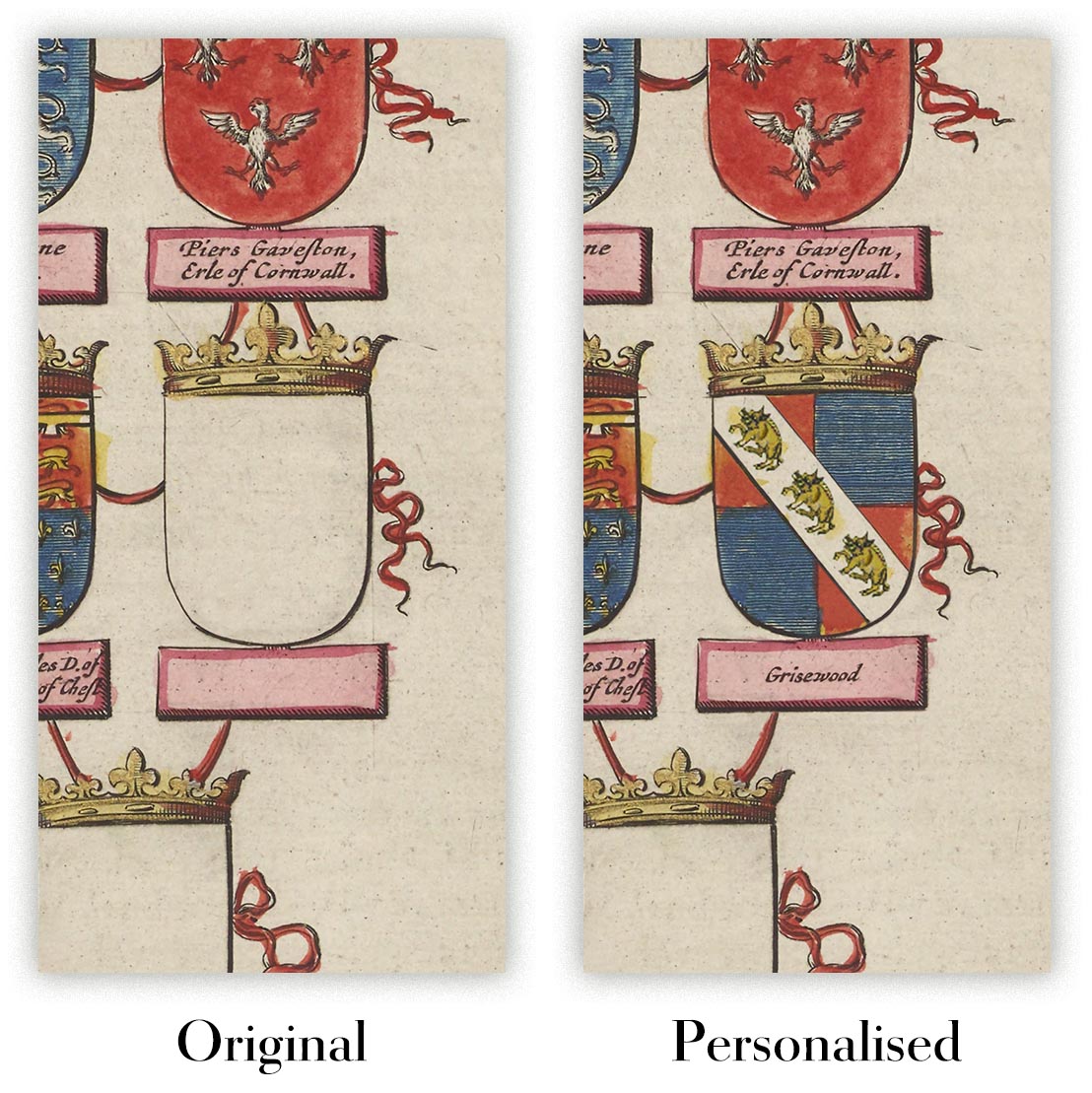
The fifth listing image shows an example of my map personalisation service.
If you’re looking for something slightly different, check out my collection of the best old maps to see if something else catches your eye.
Please contact me to check if a certain location, landmark or feature is shown on this map.
This would make a wonderful birthday, Christmas, Father's Day, work leaving, anniversary or housewarming gift for someone from the areas covered by this map.
This map is available as a giclée print on acid free archival matte paper, or you can buy it framed. The frame is a nice, simple black frame that suits most aesthetics. Please get in touch if you'd like a different frame colour or material. My frames are glazed with super-clear museum-grade acrylic (perspex/acrylite), which is significantly less reflective than glass, safer, and will always arrive in perfect condition.
This map is also available as a float framed canvas, sometimes known as a shadow gap framed canvas or canvas floater. The map is printed on artist's cotton canvas and then stretched over a handmade box frame. We then "float" the canvas inside a wooden frame, which is available in a range of colours (black, dark brown, oak, antique gold and white). This is a wonderful way to present a map without glazing in front. See some examples of float framed canvas maps and explore the differences between my different finishes.
For something truly unique, this map is also available in "Unique 3D", our trademarked process that dramatically transforms the map so that it has a wonderful sense of depth. We combine the original map with detailed topography and elevation data, so that mountains and the terrain really "pop". For more info and examples of 3D maps, check my Unique 3D page.
Colton's Patagonia. South Orkney or Powell's Group. Falkland Islands. South Georgia Island crystallizes a pivotal 1865 moment in J.H. Colton’s oeuvre, issued from his William Street address in New York as his firm navigated shifting partnerships and identities. Its visual grammar is unmistakable: full color articulates the political complexion of the far South, while fine hachures model a muscular terrain that pulls the eye along cordilleras, channels, and open coasts. An ornate cartouche—emblematic of Colton’s later style—frames the composition with confident flourish. Notably, two prime meridians, Greenwich and Washington, run in dialog across the sheet, a deliberate nod to parallel navigational conventions at mid-century. Insets focus the gaze on the South Orkney (Powell’s Group), the Falkland Islands, and South Georgia, sharpening the map’s engagement with exploration geographies and high-latitude seamanship.
Across Patagonia, chromatic tints mark the contested and emerging jurisdictions of Chile and Argentina, while precise engravings translate the region’s drama into legible form. The Andes rise in bristling hachures, a spine that tilts weather and watersheds toward two oceans. The Strait of Magellan is carefully threaded, separating the mainland from the clipped silhouette of Tierra del Fuego; farther east, the Beagle Channel is traced as a navigable seam through serrated ranges. Colton gives settlement a human register: Punta Arenas anchors the Magellanic gateway; Puerto Natales fronts fjordlands; Río Gallegos faces the Atlantic steppes; and Ushuaia—set low against the mountains—hints at future southernmost claims. The result balances frontier austerity with cartographic intimacy, capturing rivers, inlets, and promontories as a working geography for sailors and overland travelers alike.
The insets extend the narrative into the sub-Antarctic. The Falkland Islands appear as a crisp archipelago divided between East and West Falkland, with Stanley firmly named as administrative center and principal harbor. South Georgia stretches like a glaciated bastion, its serried ridges and deeply bitten bays rendered with emphatic hachures that suggest ice and altitude more than any textual cue could. South Orkney—here titled Powell’s Group—occupies a transitional belt between known sea-lanes and polar weather, a place of sealing grounds, scientific curiosity, and navigational caution. In each inset, coastal articulations—sounds, capes, and island chains—receive the same disciplined attention as the mainland, situating these remote stations within the era’s widening net of exploration, commerce, and imperial oversight.
This sheet stands at a crossroads in Colton’s publishing story. Contemporary records of the period are fragmentary, yet the map’s polish signals an atelier still committed to excellence even as the firm’s General Atlas and collaborations evolved. The dual prime meridians quietly dramatize a world negotiating standards: American practice measured from Washington while global consensus coalesced around Greenwich, and Colton prints both, refusing parochialism. Equally telling is the relief treatment. Hachures, later eclipsed by contours, are here exploited to their expressive limit, conveying the Andean wall and the battered coasts with sculptural clarity. The map thus becomes evidence of a broader mid-19th-century pivot—craftsmanship meeting industrialization, national surveying agendas intersecting with merchant routes and scientific voyages.
For the connoisseur, the attraction lies in this fusion of precision and poetics. Political color tells a story of borders forming at the literal edge of the world; the engraved lines supply the texture of lived geography—mountains that must be crossed, channels that may be chanced, capes that demand respect. The named towns—Punta Arenas, Puerto Natales, Río Gallegos, Ushuaia, and Stanley—are not mere labels but waypoints in a network linking Atlantic to Pacific and temperate seas to ice. Framed by Colton’s ornate cartouche and governed by twin meridians, the composition reads as both itinerary and argument: that the far South, once a marginal blank, had entered the consciousness of statesmen, mariners, and mapmakers—and here receives a rendering equal to its stark magnificence.
Cities and towns on this map
- Punta Arenas (Chile; modern population ~130,000)
- Puerto Natales (Chile; modern population ~20,000)
- Río Gallegos (Argentina; modern population ~72,000)
- Ushuaia (Argentina; modern population ~75,000)
- Stanley (Falkland Islands; modern population ~2,100)
Notable Features & Landmarks
- Two prime meridians: Greenwich and Washington D.C.
- Hachured relief illustration, showing terrain variation.
- Political boundaries delineated in full color.
- Insets for South Orkney, Falkland Islands, and South Georgia Island.
- Detailed topographic elements that indicate key geographical features.
Historical and design context
- Published by J.H. Colton, located at No. 172 William St. in New York.
- Date of publication: 1865.
- Historical significance: reflects a transitional moment in mid-19th century cartography and Colton’s shifting collaborations/identities.
- Design elements: full color for political boundaries and hachures for relief.
- Cartographic style: ornate cartouche characteristic of Colton’s later career.
- Geographical coverage: Patagonia, the South Orkney Islands, the Falkland Islands, and South Georgia Island.
- Themes depicted: political boundaries, relief representation, and exploration geography.
- Relation to other works: linked to Colton’s General Atlas, amid a documented gap suggesting a pivot in publishing focus.
Please double check the images to make sure that a specific town or place is shown on this map. You can also get in touch and ask us to check the map for you.
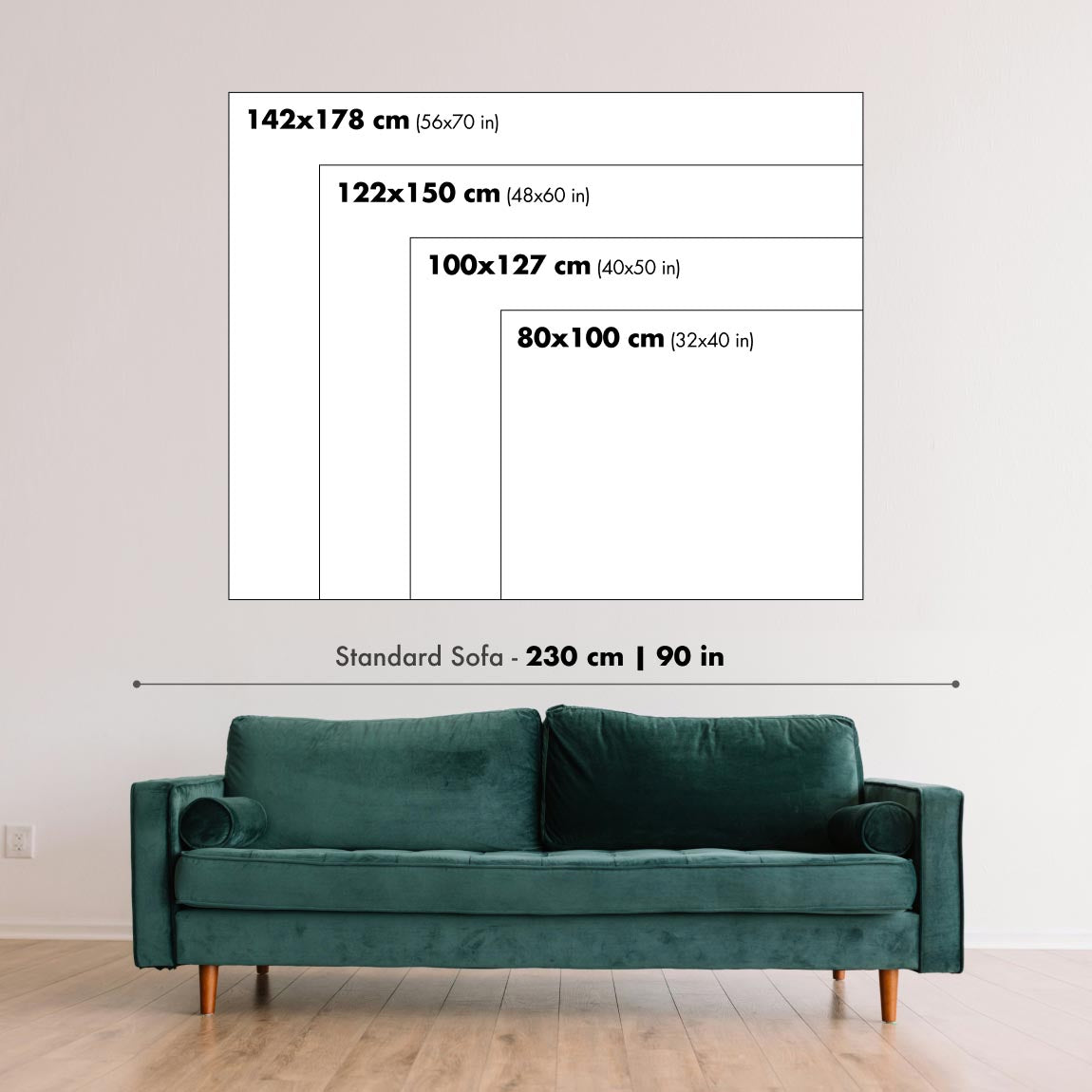
This map looks great at every size, but I always recommend going for a larger size if you have space. That way you can easily make out all of the details.
This map looks amazing at sizes all the way up to 50in (125cm). If you are looking for a larger map, please get in touch.
The model in the listing images is holding the 16x20in (40x50cm) version of this map.
The fifth listing image shows an example of my map personalisation service.
If you’re looking for something slightly different, check out my collection of the best old maps to see if something else catches your eye.
Please contact me to check if a certain location, landmark or feature is shown on this map.
This would make a wonderful birthday, Christmas, Father's Day, work leaving, anniversary or housewarming gift for someone from the areas covered by this map.
This map is available as a giclée print on acid free archival matte paper, or you can buy it framed. The frame is a nice, simple black frame that suits most aesthetics. Please get in touch if you'd like a different frame colour or material. My frames are glazed with super-clear museum-grade acrylic (perspex/acrylite), which is significantly less reflective than glass, safer, and will always arrive in perfect condition.
This map is also available as a float framed canvas, sometimes known as a shadow gap framed canvas or canvas floater. The map is printed on artist's cotton canvas and then stretched over a handmade box frame. We then "float" the canvas inside a wooden frame, which is available in a range of colours (black, dark brown, oak, antique gold and white). This is a wonderful way to present a map without glazing in front. See some examples of float framed canvas maps and explore the differences between my different finishes.
For something truly unique, this map is also available in "Unique 3D", our trademarked process that dramatically transforms the map so that it has a wonderful sense of depth. We combine the original map with detailed topography and elevation data, so that mountains and the terrain really "pop". For more info and examples of 3D maps, check my Unique 3D page.
Many of our maps and art prints are chosen as thoughtful gifts for homes, offices, studies and meaningful places.
Choose a framed option for the easiest ready-to-hang gift, or choose an unframed print if the recipient may prefer to select their own frame.
We make orders locally in 24 countries around the world, so gifts can often be produced close to the recipient. This helps them arrive faster, travel more safely, and avoid customs or import duty surprises.
- We can deliver directly to the recipient
- Framed pieces arrive ready to hang
- Unframed prints are carefully packed in a strong protective tube
- Almost every order is made locally, for faster, safer gifting
- 90-day returns give the recipient time to decide
If you are not sure what to choose, please contact us. We can help you pick the right map, size, finish or delivery option.
Most orders are made locally and delivered in around 2–3 working days, depending on the product, size and destination.
We print and frame maps and artwork in 24 countries around the world, so your order is usually made close to you or your recipient. That means faster delivery, less time in transit, and no customs or import duty surprises.
Personalised and customised pieces usually take an extra 1–2 working days, because we prepare your design and send it to you for approval before printing.
Very large framed orders can take a little longer, as they need extra care in production and delivery.
Every order is carefully packaged: unframed prints are sent in a strong protective tube, while framed pieces are securely packed with protective materials around the frame.
If you need your order by a particular date, please contact us before ordering. We’ll check the best production route and delivery option for your location.
Express delivery is available at checkout for most countries. Next-day delivery is available in the UK, US, Singapore and the UAE.
Your order is covered by our 90-day returns policy and 10-year guarantee.
Our standard frame is a gallery-style black ash hardwood frame, with a simple, modern look. It is approximately 20mm (0.8in) wide. You can also view some lovely customer photos of framed maps and art.
We use super-clear acrylic glazing, also known as Perspex or Acrylite, instead of traditional glass. It is lighter, safer, and has lower reflectivity, giving the artwork a clearer, cleaner appearance.
Six standard frame colours are available at no extra cost: black, dark brown, dark grey, oak, white, and antique gold. Custom framing and mounting/matting is also available for customers looking for something more specific.
Most maps, art prints, and illustrations are also available as a framed canvas. We use matte cotton canvas, stretch it over a sustainably sourced wooden box frame, and then float the piece within a wooden outer frame. The finished result is beautifully presented, with no glazing between you and the artwork.
All frames are supplied ready to hang, with either string or brackets fitted to the back. Very large frames will include heavy-duty hanging plates and/or a mounting baton. If you have any questions, please get in touch.
We can also supply old maps and artwork on canvas, foam board, cotton rag, and other materials.
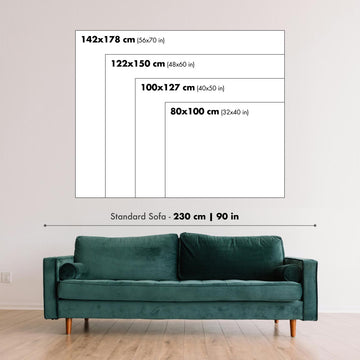
If you would prefer to frame your map or artwork yourself, please read our size guide before ordering.
We work with interior designers, hospitality businesses, property professionals, offices and corporate buyers on individual pieces and larger coordinated projects.
This map can be adapted for a particular wall, room or project, and our workshop can help coordinate the dimensions, material and framing before production.
- Exact, oversized and made-to-measure dimensions
- Custom framing, mounting and alternative materials
- Coordinated pieces for several rooms or locations
- Map personalisation, to mark important locations or add extra details
- Map and framing guidance from our workshop
- Local production for projects around the world
Every Unique Maps piece begins with an authentic cartographic source or an original design from our London studio.
For our historic maps, we source rare originals from libraries, archives, auction houses and private collections around the world. We carefully restore each map for print—repairing age-related damage, balancing colour and improving clarity while preserving its original detail, texture and character.
Once restored, the map is prepared for your chosen size and finish. Your piece is then printed and, where selected, framed close to its delivery destination.
Our map prints use acid-free 200gsm archival matte paper and fade-resistant pigment inks, creating a rich, non-glossy finish designed to last. Framed maps use crystal-clear optical acrylic and arrive ready to hang.
Canvas, cotton-rag and other specialist presentations are also available. Learn more about our materials and finishes.
Personalising your map
You can add a short title or dedication, mark one meaningful place, or request one considered visual detail. For personalised designs, we send a proof before printing and you can request changes before approval.
For more complex bespoke commissions, contact our design team.
Original or Aged
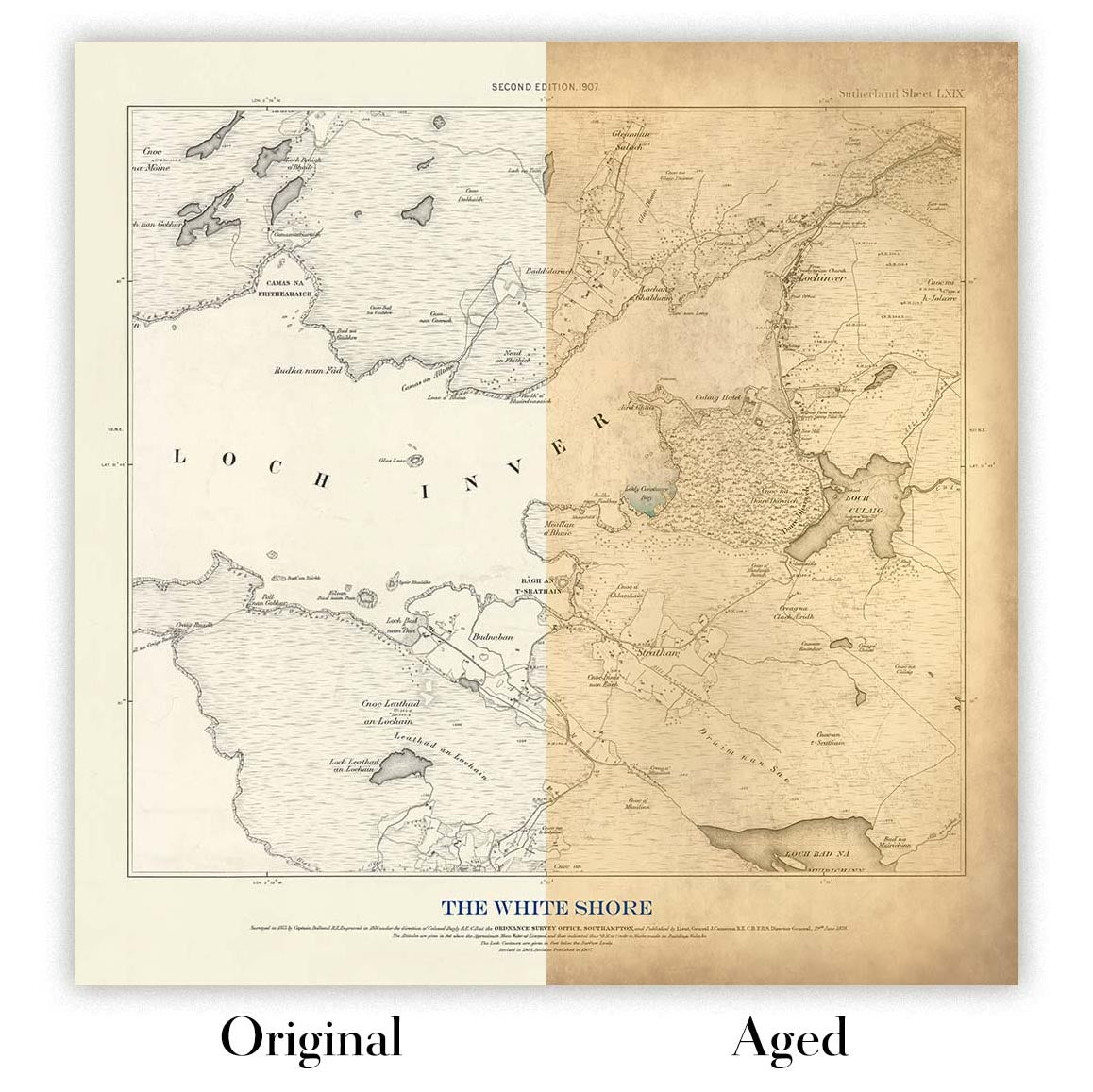
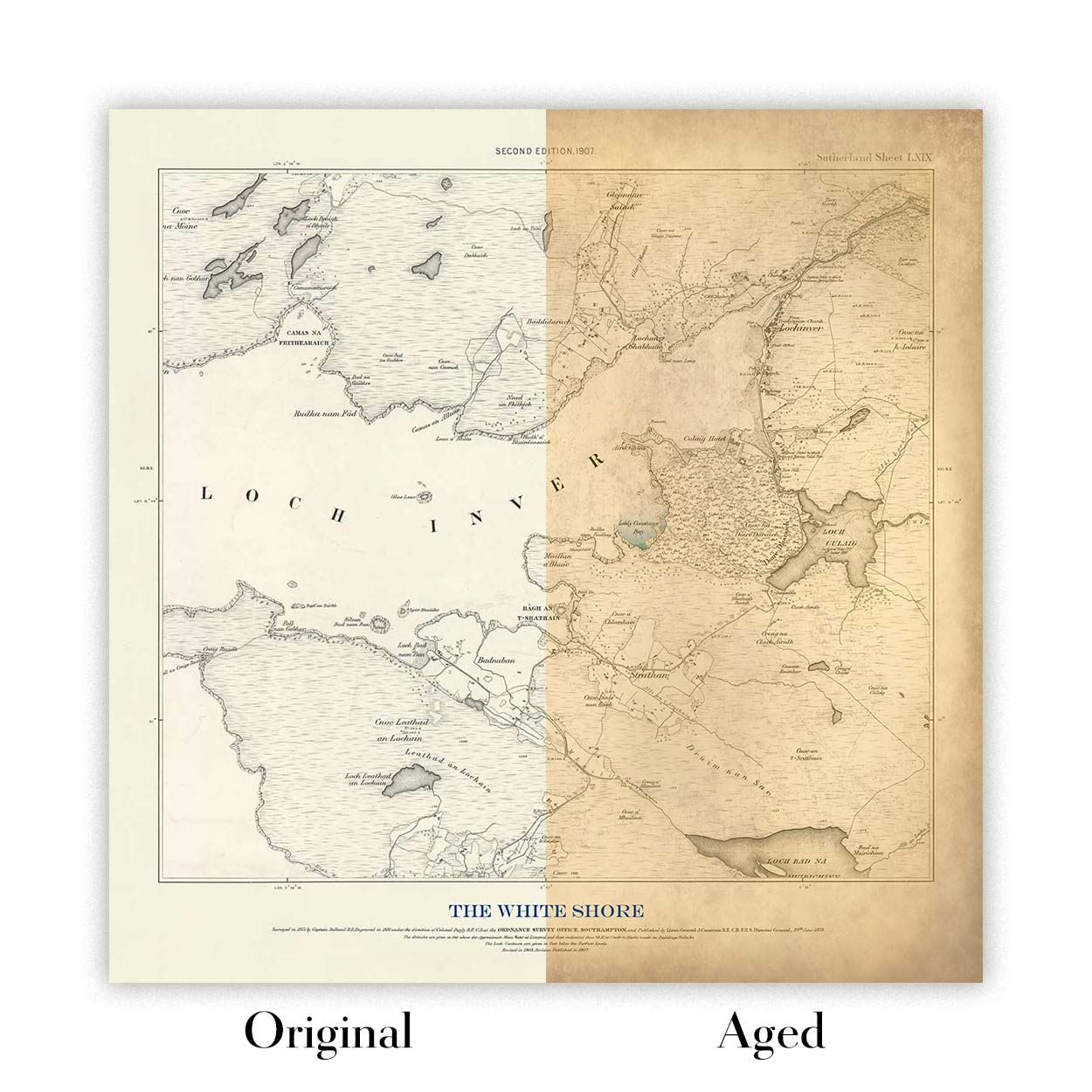
Choose Original for true-to-source colour, or Aged for a warmer, richer antique character created with our specialist ageing process. See examples of our Aged maps.
We’ve been restoring and producing maps and art prints since 1984, and we stand behind every piece.
Every order is covered by our 10-year guarantee and damage-free delivery guarantee. If your piece arrives damaged, we’ll replace or remake it free of charge. If anything else isn’t right, contact our workshop team and we’ll put it right promptly.
See our returns and refund policy for full details.
Or try searching for something!


