















Rare Old Map of West Virginia, 1920: Charleston, Huntington, Ohio River, State Roads, Electric Lines
Restored in our London workshop from the original 1920 map and printed to museum-grade archival standards. Full description
The Collector’s Offer
Choose two eligible works and receive 20% off both. Choose three and the lowest-priced one is complimentary, a maximum saving of 33%.
Mix and match eligible standard maps and fine-art prints. No code is required; the offer is applied automatically at checkout.
Standard made-to-order configurations are included. Bespoke sizes, personalised designs and commissioned work are excluded.
Need delivery to different addresses? Contact us before ordering.The Collector’s Offer
Choose two eligible works and receive 20% off both. Choose three and the lowest-priced one is complimentary, a maximum saving of 33%.
Mix and match eligible standard maps and fine-art prints. No code is required; the offer is applied automatically at checkout.
Standard made-to-order configurations are included. Bespoke sizes, personalised designs and commissioned work are excluded.
Need delivery to different addresses? Contact us before ordering.
Restored from the original 1920 map and printed to museum-grade archival standards. Full description
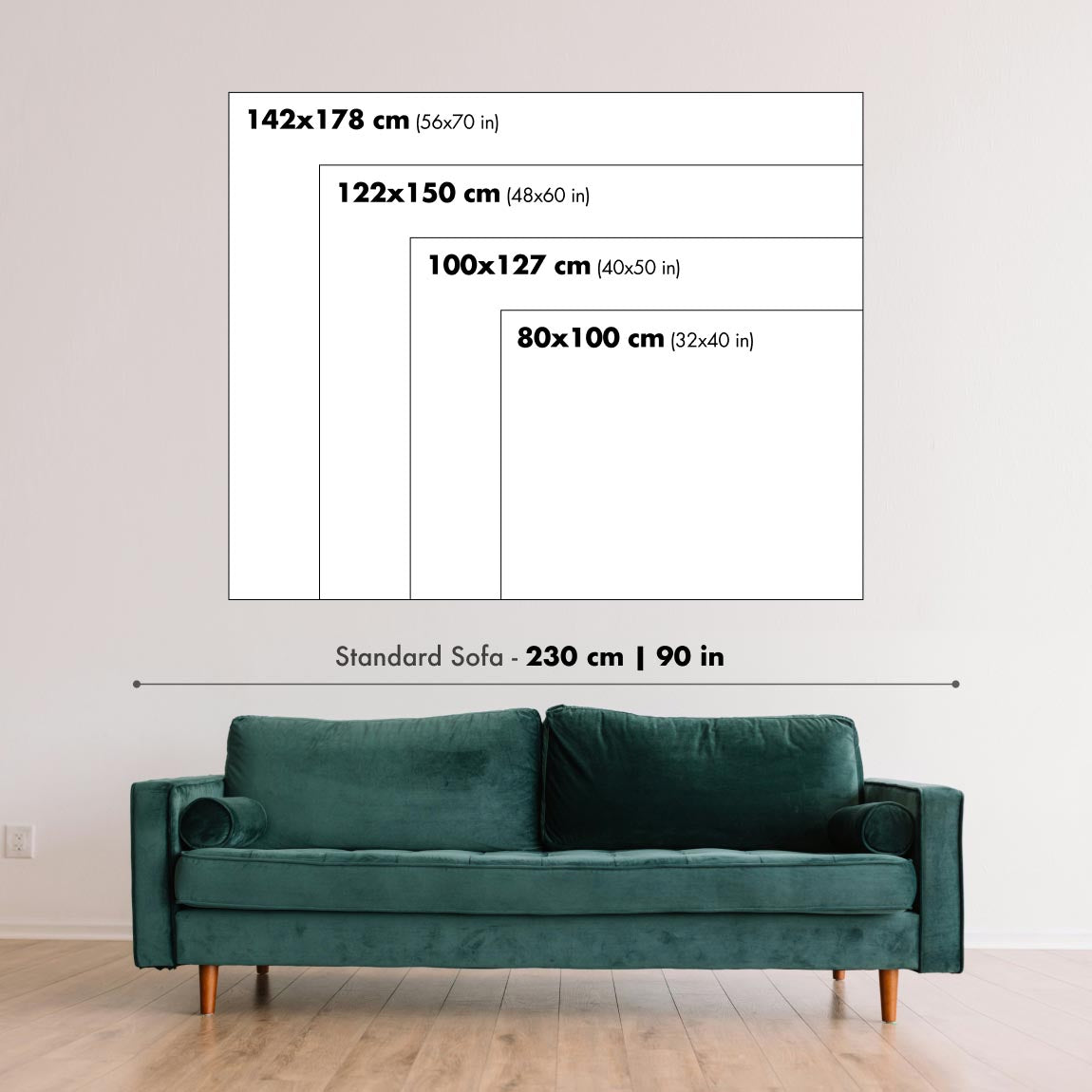
Choose your size
Choose your finish


(More info)
Gift message & custom finish

If you want to add a gift message, or a finish (jigsaw, aluminium board, etc.) that is not available here, please request it in the "order note" when you check out.
Every order is custom made, so if you need the size adjusted slightly, or printed on an unusual material, just let us know. We've done thousands of custom orders over the years, so there's (almost) nothing we can't manage.
You can also contact us before you order, if you prefer!
Own a piece of history
8,000+ five-star reviews


West Virginia, published in 1920 by the George F. Cram Company, presents the Mountain State at the instant America stepped from steam...
Continue readingWest Virginia, published in 1920 by the George F. Cram Company, presents the Mountain State at the instant America stepped from steam into the age of gasoline and electricity. Its original title—simply West Virginia—belies a composition alive with color-coded intelligence: counties ringed in green, arterial state roads traced in red and blue, and electric lines flashed in red across valleys and ridgelines. Hachured relief folds the landscape into the Alleghenies, letting the eye feel ascent and descent as routes thread through passes toward Charleston, Huntington, and Wheeling. Principal cities and county seats are crisply named, their relative stature echoed by contemporary census tallies from 1920. The result is a clear, elegant synthesis of political order, physical form, and the new connective tissues binding mines, mills, and markets across the state.
Produced by the prestigious George F. Cram Company—established in 1867 and renowned for atlases that married precision with practical utility—this map embodies the firm’s early twentieth-century aesthetic. Cram’s editors distilled immense datasets into legible hierarchies, using disciplined palettes and fine linework to balance beauty with use. Trained in the traditions of American commercial cartography yet alert to modern travel, they were quick to foreground highways, state roads, and electric lines alongside political boundaries and population figures. In 1920 that editorial stance mattered: motorists pressed beyond rail corridors, interurban lines stitched together industrial towns, and state commissions rationalized road systems. Cram captured that transition with quiet authority, rendering West Virginia’s administrative grid and mountain physiography as the fixed stage upon which new mobility unfolded.
Topographically, the map is a masterclass in hachure technique. Short, closely set strokes articulate the Allegheny front and the corrugated ridges of the Potomac Highlands, while the broader Allegheny Plateau to the west relaxes into rounded hills and deeply incised streams. The Ohio River anchors the western edge, its bends hosting Wheeling, Parkersburg, and Huntington, each a riverport turned rail-and-road nexus. Northward, the Monongahela gathers waters through Fairmont and Morgantown; eastward, the Potomac skirts Martinsburg and the Eastern Panhandle. Central valleys carry the Elk and Kanawha past Charleston and South Charleston, while farther south the New River and Gauley carve dramatic gorges toward their confluence. These landforms do not merely decorate the scene—they dictate the alignments of roads, the siting of towns, and the very pattern of economic life.
Politically, counties are crisply partitioned in green, their seats neatly identified, giving instant comprehension of West Virginia’s administrative mosaic in 1920. Kanawha County asserts its centrality with Charleston as capital, while Ohio County clusters around venerable Wheeling at the northern bend of the river. Cabell centers on Huntington; Wood on Parkersburg; Monongalia and Harrison bracket Fairmont, Morgantown, and Clarksburg across the northern coal belt; Berkeley orients Martinsburg toward the mid-Atlantic; Raleigh signals Beckley’s ascent on the southern plateau; Hancock and Brooke squeeze into the Northern Panhandle with Weirton’s burgeoning steelworks between river and ridge; Mineral sets Keyser along the Potomac corridor. Paired with census figures of the same year, the pattern reveals an urban network swelling along energy seams and water routes, even as courthouse towns anchor the rural highlands.
Transportation symbology is where the composition sparks with modernity. Major highways and state roads are cleanly segregated in red and blue, guiding the eye from the panhandles through the central highlands to border crossings with Ohio, Pennsylvania, Virginia, and Kentucky. Red-marked electric lines—interurban railways and power-linked corridors—lace together mills, mines, and markets, especially along the Ohio River valley and across the north-central coalfields. Charleston emerges as a road hub on the Kanawha; Huntington fronts a multi-modal river gateway; Wheeling and Parkersburg marshal crossings and bridges; branch routes climb to Beckley and the southern camps. Tracked against the hachured terrain, every gradient, gap, and river bend explains a decision in engineering. The map captures the last great moment before federal highway numbering, when the state’s own system defined movement and ambition.
Cities and towns on this map
- Charleston
- Huntington
- Morgantown
- Parkersburg
- Wheeling
- Fairmont
- Martinsburg
- Beckley
- Clarksburg
- Weirton
- South Charleston
- Keyser
Notable Features & Landmarks
- Administrative boundaries outlined in green
- Major highways and state roads illustrated in red and blue
- Electric lines clearly marked in red
- County seats and major towns indicated with names
- Relief illustrated with hachures
Historical and design context
- Publisher: George F. Cram Company (est. 1867), renowned for detailed early-20th-century cartography
- Publication year: 1920
- Themes displayed: political boundaries, physical geography, and transportation routes (highways, state roads, electric lines)
- Regions covered: entire state of West Virginia with key administrative boundaries, principal cities, and counties
- Design elements: distinctive color schemes; electric lines in red; roads in red and blue; hachures to illustrate relief
- Historical context: depicts early 20th-century transportation and administration, accompanied by 1920 census data
Please double check the images to make sure that a specific town or place is shown on this map. You can also get in touch and ask us to check the map for you.
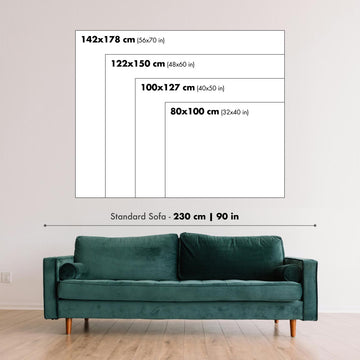
This map looks great at every size, but I always recommend going for a larger size if you have space. That way you can easily make out all of the details.
This map looks amazing at sizes all the way up to 50in (125cm). If you are looking for a larger map, please get in touch.
The model in the listing images is holding the 18x24in (45x60cm) version of this map.
The fifth listing image shows an example of my map personalisation service.
If you’re looking for something slightly different, check out my collection of the best old maps to see if something else catches your eye.
Please contact me to check if a certain location, landmark or feature is shown on this map.
This would make a wonderful birthday, Christmas, Father's Day, work leaving, anniversary or housewarming gift for someone from the areas covered by this map.
This map is available as a giclée print on acid free archival matte paper, or you can buy it framed. The frame is a nice, simple black frame that suits most aesthetics. Please get in touch if you'd like a different frame colour or material. My frames are glazed with super-clear museum-grade acrylic (perspex/acrylite), which is significantly less reflective than glass, safer, and will always arrive in perfect condition.
This map is also available as a float framed canvas, sometimes known as a shadow gap framed canvas or canvas floater. The map is printed on artist's cotton canvas and then stretched over a handmade box frame. We then "float" the canvas inside a wooden frame, which is available in a range of colours (black, dark brown, oak, antique gold and white). This is a wonderful way to present a map without glazing in front. See some examples of float framed canvas maps and explore the differences between my different finishes.
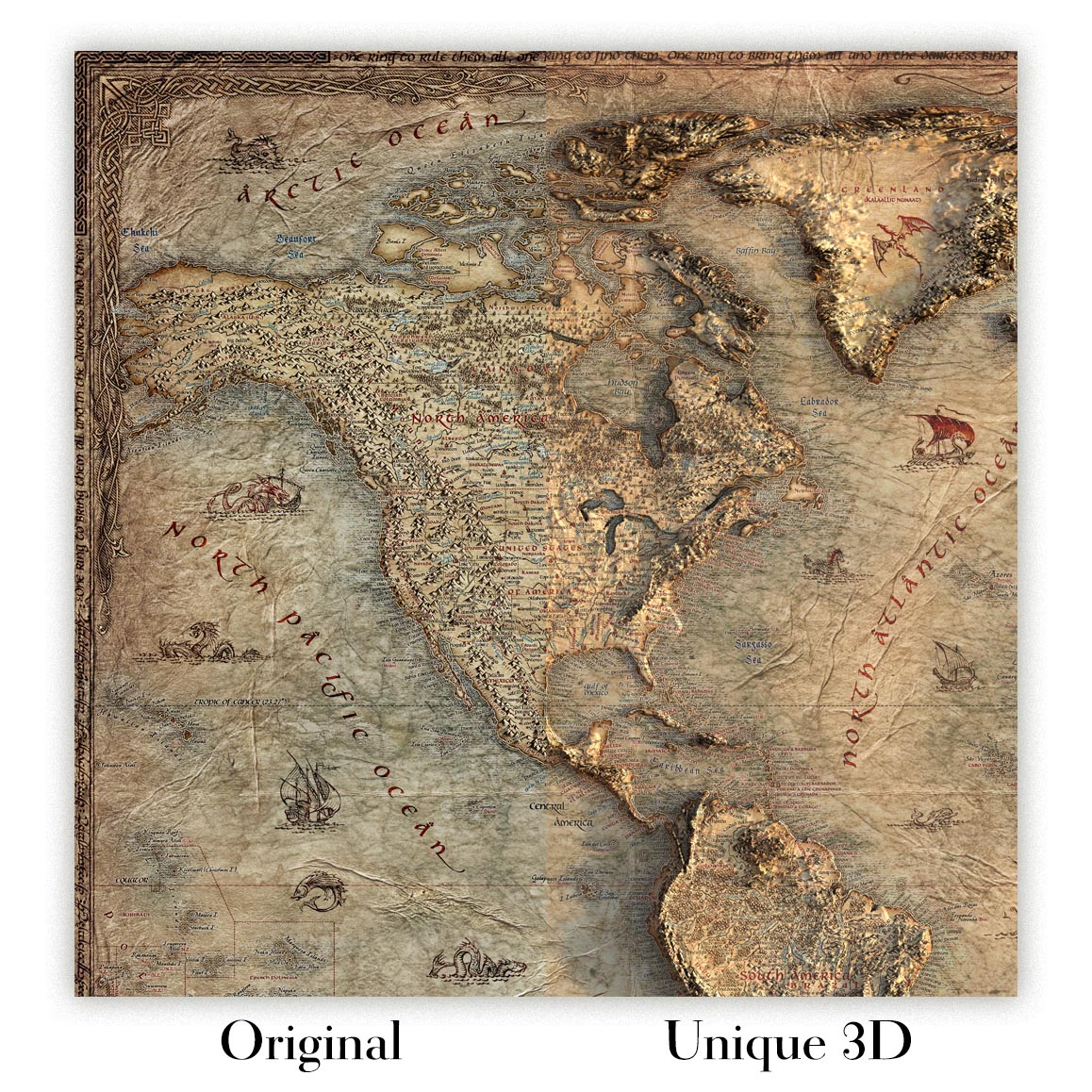
For something truly unique, this map is also available in "Unique 3D", our trademarked process that dramatically transforms the map so that it has a wonderful sense of depth. We combine the original map with detailed topography and elevation data, so that mountains and the terrain really "pop". For more info and examples of 3D maps, check my Unique 3D page.
West Virginia, published in 1920 by the George F. Cram Company, presents the Mountain State at the instant America stepped from steam into the age of gasoline and electricity. Its original title—simply West Virginia—belies a composition alive with color-coded intelligence: counties ringed in green, arterial state roads traced in red and blue, and electric lines flashed in red across valleys and ridgelines. Hachured relief folds the landscape into the Alleghenies, letting the eye feel ascent and descent as routes thread through passes toward Charleston, Huntington, and Wheeling. Principal cities and county seats are crisply named, their relative stature echoed by contemporary census tallies from 1920. The result is a clear, elegant synthesis of political order, physical form, and the new connective tissues binding mines, mills, and markets across the state.
Produced by the prestigious George F. Cram Company—established in 1867 and renowned for atlases that married precision with practical utility—this map embodies the firm’s early twentieth-century aesthetic. Cram’s editors distilled immense datasets into legible hierarchies, using disciplined palettes and fine linework to balance beauty with use. Trained in the traditions of American commercial cartography yet alert to modern travel, they were quick to foreground highways, state roads, and electric lines alongside political boundaries and population figures. In 1920 that editorial stance mattered: motorists pressed beyond rail corridors, interurban lines stitched together industrial towns, and state commissions rationalized road systems. Cram captured that transition with quiet authority, rendering West Virginia’s administrative grid and mountain physiography as the fixed stage upon which new mobility unfolded.
Topographically, the map is a masterclass in hachure technique. Short, closely set strokes articulate the Allegheny front and the corrugated ridges of the Potomac Highlands, while the broader Allegheny Plateau to the west relaxes into rounded hills and deeply incised streams. The Ohio River anchors the western edge, its bends hosting Wheeling, Parkersburg, and Huntington, each a riverport turned rail-and-road nexus. Northward, the Monongahela gathers waters through Fairmont and Morgantown; eastward, the Potomac skirts Martinsburg and the Eastern Panhandle. Central valleys carry the Elk and Kanawha past Charleston and South Charleston, while farther south the New River and Gauley carve dramatic gorges toward their confluence. These landforms do not merely decorate the scene—they dictate the alignments of roads, the siting of towns, and the very pattern of economic life.
Politically, counties are crisply partitioned in green, their seats neatly identified, giving instant comprehension of West Virginia’s administrative mosaic in 1920. Kanawha County asserts its centrality with Charleston as capital, while Ohio County clusters around venerable Wheeling at the northern bend of the river. Cabell centers on Huntington; Wood on Parkersburg; Monongalia and Harrison bracket Fairmont, Morgantown, and Clarksburg across the northern coal belt; Berkeley orients Martinsburg toward the mid-Atlantic; Raleigh signals Beckley’s ascent on the southern plateau; Hancock and Brooke squeeze into the Northern Panhandle with Weirton’s burgeoning steelworks between river and ridge; Mineral sets Keyser along the Potomac corridor. Paired with census figures of the same year, the pattern reveals an urban network swelling along energy seams and water routes, even as courthouse towns anchor the rural highlands.
Transportation symbology is where the composition sparks with modernity. Major highways and state roads are cleanly segregated in red and blue, guiding the eye from the panhandles through the central highlands to border crossings with Ohio, Pennsylvania, Virginia, and Kentucky. Red-marked electric lines—interurban railways and power-linked corridors—lace together mills, mines, and markets, especially along the Ohio River valley and across the north-central coalfields. Charleston emerges as a road hub on the Kanawha; Huntington fronts a multi-modal river gateway; Wheeling and Parkersburg marshal crossings and bridges; branch routes climb to Beckley and the southern camps. Tracked against the hachured terrain, every gradient, gap, and river bend explains a decision in engineering. The map captures the last great moment before federal highway numbering, when the state’s own system defined movement and ambition.
Cities and towns on this map
- Charleston
- Huntington
- Morgantown
- Parkersburg
- Wheeling
- Fairmont
- Martinsburg
- Beckley
- Clarksburg
- Weirton
- South Charleston
- Keyser
Notable Features & Landmarks
- Administrative boundaries outlined in green
- Major highways and state roads illustrated in red and blue
- Electric lines clearly marked in red
- County seats and major towns indicated with names
- Relief illustrated with hachures
Historical and design context
- Publisher: George F. Cram Company (est. 1867), renowned for detailed early-20th-century cartography
- Publication year: 1920
- Themes displayed: political boundaries, physical geography, and transportation routes (highways, state roads, electric lines)
- Regions covered: entire state of West Virginia with key administrative boundaries, principal cities, and counties
- Design elements: distinctive color schemes; electric lines in red; roads in red and blue; hachures to illustrate relief
- Historical context: depicts early 20th-century transportation and administration, accompanied by 1920 census data
Please double check the images to make sure that a specific town or place is shown on this map. You can also get in touch and ask us to check the map for you.
This map looks great at every size, but I always recommend going for a larger size if you have space. That way you can easily make out all of the details.
This map looks amazing at sizes all the way up to 50in (125cm). If you are looking for a larger map, please get in touch.
The model in the listing images is holding the 18x24in (45x60cm) version of this map.
The fifth listing image shows an example of my map personalisation service.
If you’re looking for something slightly different, check out my collection of the best old maps to see if something else catches your eye.
Please contact me to check if a certain location, landmark or feature is shown on this map.
This would make a wonderful birthday, Christmas, Father's Day, work leaving, anniversary or housewarming gift for someone from the areas covered by this map.
This map is available as a giclée print on acid free archival matte paper, or you can buy it framed. The frame is a nice, simple black frame that suits most aesthetics. Please get in touch if you'd like a different frame colour or material. My frames are glazed with super-clear museum-grade acrylic (perspex/acrylite), which is significantly less reflective than glass, safer, and will always arrive in perfect condition.
This map is also available as a float framed canvas, sometimes known as a shadow gap framed canvas or canvas floater. The map is printed on artist's cotton canvas and then stretched over a handmade box frame. We then "float" the canvas inside a wooden frame, which is available in a range of colours (black, dark brown, oak, antique gold and white). This is a wonderful way to present a map without glazing in front. See some examples of float framed canvas maps and explore the differences between my different finishes.
For something truly unique, this map is also available in "Unique 3D", our trademarked process that dramatically transforms the map so that it has a wonderful sense of depth. We combine the original map with detailed topography and elevation data, so that mountains and the terrain really "pop". For more info and examples of 3D maps, check my Unique 3D page.
Many of our maps and art prints are chosen as thoughtful gifts for homes, offices, studies and meaningful places.
Choose a framed option for the easiest ready-to-hang gift, or choose an unframed print if the recipient may prefer to select their own frame.
We make orders locally in 24 countries around the world, so gifts can often be produced close to the recipient. This helps them arrive faster, travel more safely, and avoid customs or import duty surprises.
- We can deliver directly to the recipient
- Framed pieces arrive ready to hang
- Unframed prints are carefully packed in a strong protective tube
- Almost every order is made locally, for faster, safer gifting
- 90-day returns give the recipient time to decide
If you are not sure what to choose, please contact us. We can help you pick the right map, size, finish or delivery option.
Most orders are made locally and delivered in around 2–3 working days, depending on the product, size and destination.
We print and frame maps and artwork in 24 countries around the world, so your order is usually made close to you or your recipient. That means faster delivery, less time in transit, and no customs or import duty surprises.
Personalised and customised pieces usually take an extra 1–2 working days, because we prepare your design and send it to you for approval before printing.
Very large framed orders can take a little longer, as they need extra care in production and delivery.
Every order is carefully packaged: unframed prints are sent in a strong protective tube, while framed pieces are securely packed with protective materials around the frame.
If you need your order by a particular date, please contact us before ordering. We’ll check the best production route and delivery option for your location.
Express delivery is available at checkout for most countries. Next-day delivery is available in the UK, US, Singapore and the UAE.
Your order is covered by our 90-day returns policy and 10-year guarantee.
Our standard frame is a gallery-style black ash hardwood frame, with a simple, modern look. It is approximately 20mm (0.8in) wide. You can also view some lovely customer photos of framed maps and art.
We use super-clear acrylic glazing, also known as Perspex or Acrylite, instead of traditional glass. It is lighter, safer, and has lower reflectivity, giving the artwork a clearer, cleaner appearance.
Six standard frame colours are available at no extra cost: black, dark brown, dark grey, oak, white, and antique gold. Custom framing and mounting/matting is also available for customers looking for something more specific.
Most maps, art prints, and illustrations are also available as a framed canvas. We use matte cotton canvas, stretch it over a sustainably sourced wooden box frame, and then float the piece within a wooden outer frame. The finished result is beautifully presented, with no glazing between you and the artwork.
All frames are supplied ready to hang, with either string or brackets fitted to the back. Very large frames will include heavy-duty hanging plates and/or a mounting baton. If you have any questions, please get in touch.
We can also supply old maps and artwork on canvas, foam board, cotton rag, and other materials.
If you would prefer to frame your map or artwork yourself, please read our size guide before ordering.
We work with interior designers, hospitality businesses, property professionals, offices and corporate buyers on individual pieces and larger coordinated projects.
This map can be adapted for a particular wall, room or project, and our workshop can help coordinate the dimensions, material and framing before production.
- Exact, oversized and made-to-measure dimensions
- Custom framing, mounting and alternative materials
- Coordinated pieces for several rooms or locations
- Map personalisation, to mark important locations or add extra details
- Map and framing guidance from our workshop
- Local production for projects around the world
Every Unique Maps piece begins with an authentic cartographic source or an original design from our London studio.
For our historic maps, we source rare originals from libraries, archives, auction houses and private collections around the world. We carefully restore each map for print—repairing age-related damage, balancing colour and improving clarity while preserving its original detail, texture and character.
Once restored, the map is prepared for your chosen size and finish. Your piece is then printed and, where selected, framed close to its delivery destination.
Our map prints use acid-free 200gsm archival matte paper and fade-resistant pigment inks, creating a rich, non-glossy finish designed to last. Framed maps use crystal-clear optical acrylic and arrive ready to hang.
Canvas, cotton-rag and other specialist presentations are also available. Learn more about our materials and finishes.
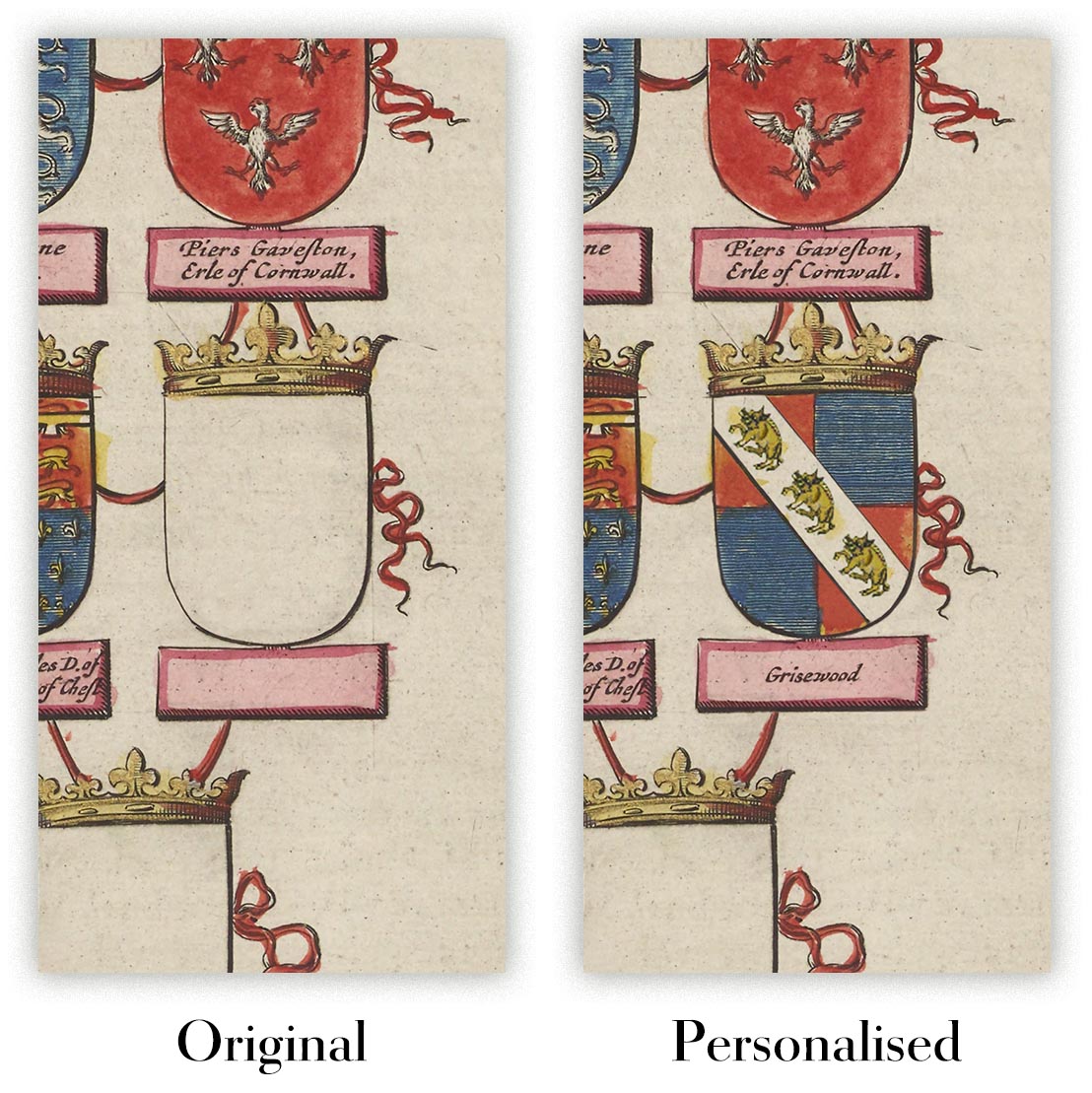
Personalising your map
You can add a short title or dedication, mark one meaningful place, or request one considered visual detail. For personalised designs, we send a proof before printing and you can request changes before approval.
For more complex bespoke commissions, contact our design team.
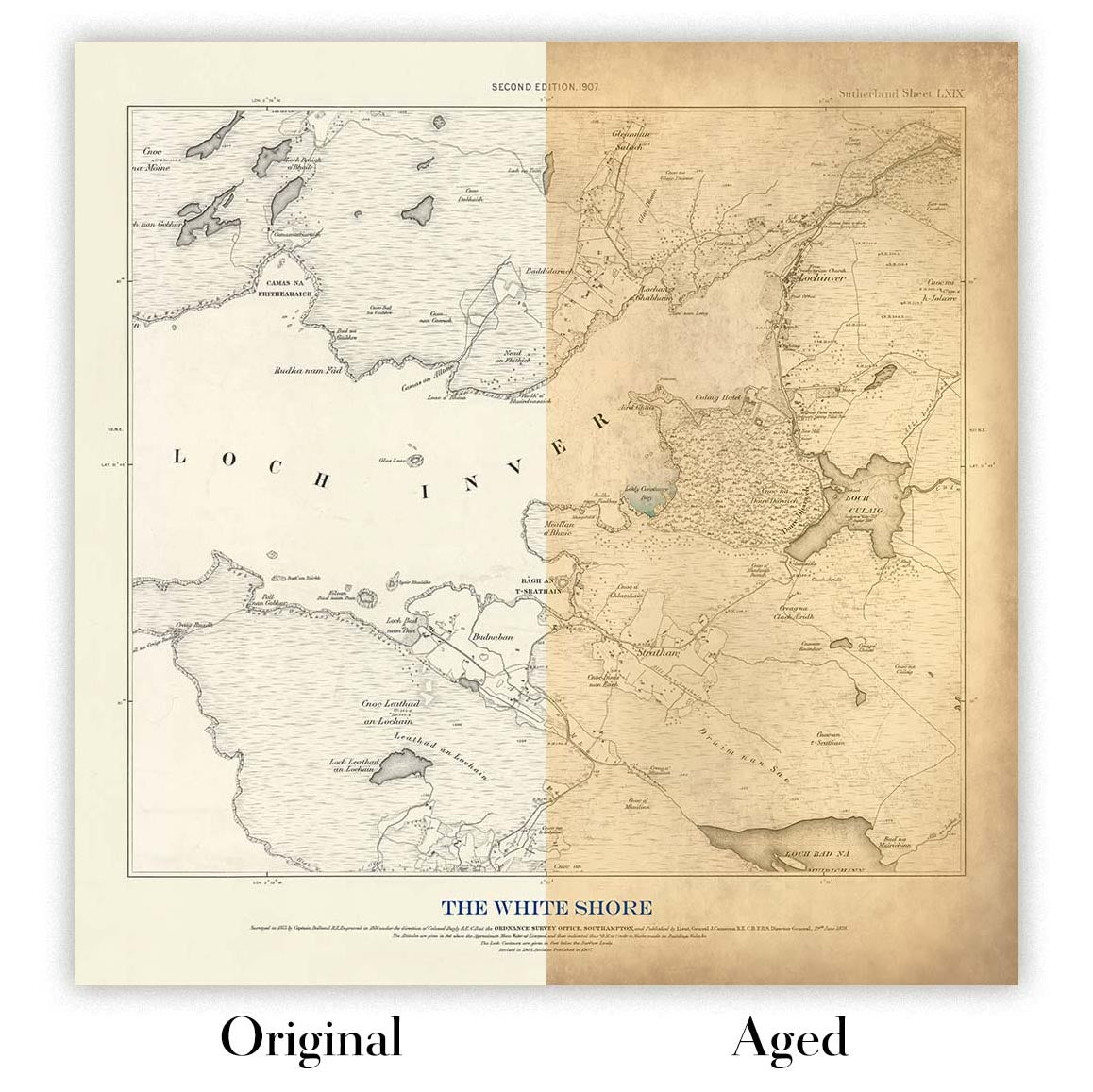
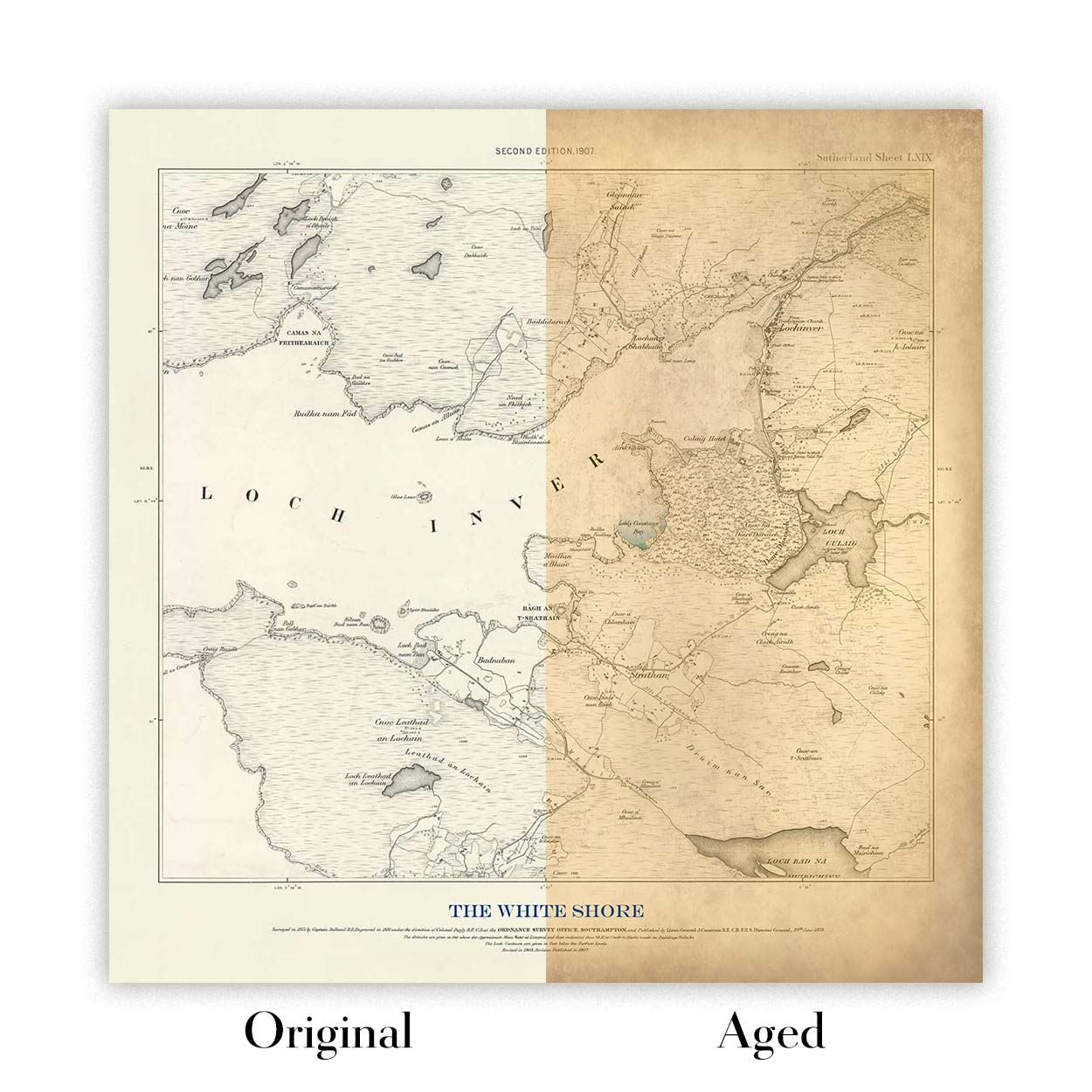
Original or Aged
Choose Original for true-to-source colour, or Aged for a warmer, richer antique character created with our specialist ageing process. See examples of our Aged maps.
We’ve been restoring and producing maps and art prints since 1984, and we stand behind every piece.
Every order is covered by our 10-year guarantee and damage-free delivery guarantee. If your piece arrives damaged, we’ll replace or remake it free of charge. If anything else isn’t right, contact our workshop team and we’ll put it right promptly.
See our returns and refund policy for full details.
Or try searching for something!


