














Rare Old Pictorial Map of Alabama by Liozu, 1946: Huntsville, Birmingham, Montgomery, Mobile, Tennessee River
Restored in our London workshop from the original 1946 map and printed to museum-grade archival standards. Full description
The Collector’s Offer
Choose two eligible works and receive 20% off both. Choose three and the lowest-priced one is complimentary, a maximum saving of 33%.
Mix and match eligible standard maps and fine-art prints. No code is required; the offer is applied automatically at checkout.
Standard made-to-order configurations are included. Bespoke sizes, personalised designs and commissioned work are excluded.
Need delivery to different addresses? Contact us before ordering.The Collector’s Offer
Choose two eligible works and receive 20% off both. Choose three and the lowest-priced one is complimentary, a maximum saving of 33%.
Mix and match eligible standard maps and fine-art prints. No code is required; the offer is applied automatically at checkout.
Standard made-to-order configurations are included. Bespoke sizes, personalised designs and commissioned work are excluded.
Need delivery to different addresses? Contact us before ordering.
Restored from the original 1946 map and printed to museum-grade archival standards. Full description
Choose your size
Choose your finish


(More info)
Gift message & custom finish

If you want to add a gift message, or a finish (jigsaw, aluminium board, etc.) that is not available here, please request it in the "order note" when you check out.
Every order is custom made, so if you need the size adjusted slightly, or printed on an unusual material, just let us know. We've done thousands of custom orders over the years, so there's (almost) nothing we can't manage.
You can also contact us before you order, if you prefer!
Own a piece of history
8,000+ five-star reviews


Titled Alabama small state map, Jacques Liozu’s 1946 pictorial bird’s‑eye view distills the postwar South into a vivid, story-rich tableau. The artist-cartographer...
Continue readingTitled Alabama small state map, Jacques Liozu’s 1946 pictorial bird’s‑eye view distills the postwar South into a vivid, story-rich tableau. The artist-cartographer renders Alabama not through grids and meridians, but through bustling scenes: cotton pickers bent to the rows, factory hands at their shifts, anglers and hunters threading woods and water. City names sweep across the surface in an engaging hand, while vignettes animate the landscape from Mobile Bay up to the Appalachian foothills. Created at a moment when illustration served education and civic pride, the map doubles as a cultural primer, introducing travelers and students to the state’s varied livelihoods and pleasures. It is both an inventory of resources and a portrait of identity, brimming with regional color and mid‑century optimism.
Liozu’s hallmark style shines here—vibrant, theatrical, and meticulously choreographed. A decorative compass rose pirouettes in the upper corner, orienting the viewer even as the scene unfurls with narrative momentum. At the bottom, an artistic cartouche crowned with ALABAMA features workers whose tools and posture echo the state’s agrarian and industrial sinews. Rivers curl across the sheet in clear, labeled ribbons, while towns and cities appear in a lively, legible script that invites close reading. Rather than pursue surveyors’ precision, the composition privileges visual hierarchy and memory: the places that mattered in 1946 are made to stand forward, their economic roles telegraphed by emblematic figures, tools, smokestacks, crops, and animals.
The state’s urban engines coalesce into commanding vignettes, each a capsule of mid-century enterprise. Birmingham rises with belching smokestacks and sturdy foundries, the archetype of Southern industry. Mobile, gateway to the Gulf, suggests a humming port with docks, cranes, and maritime traffic. Montgomery’s presence straddles governance and commerce, while Huntsville and Decatur anchor the Tennessee River corridor. Tuscaloosa hints at river-borne trade and manufacturing; Gadsden, Anniston, and Selma appear as industrious nodes along rail and river. Agriculture radiates across the map: Dothan’s peanut country, Auburn’s agrarian learning tradition, cotton fields rippling around Florence, Tuscumbia, and smaller communities like Evergreen, Shelby, and Fayette. Workers stride through these scenes—mill hands, timber crews, farmers—embodying a state at the confluence of fields, forests, workshops, and warehouses.
Geography is the map’s narrative scaffolding. The Tennessee River sweeps across the north, binding Florence, Tuscumbia, Decatur, and Huntsville in a luminous arc of water and power. To the east, the Coosa and Tallapoosa descend from hill country, merging to form the Alabama River, whose broad, labeled course threads Montgomery and Selma en route to the Mobile–Tensaw Delta. The Black Warrior braids through Tuscaloosa; the Tombigbee and Chattahoochee define western and southeastern reaches, the latter brushing past Dothan. Vignettes punctuate floodplains and pine uplands with deer, quail, and fish, while boats skim bay and river. The Appalachians’ last folds rise gently in the northeast; the coastal plain flattens toward Mobile Bay. Recreational scenes—camping, hunting, angling—underscore how water and woods shaped everyday life.
Produced in 1946, the map channels post‑World War II confidence in regional self‑definition—and in art as a teaching tool. Liozu, renowned for transforming geography into a tableau of livelihoods, compresses civics, economics, and natural history into a single glance. The result reads like a mid‑century civic mural: accessible, celebratory, and packed with cues that turn place-names into stories. Birmingham, Montgomery, Huntsville, Mobile, and Tuscaloosa are set alongside Dothan, Decatur, Auburn, Anniston, Selma, Gadsden, Florence, Evergreen, Tuscumbia, Shelby, and Fayette, knitting metropolis and hamlet into one fabric. By privileging emblematic scenes over measurement, Liozu reveals a living atlas of the era—a state balancing crops and smokestacks, riverways and roadways, and the labor and leisure that defined Alabama at midcentury.
Cities and towns on this map
- Birmingham
- Montgomery
- Huntsville
- Mobile
- Tuscaloosa
- Dothan
- Decatur
- Auburn
- Anniston
- Selma
- Gadsden
- Florence
- Evergreen
- Tuscumbia
- Shelby
- Fayette
Notable Features & Landmarks
- Vignettes illustrating cotton picking, farming, and local fauna.
- Major industrial cities depicted with central vignettes showing smokestacks and workers.
- Decorative compass rose located in the upper corner.
- Labeled rivers and significant geographical features.
- City names prominently displayed in an engaging font.
- Artistic cartouche with "ALABAMA" at the bottom, depicting workers.
Historical and design context
- Title: Alabama small state map.
- Year created: 1946.
- Mapmaker: Jacques Liozu, known for his mid-century regional maps characterized by an illustrative style.
- Notes: A pictorial bird’s-eye view highlighting local industries, farm crops, and recreational activities, reflecting regional identity through engaging imagery.
- Themes shown: Local industries (agriculture and manufacturing), farm crops, recreational pastimes, and notable landmarks represented through vignettes.
- Coverage: Focuses on the state of Alabama.
- Design style: Vibrant and illustrative, emphasizing visual engagement over technical detail.
- Historical significance: Reflects post-World War II attitudes toward regional identity and education through art, illuminating Alabama’s economic and cultural landscape of the period.
Please double check the images to make sure that a specific town or place is shown on this map. You can also get in touch and ask us to check the map for you.
This map looks great at every size, but I always recommend going for a larger size if you have space. That way you can easily make out all of the details.
This map looks amazing at sizes all the way up to 40in (100cm). If you are looking for a larger map, please get in touch.
The model in the listing images is holding the 18x24in (45x60cm) version of this map.
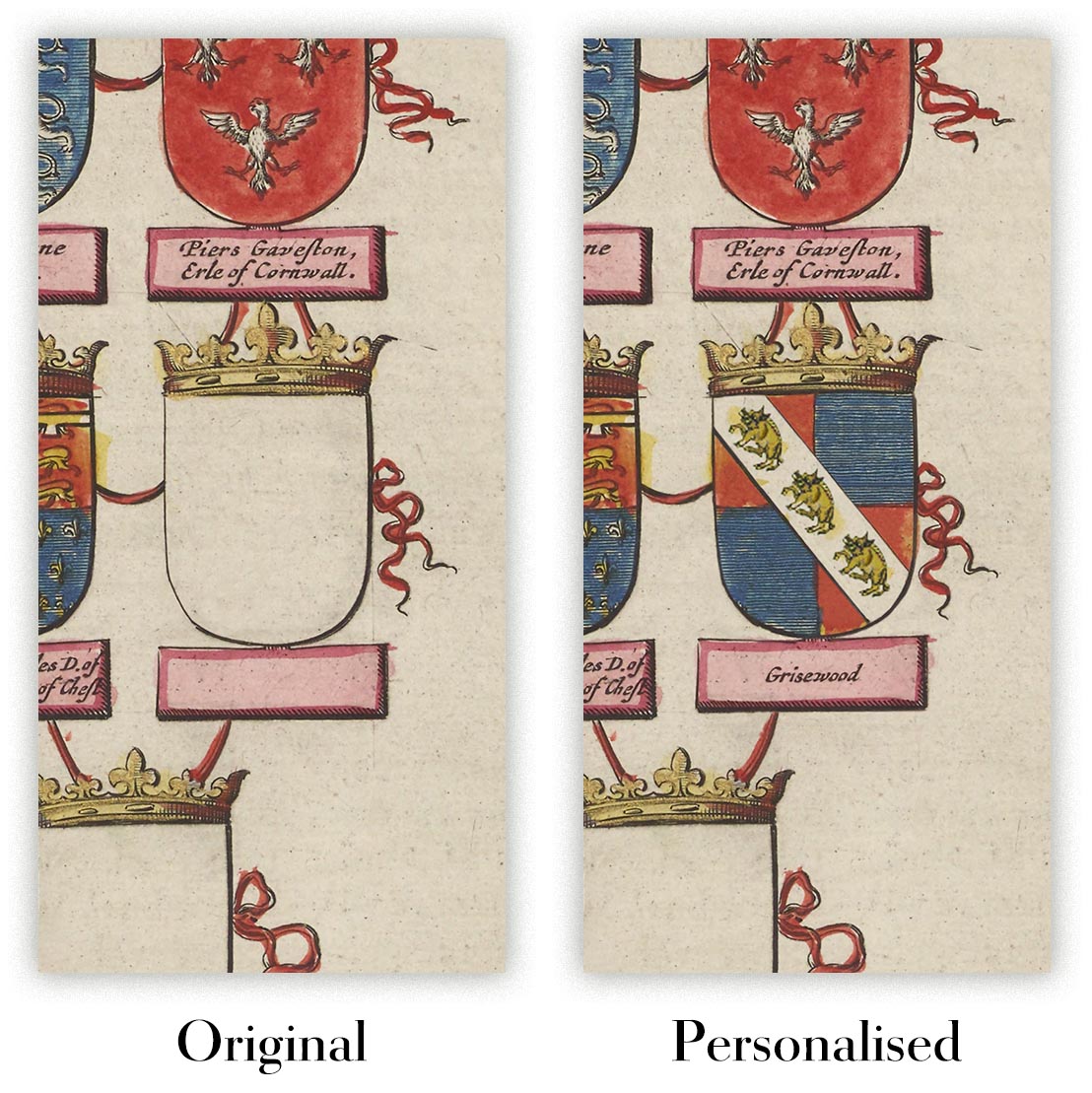
The fifth listing image shows an example of my map personalisation service.
If you’re looking for something slightly different, check out my collection of the best old maps to see if something else catches your eye.
Please contact me to check if a certain location, landmark or feature is shown on this map.
This would make a wonderful birthday, Christmas, Father's Day, work leaving, anniversary or housewarming gift for someone from the areas covered by this map.
This map is available as a giclée print on acid free archival matte paper, or you can buy it framed. The frame is a nice, simple black frame that suits most aesthetics. Please get in touch if you'd like a different frame colour or material. My frames are glazed with super-clear museum-grade acrylic (perspex/acrylite), which is significantly less reflective than glass, safer, and will always arrive in perfect condition.
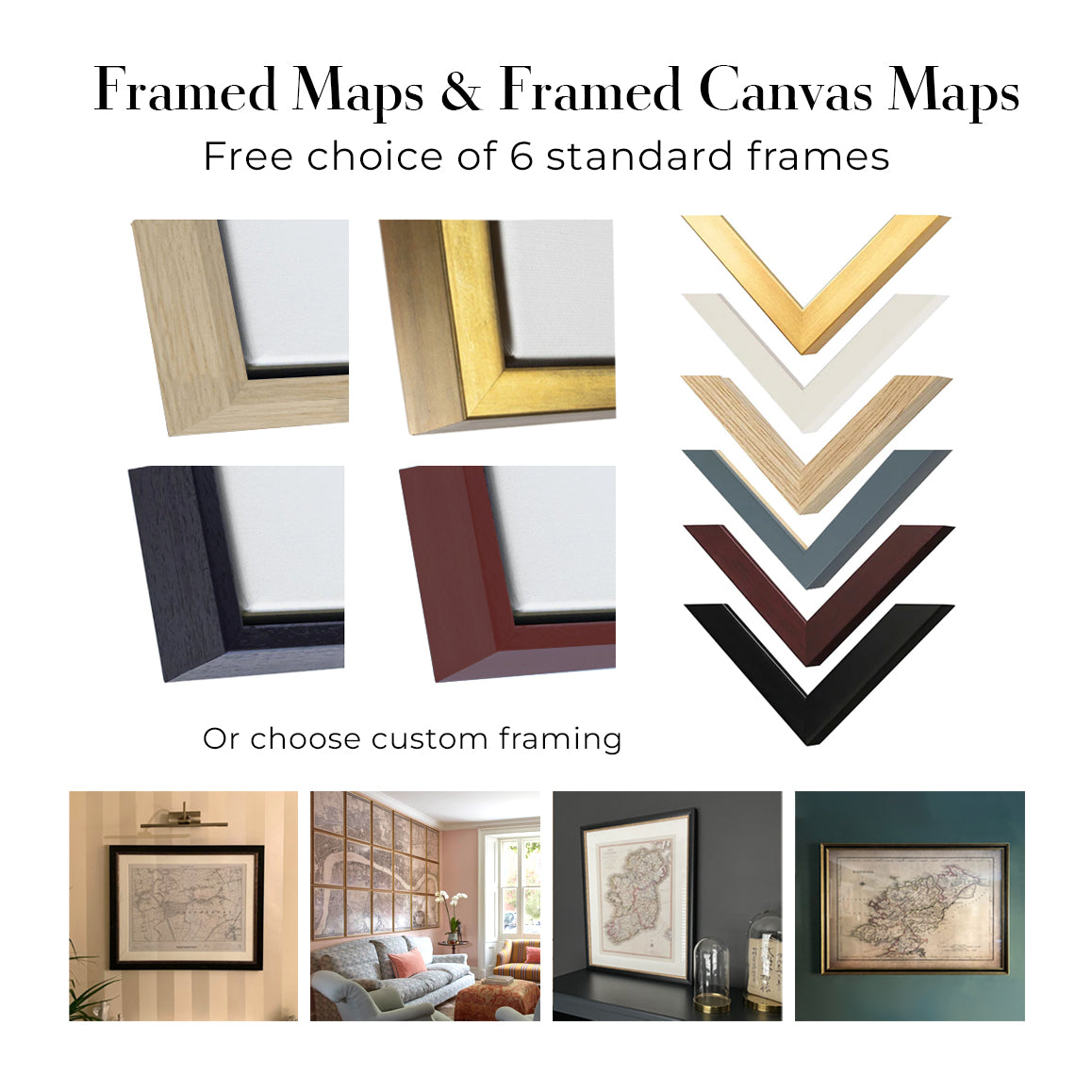
This map is also available as a float framed canvas, sometimes known as a shadow gap framed canvas or canvas floater. The map is printed on artist's cotton canvas and then stretched over a handmade box frame. We then "float" the canvas inside a wooden frame, which is available in a range of colours (black, dark brown, oak, antique gold and white). This is a wonderful way to present a map without glazing in front. See some examples of float framed canvas maps and explore the differences between my different finishes.
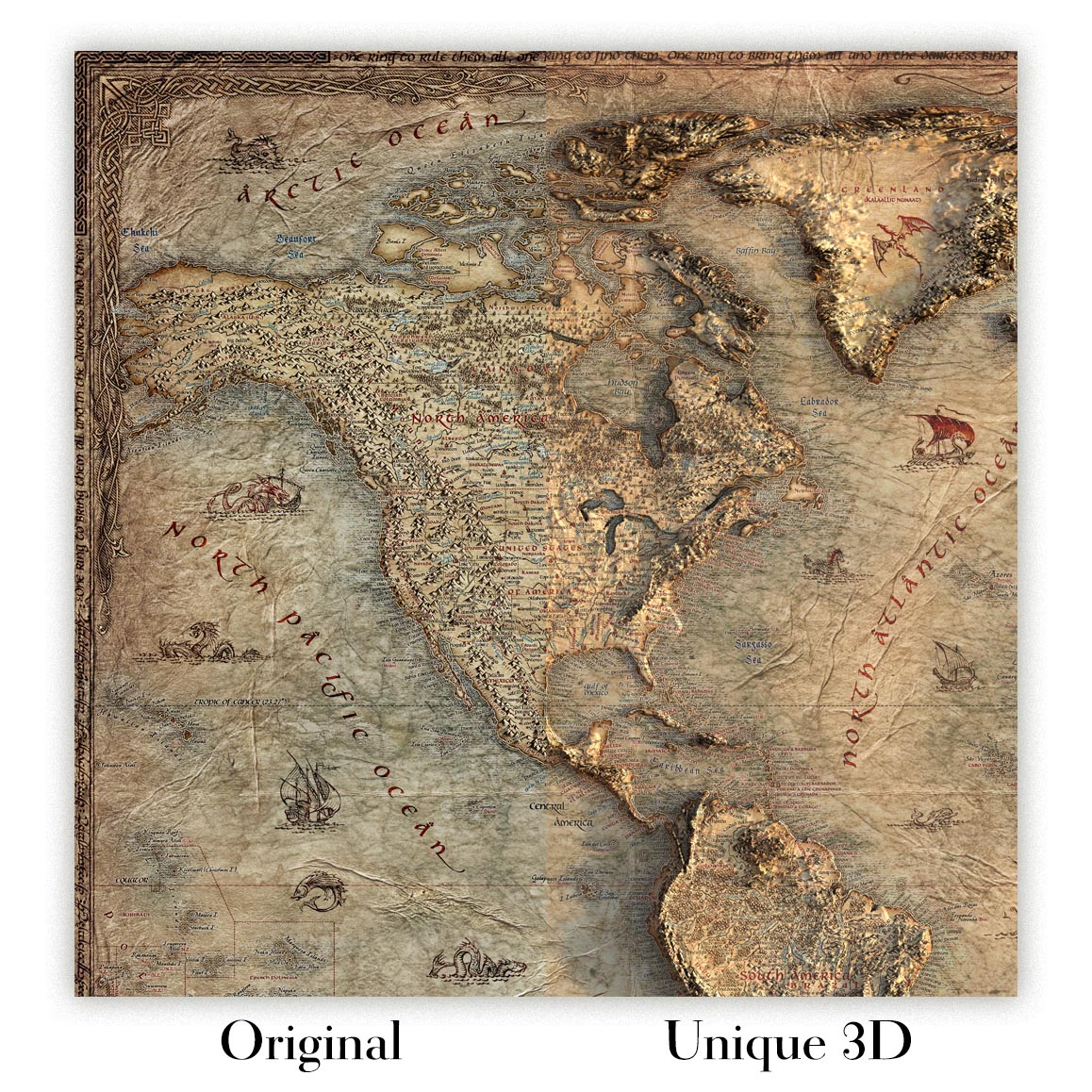
For something truly unique, this map is also available in "Unique 3D", our trademarked process that dramatically transforms the map so that it has a wonderful sense of depth. We combine the original map with detailed topography and elevation data, so that mountains and the terrain really "pop". For more info and examples of 3D maps, check my Unique 3D page.
Titled Alabama small state map, Jacques Liozu’s 1946 pictorial bird’s‑eye view distills the postwar South into a vivid, story-rich tableau. The artist-cartographer renders Alabama not through grids and meridians, but through bustling scenes: cotton pickers bent to the rows, factory hands at their shifts, anglers and hunters threading woods and water. City names sweep across the surface in an engaging hand, while vignettes animate the landscape from Mobile Bay up to the Appalachian foothills. Created at a moment when illustration served education and civic pride, the map doubles as a cultural primer, introducing travelers and students to the state’s varied livelihoods and pleasures. It is both an inventory of resources and a portrait of identity, brimming with regional color and mid‑century optimism.
Liozu’s hallmark style shines here—vibrant, theatrical, and meticulously choreographed. A decorative compass rose pirouettes in the upper corner, orienting the viewer even as the scene unfurls with narrative momentum. At the bottom, an artistic cartouche crowned with ALABAMA features workers whose tools and posture echo the state’s agrarian and industrial sinews. Rivers curl across the sheet in clear, labeled ribbons, while towns and cities appear in a lively, legible script that invites close reading. Rather than pursue surveyors’ precision, the composition privileges visual hierarchy and memory: the places that mattered in 1946 are made to stand forward, their economic roles telegraphed by emblematic figures, tools, smokestacks, crops, and animals.
The state’s urban engines coalesce into commanding vignettes, each a capsule of mid-century enterprise. Birmingham rises with belching smokestacks and sturdy foundries, the archetype of Southern industry. Mobile, gateway to the Gulf, suggests a humming port with docks, cranes, and maritime traffic. Montgomery’s presence straddles governance and commerce, while Huntsville and Decatur anchor the Tennessee River corridor. Tuscaloosa hints at river-borne trade and manufacturing; Gadsden, Anniston, and Selma appear as industrious nodes along rail and river. Agriculture radiates across the map: Dothan’s peanut country, Auburn’s agrarian learning tradition, cotton fields rippling around Florence, Tuscumbia, and smaller communities like Evergreen, Shelby, and Fayette. Workers stride through these scenes—mill hands, timber crews, farmers—embodying a state at the confluence of fields, forests, workshops, and warehouses.
Geography is the map’s narrative scaffolding. The Tennessee River sweeps across the north, binding Florence, Tuscumbia, Decatur, and Huntsville in a luminous arc of water and power. To the east, the Coosa and Tallapoosa descend from hill country, merging to form the Alabama River, whose broad, labeled course threads Montgomery and Selma en route to the Mobile–Tensaw Delta. The Black Warrior braids through Tuscaloosa; the Tombigbee and Chattahoochee define western and southeastern reaches, the latter brushing past Dothan. Vignettes punctuate floodplains and pine uplands with deer, quail, and fish, while boats skim bay and river. The Appalachians’ last folds rise gently in the northeast; the coastal plain flattens toward Mobile Bay. Recreational scenes—camping, hunting, angling—underscore how water and woods shaped everyday life.
Produced in 1946, the map channels post‑World War II confidence in regional self‑definition—and in art as a teaching tool. Liozu, renowned for transforming geography into a tableau of livelihoods, compresses civics, economics, and natural history into a single glance. The result reads like a mid‑century civic mural: accessible, celebratory, and packed with cues that turn place-names into stories. Birmingham, Montgomery, Huntsville, Mobile, and Tuscaloosa are set alongside Dothan, Decatur, Auburn, Anniston, Selma, Gadsden, Florence, Evergreen, Tuscumbia, Shelby, and Fayette, knitting metropolis and hamlet into one fabric. By privileging emblematic scenes over measurement, Liozu reveals a living atlas of the era—a state balancing crops and smokestacks, riverways and roadways, and the labor and leisure that defined Alabama at midcentury.
Cities and towns on this map
- Birmingham
- Montgomery
- Huntsville
- Mobile
- Tuscaloosa
- Dothan
- Decatur
- Auburn
- Anniston
- Selma
- Gadsden
- Florence
- Evergreen
- Tuscumbia
- Shelby
- Fayette
Notable Features & Landmarks
- Vignettes illustrating cotton picking, farming, and local fauna.
- Major industrial cities depicted with central vignettes showing smokestacks and workers.
- Decorative compass rose located in the upper corner.
- Labeled rivers and significant geographical features.
- City names prominently displayed in an engaging font.
- Artistic cartouche with "ALABAMA" at the bottom, depicting workers.
Historical and design context
- Title: Alabama small state map.
- Year created: 1946.
- Mapmaker: Jacques Liozu, known for his mid-century regional maps characterized by an illustrative style.
- Notes: A pictorial bird’s-eye view highlighting local industries, farm crops, and recreational activities, reflecting regional identity through engaging imagery.
- Themes shown: Local industries (agriculture and manufacturing), farm crops, recreational pastimes, and notable landmarks represented through vignettes.
- Coverage: Focuses on the state of Alabama.
- Design style: Vibrant and illustrative, emphasizing visual engagement over technical detail.
- Historical significance: Reflects post-World War II attitudes toward regional identity and education through art, illuminating Alabama’s economic and cultural landscape of the period.
Please double check the images to make sure that a specific town or place is shown on this map. You can also get in touch and ask us to check the map for you.
This map looks great at every size, but I always recommend going for a larger size if you have space. That way you can easily make out all of the details.
This map looks amazing at sizes all the way up to 40in (100cm). If you are looking for a larger map, please get in touch.
The model in the listing images is holding the 18x24in (45x60cm) version of this map.
The fifth listing image shows an example of my map personalisation service.
If you’re looking for something slightly different, check out my collection of the best old maps to see if something else catches your eye.
Please contact me to check if a certain location, landmark or feature is shown on this map.
This would make a wonderful birthday, Christmas, Father's Day, work leaving, anniversary or housewarming gift for someone from the areas covered by this map.
This map is available as a giclée print on acid free archival matte paper, or you can buy it framed. The frame is a nice, simple black frame that suits most aesthetics. Please get in touch if you'd like a different frame colour or material. My frames are glazed with super-clear museum-grade acrylic (perspex/acrylite), which is significantly less reflective than glass, safer, and will always arrive in perfect condition.
This map is also available as a float framed canvas, sometimes known as a shadow gap framed canvas or canvas floater. The map is printed on artist's cotton canvas and then stretched over a handmade box frame. We then "float" the canvas inside a wooden frame, which is available in a range of colours (black, dark brown, oak, antique gold and white). This is a wonderful way to present a map without glazing in front. See some examples of float framed canvas maps and explore the differences between my different finishes.
For something truly unique, this map is also available in "Unique 3D", our trademarked process that dramatically transforms the map so that it has a wonderful sense of depth. We combine the original map with detailed topography and elevation data, so that mountains and the terrain really "pop". For more info and examples of 3D maps, check my Unique 3D page.
Many of our maps and art prints are chosen as thoughtful gifts for homes, offices, studies and meaningful places.
Choose a framed option for the easiest ready-to-hang gift, or choose an unframed print if the recipient may prefer to select their own frame.
We make orders locally in 24 countries around the world, so gifts can often be produced close to the recipient. This helps them arrive faster, travel more safely, and avoid customs or import duty surprises.
- We can deliver directly to the recipient
- Framed pieces arrive ready to hang
- Unframed prints are carefully packed in a strong protective tube
- Almost every order is made locally, for faster, safer gifting
- 90-day returns give the recipient time to decide
If you are not sure what to choose, please contact us. We can help you pick the right map, size, finish or delivery option.
Most orders are made locally and delivered in around 2–3 working days, depending on the product, size and destination.
We print and frame maps and artwork in 24 countries around the world, so your order is usually made close to you or your recipient. That means faster delivery, less time in transit, and no customs or import duty surprises.
Personalised and customised pieces usually take an extra 1–2 working days, because we prepare your design and send it to you for approval before printing.
Very large framed orders can take a little longer, as they need extra care in production and delivery.
Every order is carefully packaged: unframed prints are sent in a strong protective tube, while framed pieces are securely packed with protective materials around the frame.
If you need your order by a particular date, please contact us before ordering. We’ll check the best production route and delivery option for your location.
Express delivery is available at checkout for most countries. Next-day delivery is available in the UK, US, Singapore and the UAE.
Your order is covered by our 90-day returns policy and 10-year guarantee.
Our standard frame is a gallery-style black ash hardwood frame, with a simple, modern look. It is approximately 20mm (0.8in) wide. You can also view some lovely customer photos of framed maps and art.
We use super-clear acrylic glazing, also known as Perspex or Acrylite, instead of traditional glass. It is lighter, safer, and has lower reflectivity, giving the artwork a clearer, cleaner appearance.
Six standard frame colours are available at no extra cost: black, dark brown, dark grey, oak, white, and antique gold. Custom framing and mounting/matting is also available for customers looking for something more specific.
Most maps, art prints, and illustrations are also available as a framed canvas. We use matte cotton canvas, stretch it over a sustainably sourced wooden box frame, and then float the piece within a wooden outer frame. The finished result is beautifully presented, with no glazing between you and the artwork.
All frames are supplied ready to hang, with either string or brackets fitted to the back. Very large frames will include heavy-duty hanging plates and/or a mounting baton. If you have any questions, please get in touch.
We can also supply old maps and artwork on canvas, foam board, cotton rag, and other materials.
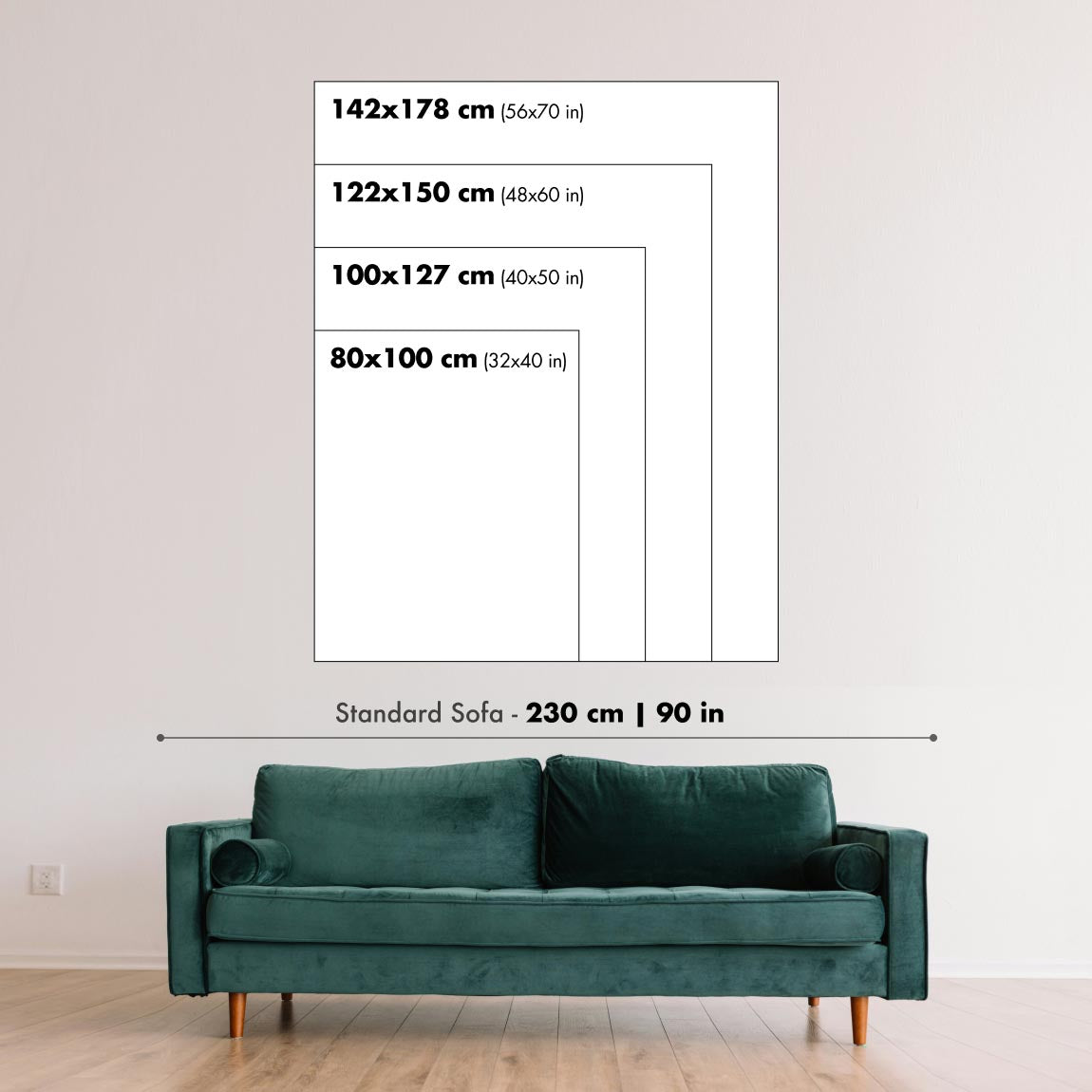
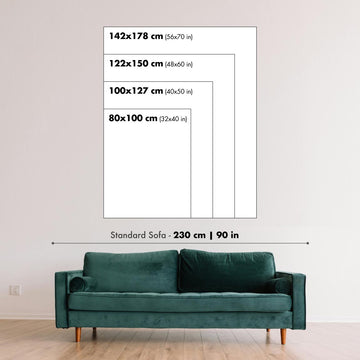
If you would prefer to frame your map or artwork yourself, please read our size guide before ordering.
We work with interior designers, hospitality businesses, property professionals, offices and corporate buyers on individual pieces and larger coordinated projects.
This map can be adapted for a particular wall, room or project, and our workshop can help coordinate the dimensions, material and framing before production.
- Exact, oversized and made-to-measure dimensions
- Custom framing, mounting and alternative materials
- Coordinated pieces for several rooms or locations
- Map personalisation, to mark important locations or add extra details
- Map and framing guidance from our workshop
- Local production for projects around the world
Every Unique Maps piece begins with an authentic cartographic source or an original design from our London studio.
For our historic maps, we source rare originals from libraries, archives, auction houses and private collections around the world. We carefully restore each map for print—repairing age-related damage, balancing colour and improving clarity while preserving its original detail, texture and character.
Once restored, the map is prepared for your chosen size and finish. Your piece is then printed and, where selected, framed close to its delivery destination.
Our map prints use acid-free 200gsm archival matte paper and fade-resistant pigment inks, creating a rich, non-glossy finish designed to last. Framed maps use crystal-clear optical acrylic and arrive ready to hang.
Canvas, cotton-rag and other specialist presentations are also available. Learn more about our materials and finishes.
Personalising your map
You can add a short title or dedication, mark one meaningful place, or request one considered visual detail. For personalised designs, we send a proof before printing and you can request changes before approval.
For more complex bespoke commissions, contact our design team.
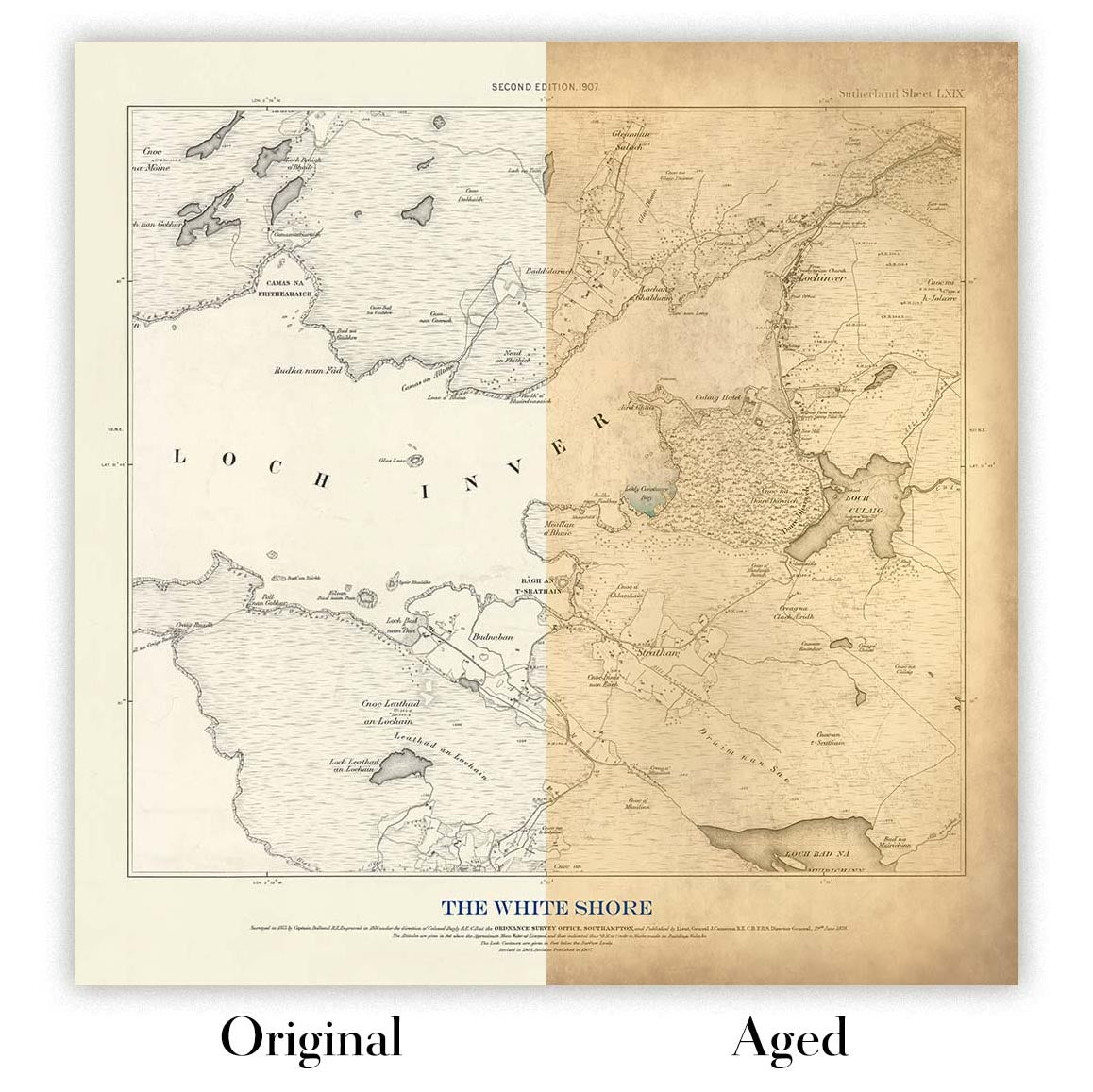
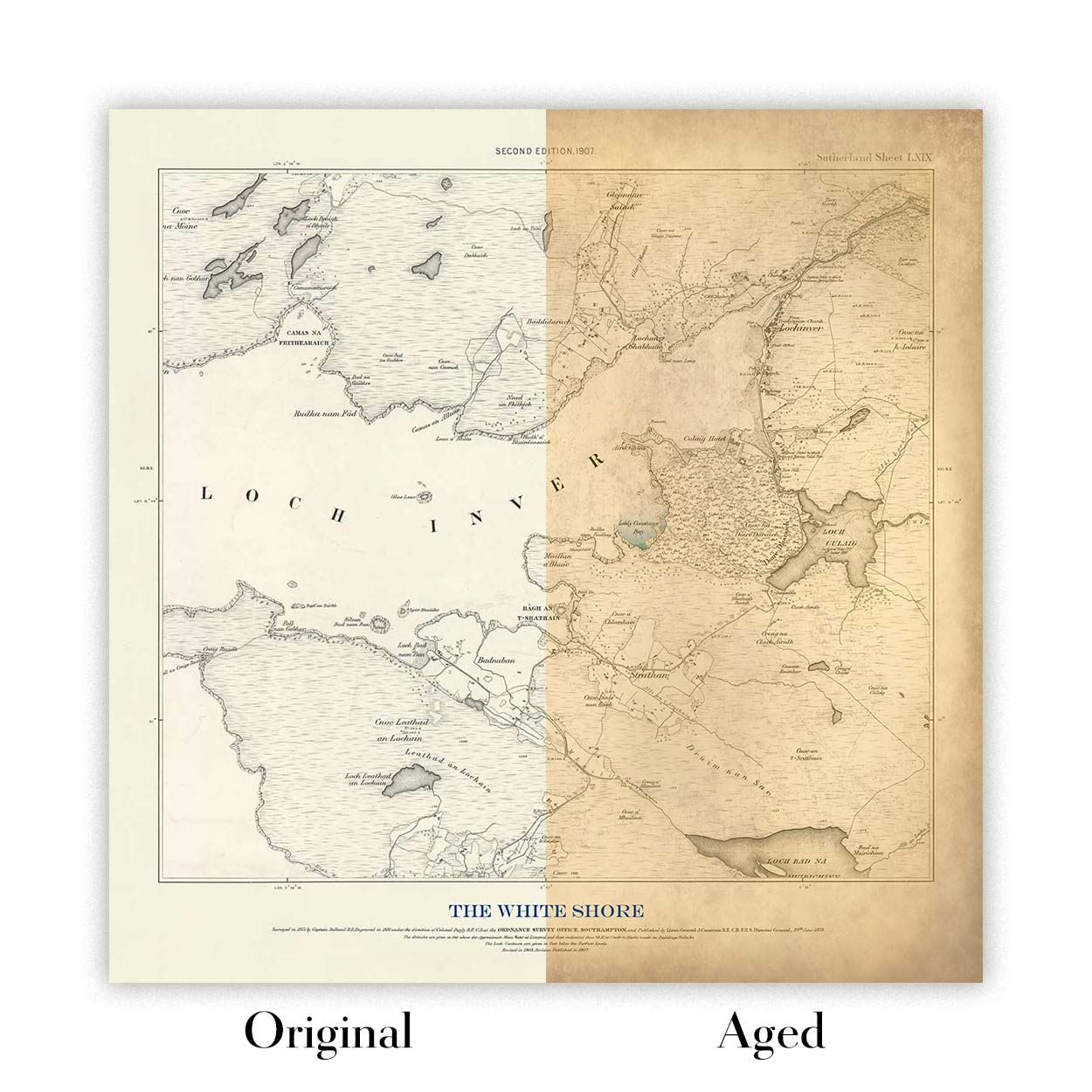
Original or Aged
Choose Original for true-to-source colour, or Aged for a warmer, richer antique character created with our specialist ageing process. See examples of our Aged maps.
We’ve been restoring and producing maps and art prints since 1984, and we stand behind every piece.
Every order is covered by our 10-year guarantee and damage-free delivery guarantee. If your piece arrives damaged, we’ll replace or remake it free of charge. If anything else isn’t right, contact our workshop team and we’ll put it right promptly.
See our returns and refund policy for full details.
Or try searching for something!


