















Rare Old Map of South Carolina, 1920: Road & Railroad, Charleston, Columbia, Greenville, Auto Trails, Electric Lines
Restored in our London workshop from the original 1920 map and printed to museum-grade archival standards. Full description
The Collector’s Offer
Choose two eligible works and receive 20% off both. Choose three and the lowest-priced one is complimentary, a maximum saving of 33%.
Mix and match eligible standard maps and fine-art prints. No code is required; the offer is applied automatically at checkout.
Standard made-to-order configurations are included. Bespoke sizes, personalised designs and commissioned work are excluded.
Need delivery to different addresses? Contact us before ordering.The Collector’s Offer
Choose two eligible works and receive 20% off both. Choose three and the lowest-priced one is complimentary, a maximum saving of 33%.
Mix and match eligible standard maps and fine-art prints. No code is required; the offer is applied automatically at checkout.
Standard made-to-order configurations are included. Bespoke sizes, personalised designs and commissioned work are excluded.
Need delivery to different addresses? Contact us before ordering.
Restored from the original 1920 map and printed to museum-grade archival standards. Full description
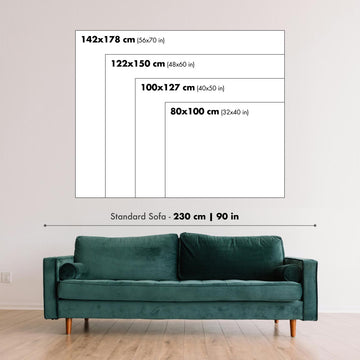
Choose your size
Choose your finish


(More info)
Gift message & custom finish

If you want to add a gift message, or a finish (jigsaw, aluminium board, etc.) that is not available here, please request it in the "order note" when you check out.
Every order is custom made, so if you need the size adjusted slightly, or printed on an unusual material, just let us know. We've done thousands of custom orders over the years, so there's (almost) nothing we can't manage.
You can also contact us before you order, if you prefer!
Own a piece of history
8,000+ five-star reviews


Titled "South Carolina," this 1920 state map from the George F. Cram Company captures the Palmetto State at the dawn of the...
Continue readingTitled "South Carolina," this 1920 state map from the George F. Cram Company captures the Palmetto State at the dawn of the motor age, when new routes stitched together long-established towns and plantations into a modern network. Designed as both navigational tool and geographic portrait, it uses a disciplined palette to extraordinary effect: electric lines glow in red, auto trails course across the state in distinct tints, and state roads and highways alternate between red and blue for instant legibility. Administrative boundaries are crisply color-coded, while principal cities, county seats, and the capital stand out in green. An illustrative key clarifies every symbol, and a mile-referenced scale anchors distance at a glance. Hachured relief adds sculptural depth, casting the Piedmont and coastal flats into satisfying visual balance.
Chicago-based George F. Cram Company built its reputation on practical, infrastructure-forward cartography, and this sheet distills that ethos with understated elegance. In the early twentieth century, as census tabulations and public works accelerated, Cram’s editors prioritized what travelers, shippers, and salesmen most needed: clear hierarchies of roads, rail and traction lines, and unambiguous county delineations that matched governmental realities. Their South Carolina integrates these priorities seamlessly, marrying meticulous labeling with color logic that reduces complexity without sacrificing detail. The house style favors clean typography, restrained ornament, and an insistence on current improvements—qualities that made Cram a staple in classrooms, glove compartments, and boardrooms alike. Here, those virtues serve a state in transition, translating its rapid infrastructural growth into a map that is both immediately useful and enduringly informative.
Geography is rendered with rare sensitivity. Hachures trace the Blue Ridge’s first upthrusts in the northwest before softening across the rolling Piedmont, then fading to the sandy breaks of the Fall Line and the broad Coastal Plain. A web of rivers—Savannah and Saluda, Broad joining the Congaree, the Santee’s braided courses, the Edisto’s blackwater, the Pee Dee and Waccamaw near the Grand Strand—organizes settlement and transport. Every county is sharply outlined, their seats and principal cities highlighted in green to guide administration and trade. Paved and improved roads are carefully distinguished, revealing the era’s priority corridors snaking from courthouse towns to mills and markets. The reference scale in miles invites practical planning, while the clean legend translates this complexity into a language any 1920 motorist or merchant could instantly read.
Urban and industrial South Carolina steps forward in confident color. Columbia anchors the interior as state capital and railroad nexus; Charleston commands the coast, its harbor tying rice fields and pine forests to the wider Atlantic world. Upstate, Greenville, Spartanburg, and Anderson—the storied “Electric City”—form a textile-powered arc. Florence presides over the Pee Dee’s rail crossroads, while Rock Hill’s mills signal the Catawba’s energy. Summerville and the Lowcountry communities north of Charleston nod to early resort and naval development, and Myrtle Beach appears on the cusp of its seaside future. The red-threaded electric lines spotlight interurban and traction corridors across the Piedmont, while distinct auto-trail colors chart coastal arteries to Savannah and North Carolina and inland routes toward Charlotte and beyond—the precursors of the numbered U.S. highways that would soon rationalize America’s roads.
As a historical document, this map fixes South Carolina in the bright light of 1920, when census counts, county governance, and public investment converged to redraw how people moved and where commerce flowed. Railroads still carried the heaviest loads, but paved and improved roadways were advancing fast, and electrified lines were at their zenith—exactly the triad Cram emphasizes. For researchers, it is a precise guide to county boundaries, population hubs, and the connective tissue between courthouse, mill village, and port; for collectors, it offers the satisfying harmony of color, line, and purposeful design that defined great American cartography between wars. Above all, it captures a living landscape—from Blue Ridge foothills to sea islands—caught at a pivotal moment, when modern mobility began to reimagine an old and storied state.
Cities and towns on this map
- Columbia
- Charleston
- North Charleston
- Greenville
- Spartanburg
- Summerville
- Hilton Head Island
- Florence
- Myrtle Beach
- Rock Hill
- Anderson
Notable Features & Landmarks
- Electric lines highlighted in red.
- Auto trails marked with distinct colors for ease of navigation.
- State roads and highways indicated in red and blue.
- Administrative boundaries outlined using various color codes.
- Principal cities, counties, and capitals highlighted in green.
- Paved and improved roads identified for practical travel use.
- Reference scale indicating the distance in miles.
- Hachured relief for geographical depth.
- Illustrative key for map features.
Historical and design context
- Date of Creation: 1920
- Created By: George F. Cram Company
- Context About the Mapmaker: Chicago-based and known for detailed, practical maps and atlases focused on infrastructure and transportation.
- Themes and Topics: Highlights electric lines, auto trails, and administrative boundaries as both navigational aids and reflections of the era’s infrastructure.
- Themes and Topics: Distinct colors differentiate auto trails, state roads, and highways; principal cities and counties are outlined for user-friendly reference.
- Design and Style: Color-coded scheme for features with hachures for terrain relief to enhance visual depth.
- Historical Significance: Reflects South Carolina’s infrastructure and demographic data from the 1920 census, offering insights for researchers and collectors.
Please double check the images to make sure that a specific town or place is shown on this map. You can also get in touch and ask us to check the map for you.
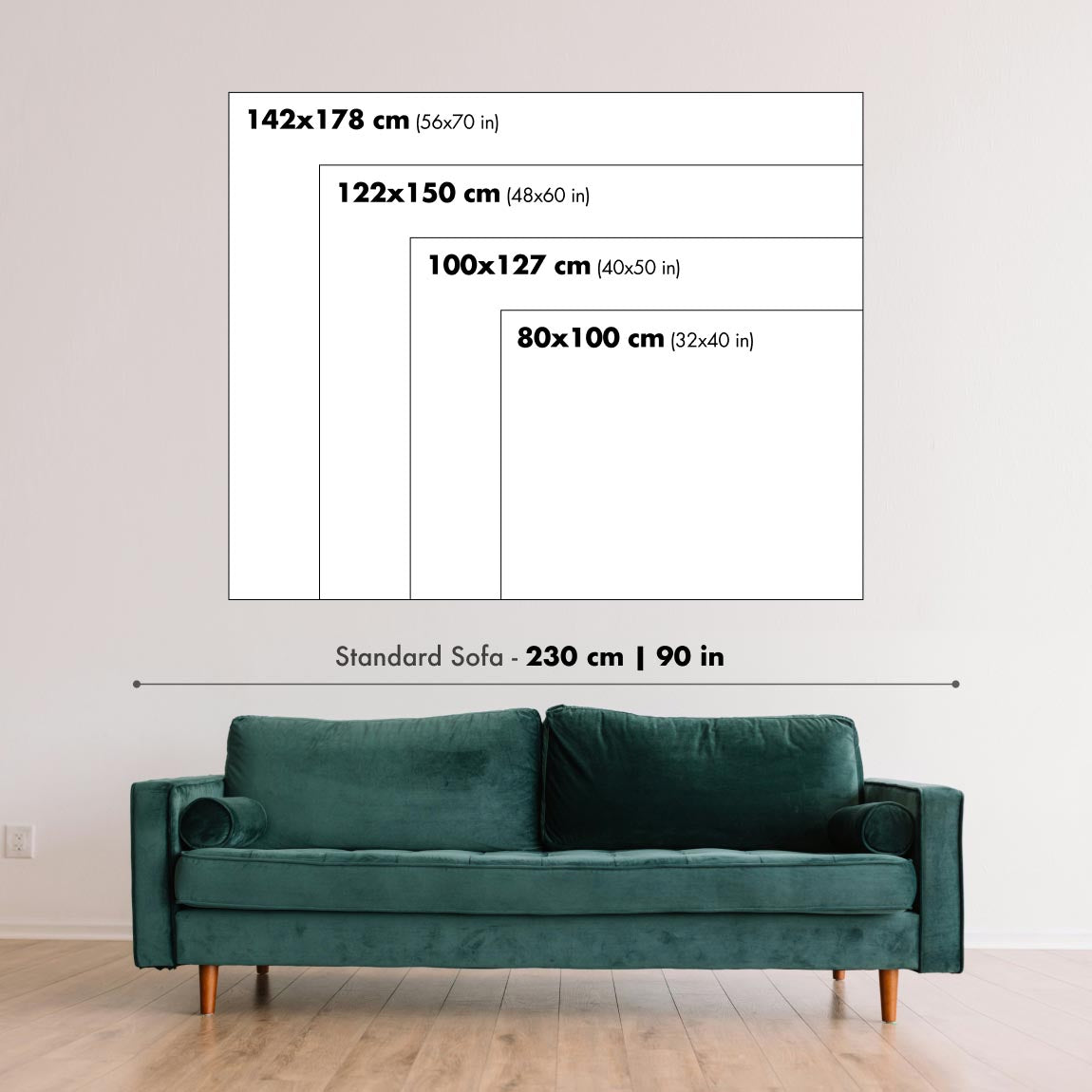
This map looks great at every size, but I always recommend going for a larger size if you have space. That way you can easily make out all of the details.
This map looks amazing at sizes all the way up to 50in (125cm). If you are looking for a larger map, please get in touch.
The model in the listing images is holding the 18x24in (45x60cm) version of this map.
The fifth listing image shows an example of my map personalisation service.
If you’re looking for something slightly different, check out my collection of the best old maps to see if something else catches your eye.
Please contact me to check if a certain location, landmark or feature is shown on this map.
This would make a wonderful birthday, Christmas, Father's Day, work leaving, anniversary or housewarming gift for someone from the areas covered by this map.
This map is available as a giclée print on acid free archival matte paper, or you can buy it framed. The frame is a nice, simple black frame that suits most aesthetics. Please get in touch if you'd like a different frame colour or material. My frames are glazed with super-clear museum-grade acrylic (perspex/acrylite), which is significantly less reflective than glass, safer, and will always arrive in perfect condition.
This map is also available as a float framed canvas, sometimes known as a shadow gap framed canvas or canvas floater. The map is printed on artist's cotton canvas and then stretched over a handmade box frame. We then "float" the canvas inside a wooden frame, which is available in a range of colours (black, dark brown, oak, antique gold and white). This is a wonderful way to present a map without glazing in front. See some examples of float framed canvas maps and explore the differences between my different finishes.
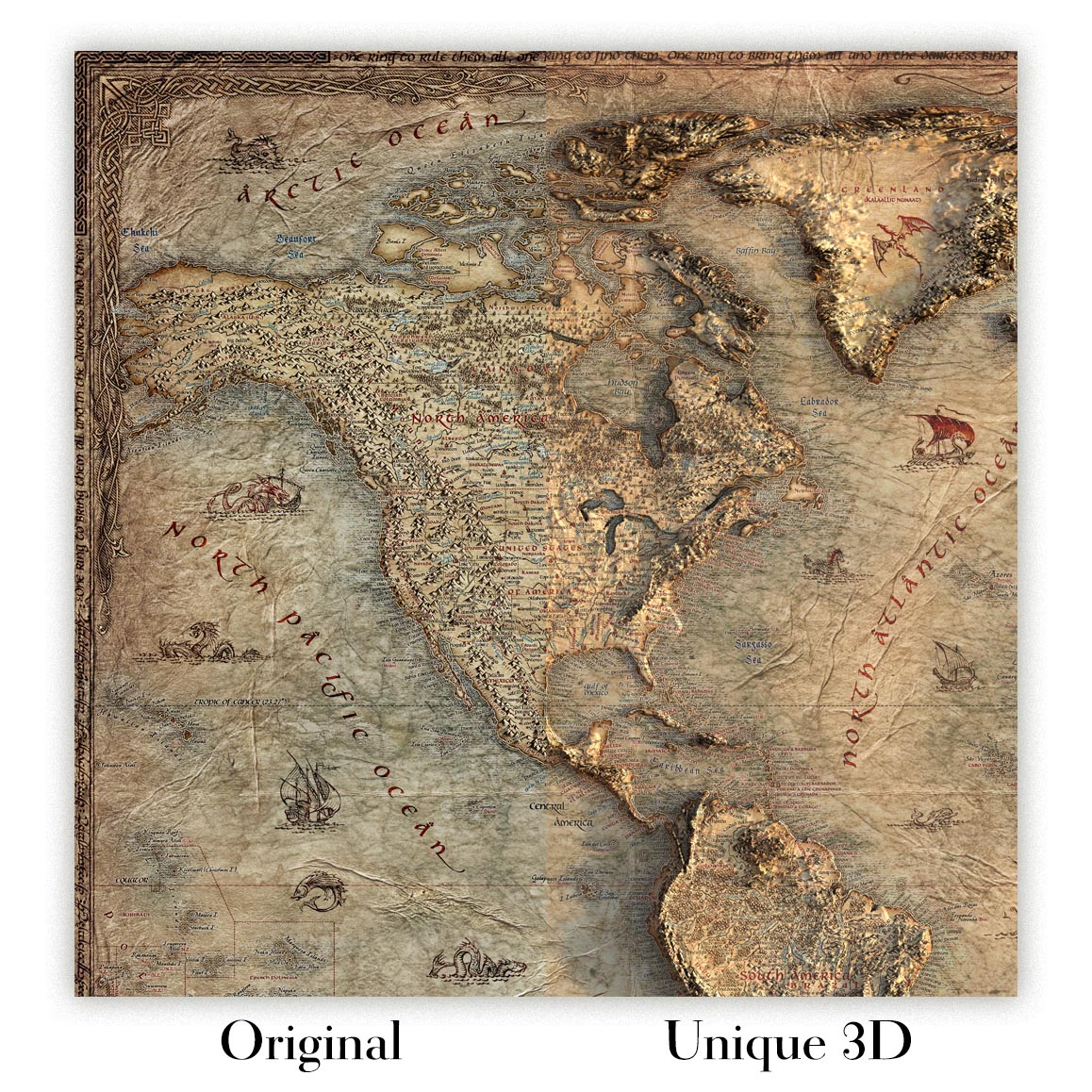
For something truly unique, this map is also available in "Unique 3D", our trademarked process that dramatically transforms the map so that it has a wonderful sense of depth. We combine the original map with detailed topography and elevation data, so that mountains and the terrain really "pop". For more info and examples of 3D maps, check my Unique 3D page.
Titled "South Carolina," this 1920 state map from the George F. Cram Company captures the Palmetto State at the dawn of the motor age, when new routes stitched together long-established towns and plantations into a modern network. Designed as both navigational tool and geographic portrait, it uses a disciplined palette to extraordinary effect: electric lines glow in red, auto trails course across the state in distinct tints, and state roads and highways alternate between red and blue for instant legibility. Administrative boundaries are crisply color-coded, while principal cities, county seats, and the capital stand out in green. An illustrative key clarifies every symbol, and a mile-referenced scale anchors distance at a glance. Hachured relief adds sculptural depth, casting the Piedmont and coastal flats into satisfying visual balance.
Chicago-based George F. Cram Company built its reputation on practical, infrastructure-forward cartography, and this sheet distills that ethos with understated elegance. In the early twentieth century, as census tabulations and public works accelerated, Cram’s editors prioritized what travelers, shippers, and salesmen most needed: clear hierarchies of roads, rail and traction lines, and unambiguous county delineations that matched governmental realities. Their South Carolina integrates these priorities seamlessly, marrying meticulous labeling with color logic that reduces complexity without sacrificing detail. The house style favors clean typography, restrained ornament, and an insistence on current improvements—qualities that made Cram a staple in classrooms, glove compartments, and boardrooms alike. Here, those virtues serve a state in transition, translating its rapid infrastructural growth into a map that is both immediately useful and enduringly informative.
Geography is rendered with rare sensitivity. Hachures trace the Blue Ridge’s first upthrusts in the northwest before softening across the rolling Piedmont, then fading to the sandy breaks of the Fall Line and the broad Coastal Plain. A web of rivers—Savannah and Saluda, Broad joining the Congaree, the Santee’s braided courses, the Edisto’s blackwater, the Pee Dee and Waccamaw near the Grand Strand—organizes settlement and transport. Every county is sharply outlined, their seats and principal cities highlighted in green to guide administration and trade. Paved and improved roads are carefully distinguished, revealing the era’s priority corridors snaking from courthouse towns to mills and markets. The reference scale in miles invites practical planning, while the clean legend translates this complexity into a language any 1920 motorist or merchant could instantly read.
Urban and industrial South Carolina steps forward in confident color. Columbia anchors the interior as state capital and railroad nexus; Charleston commands the coast, its harbor tying rice fields and pine forests to the wider Atlantic world. Upstate, Greenville, Spartanburg, and Anderson—the storied “Electric City”—form a textile-powered arc. Florence presides over the Pee Dee’s rail crossroads, while Rock Hill’s mills signal the Catawba’s energy. Summerville and the Lowcountry communities north of Charleston nod to early resort and naval development, and Myrtle Beach appears on the cusp of its seaside future. The red-threaded electric lines spotlight interurban and traction corridors across the Piedmont, while distinct auto-trail colors chart coastal arteries to Savannah and North Carolina and inland routes toward Charlotte and beyond—the precursors of the numbered U.S. highways that would soon rationalize America’s roads.
As a historical document, this map fixes South Carolina in the bright light of 1920, when census counts, county governance, and public investment converged to redraw how people moved and where commerce flowed. Railroads still carried the heaviest loads, but paved and improved roadways were advancing fast, and electrified lines were at their zenith—exactly the triad Cram emphasizes. For researchers, it is a precise guide to county boundaries, population hubs, and the connective tissue between courthouse, mill village, and port; for collectors, it offers the satisfying harmony of color, line, and purposeful design that defined great American cartography between wars. Above all, it captures a living landscape—from Blue Ridge foothills to sea islands—caught at a pivotal moment, when modern mobility began to reimagine an old and storied state.
Cities and towns on this map
- Columbia
- Charleston
- North Charleston
- Greenville
- Spartanburg
- Summerville
- Hilton Head Island
- Florence
- Myrtle Beach
- Rock Hill
- Anderson
Notable Features & Landmarks
- Electric lines highlighted in red.
- Auto trails marked with distinct colors for ease of navigation.
- State roads and highways indicated in red and blue.
- Administrative boundaries outlined using various color codes.
- Principal cities, counties, and capitals highlighted in green.
- Paved and improved roads identified for practical travel use.
- Reference scale indicating the distance in miles.
- Hachured relief for geographical depth.
- Illustrative key for map features.
Historical and design context
- Date of Creation: 1920
- Created By: George F. Cram Company
- Context About the Mapmaker: Chicago-based and known for detailed, practical maps and atlases focused on infrastructure and transportation.
- Themes and Topics: Highlights electric lines, auto trails, and administrative boundaries as both navigational aids and reflections of the era’s infrastructure.
- Themes and Topics: Distinct colors differentiate auto trails, state roads, and highways; principal cities and counties are outlined for user-friendly reference.
- Design and Style: Color-coded scheme for features with hachures for terrain relief to enhance visual depth.
- Historical Significance: Reflects South Carolina’s infrastructure and demographic data from the 1920 census, offering insights for researchers and collectors.
Please double check the images to make sure that a specific town or place is shown on this map. You can also get in touch and ask us to check the map for you.
This map looks great at every size, but I always recommend going for a larger size if you have space. That way you can easily make out all of the details.
This map looks amazing at sizes all the way up to 50in (125cm). If you are looking for a larger map, please get in touch.
The model in the listing images is holding the 18x24in (45x60cm) version of this map.
The fifth listing image shows an example of my map personalisation service.
If you’re looking for something slightly different, check out my collection of the best old maps to see if something else catches your eye.
Please contact me to check if a certain location, landmark or feature is shown on this map.
This would make a wonderful birthday, Christmas, Father's Day, work leaving, anniversary or housewarming gift for someone from the areas covered by this map.
This map is available as a giclée print on acid free archival matte paper, or you can buy it framed. The frame is a nice, simple black frame that suits most aesthetics. Please get in touch if you'd like a different frame colour or material. My frames are glazed with super-clear museum-grade acrylic (perspex/acrylite), which is significantly less reflective than glass, safer, and will always arrive in perfect condition.
This map is also available as a float framed canvas, sometimes known as a shadow gap framed canvas or canvas floater. The map is printed on artist's cotton canvas and then stretched over a handmade box frame. We then "float" the canvas inside a wooden frame, which is available in a range of colours (black, dark brown, oak, antique gold and white). This is a wonderful way to present a map without glazing in front. See some examples of float framed canvas maps and explore the differences between my different finishes.
For something truly unique, this map is also available in "Unique 3D", our trademarked process that dramatically transforms the map so that it has a wonderful sense of depth. We combine the original map with detailed topography and elevation data, so that mountains and the terrain really "pop". For more info and examples of 3D maps, check my Unique 3D page.
Many of our maps and art prints are chosen as thoughtful gifts for homes, offices, studies and meaningful places.
Choose a framed option for the easiest ready-to-hang gift, or choose an unframed print if the recipient may prefer to select their own frame.
We make orders locally in 24 countries around the world, so gifts can often be produced close to the recipient. This helps them arrive faster, travel more safely, and avoid customs or import duty surprises.
- We can deliver directly to the recipient
- Framed pieces arrive ready to hang
- Unframed prints are carefully packed in a strong protective tube
- Almost every order is made locally, for faster, safer gifting
- 90-day returns give the recipient time to decide
If you are not sure what to choose, please contact us. We can help you pick the right map, size, finish or delivery option.
Most orders are made locally and delivered in around 2–3 working days, depending on the product, size and destination.
We print and frame maps and artwork in 24 countries around the world, so your order is usually made close to you or your recipient. That means faster delivery, less time in transit, and no customs or import duty surprises.
Personalised and customised pieces usually take an extra 1–2 working days, because we prepare your design and send it to you for approval before printing.
Very large framed orders can take a little longer, as they need extra care in production and delivery.
Every order is carefully packaged: unframed prints are sent in a strong protective tube, while framed pieces are securely packed with protective materials around the frame.
If you need your order by a particular date, please contact us before ordering. We’ll check the best production route and delivery option for your location.
Express delivery is available at checkout for most countries. Next-day delivery is available in the UK, US, Singapore and the UAE.
Your order is covered by our 90-day returns policy and 10-year guarantee.
Our standard frame is a gallery-style black ash hardwood frame, with a simple, modern look. It is approximately 20mm (0.8in) wide. You can also view some lovely customer photos of framed maps and art.
We use super-clear acrylic glazing, also known as Perspex or Acrylite, instead of traditional glass. It is lighter, safer, and has lower reflectivity, giving the artwork a clearer, cleaner appearance.
Six standard frame colours are available at no extra cost: black, dark brown, dark grey, oak, white, and antique gold. Custom framing and mounting/matting is also available for customers looking for something more specific.
Most maps, art prints, and illustrations are also available as a framed canvas. We use matte cotton canvas, stretch it over a sustainably sourced wooden box frame, and then float the piece within a wooden outer frame. The finished result is beautifully presented, with no glazing between you and the artwork.
All frames are supplied ready to hang, with either string or brackets fitted to the back. Very large frames will include heavy-duty hanging plates and/or a mounting baton. If you have any questions, please get in touch.
We can also supply old maps and artwork on canvas, foam board, cotton rag, and other materials.
If you would prefer to frame your map or artwork yourself, please read our size guide before ordering.
We work with interior designers, hospitality businesses, property professionals, offices and corporate buyers on individual pieces and larger coordinated projects.
This map can be adapted for a particular wall, room or project, and our workshop can help coordinate the dimensions, material and framing before production.
- Exact, oversized and made-to-measure dimensions
- Custom framing, mounting and alternative materials
- Coordinated pieces for several rooms or locations
- Map personalisation, to mark important locations or add extra details
- Map and framing guidance from our workshop
- Local production for projects around the world
Every Unique Maps piece begins with an authentic cartographic source or an original design from our London studio.
For our historic maps, we source rare originals from libraries, archives, auction houses and private collections around the world. We carefully restore each map for print—repairing age-related damage, balancing colour and improving clarity while preserving its original detail, texture and character.
Once restored, the map is prepared for your chosen size and finish. Your piece is then printed and, where selected, framed close to its delivery destination.
Our map prints use acid-free 200gsm archival matte paper and fade-resistant pigment inks, creating a rich, non-glossy finish designed to last. Framed maps use crystal-clear optical acrylic and arrive ready to hang.
Canvas, cotton-rag and other specialist presentations are also available. Learn more about our materials and finishes.
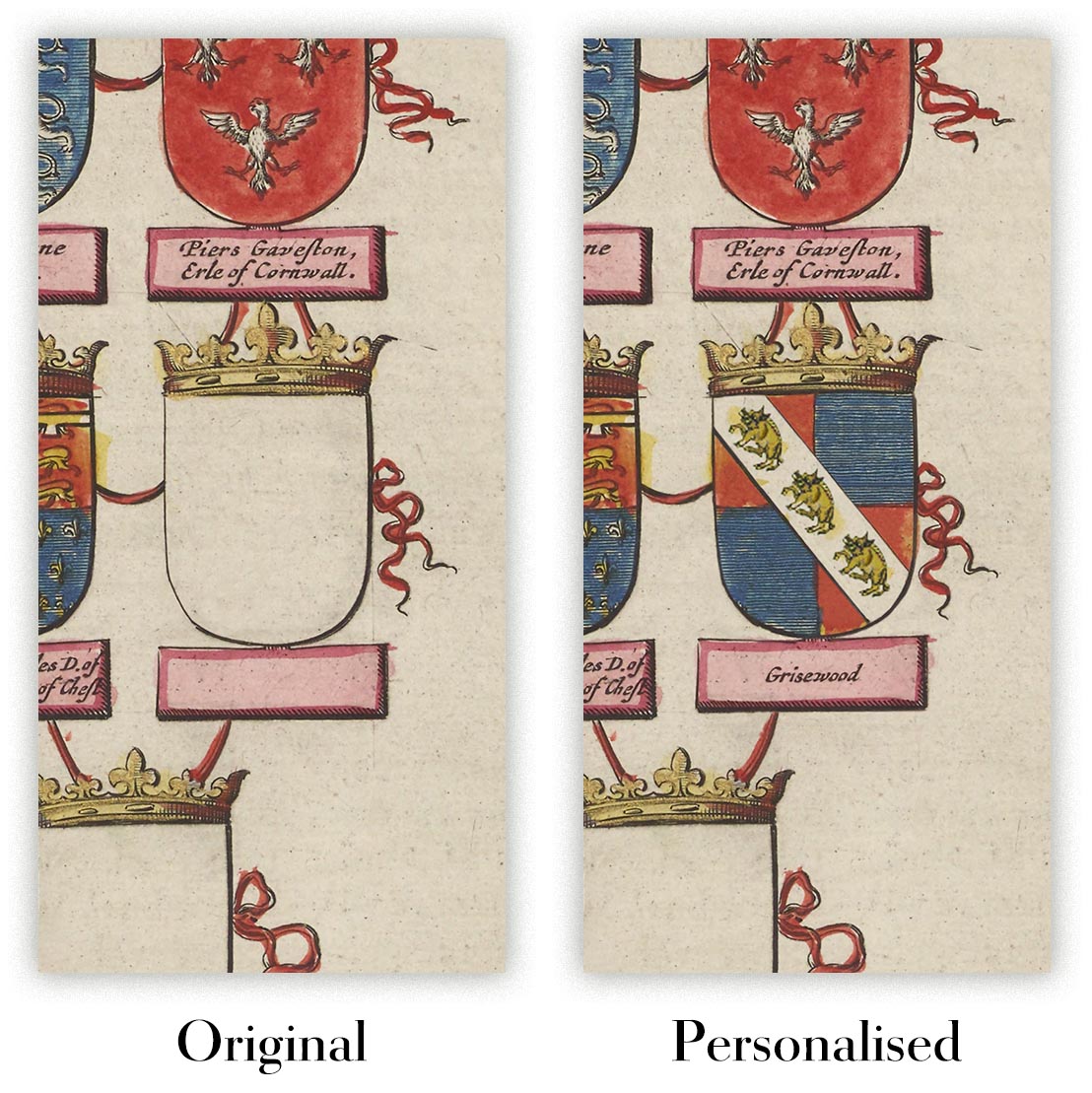
Personalising your map
You can add a short title or dedication, mark one meaningful place, or request one considered visual detail. For personalised designs, we send a proof before printing and you can request changes before approval.
For more complex bespoke commissions, contact our design team.
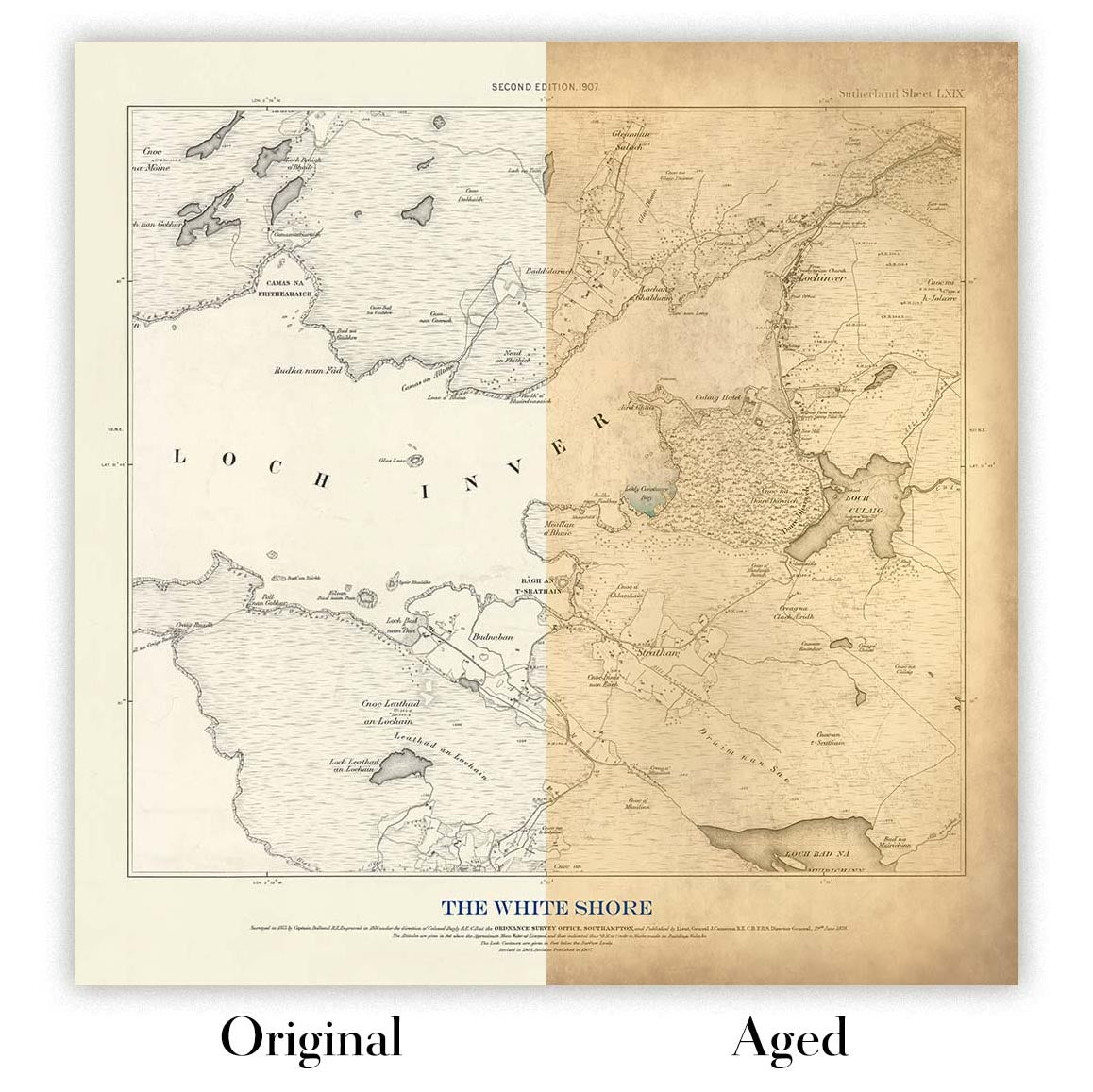
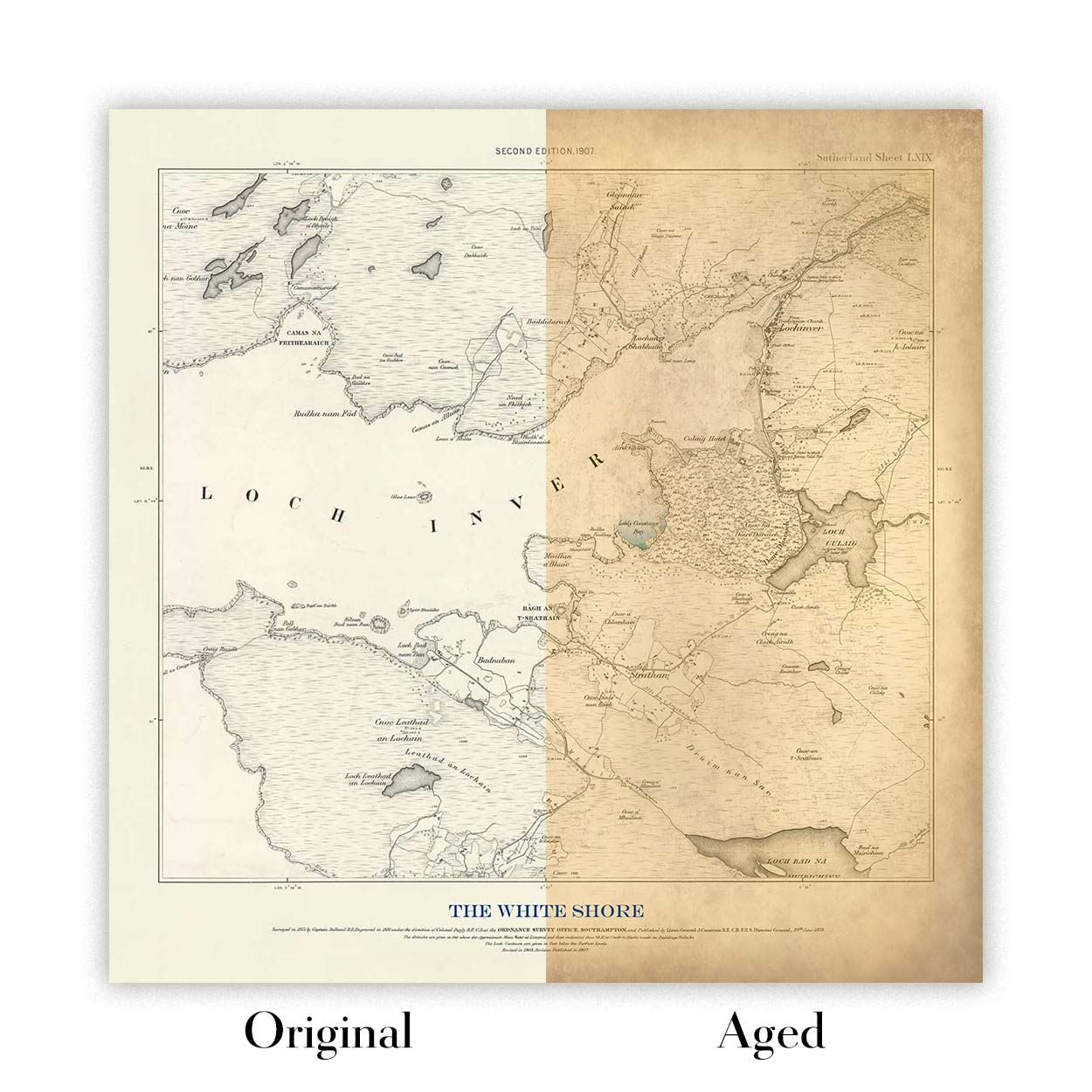
Original or Aged
Choose Original for true-to-source colour, or Aged for a warmer, richer antique character created with our specialist ageing process. See examples of our Aged maps.
We’ve been restoring and producing maps and art prints since 1984, and we stand behind every piece.
Every order is covered by our 10-year guarantee and damage-free delivery guarantee. If your piece arrives damaged, we’ll replace or remake it free of charge. If anything else isn’t right, contact our workshop team and we’ll put it right promptly.
See our returns and refund policy for full details.
Or try searching for something!


