


















Rare Large Colonial Map of Australia by Stanford, 1859: Large NSW, Tasmania
Restored in our London workshop from the original 1859 map and printed to museum-grade archival standards. Full description
The Collector’s Offer
Choose two eligible works and receive 20% off both. Choose three and the lowest-priced one is complimentary, a maximum saving of 33%.
Mix and match eligible standard maps and fine-art prints. No code is required; the offer is applied automatically at checkout.
Standard made-to-order configurations are included. Bespoke sizes, personalised designs and commissioned work are excluded.
Need delivery to different addresses? Contact us before ordering.The Collector’s Offer
Choose two eligible works and receive 20% off both. Choose three and the lowest-priced one is complimentary, a maximum saving of 33%.
Mix and match eligible standard maps and fine-art prints. No code is required; the offer is applied automatically at checkout.
Standard made-to-order configurations are included. Bespoke sizes, personalised designs and commissioned work are excluded.
Need delivery to different addresses? Contact us before ordering.
Restored from the original 1859 map and printed to museum-grade archival standards. Full description
Choose your size
Choose your finish


(More info)
Gift message & custom finish

If you want to add a gift message, or a finish (jigsaw, aluminium board, etc.) that is not available here, please request it in the "order note" when you check out.
Every order is custom made, so if you need the size adjusted slightly, or printed on an unusual material, just let us know. We've done thousands of custom orders over the years, so there's (almost) nothing we can't manage.
You can also contact us before you order, if you prefer!
Own a piece of history
8,000+ five-star reviews


Step into a pivotal moment in colonial history with "The Australian Colonies," an exquisite 1859 map crafted by the renowned Edward Stanford...
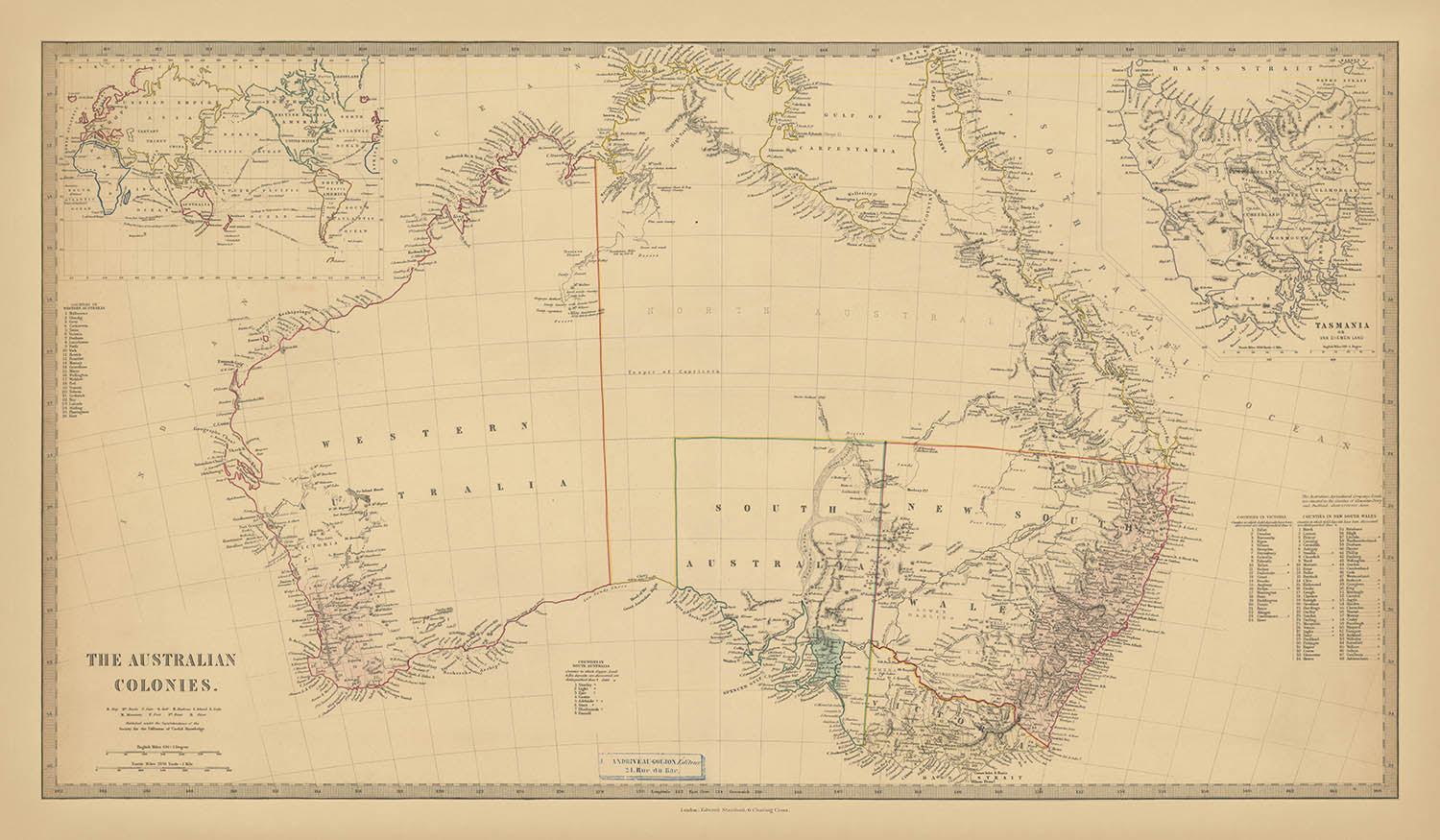
Continue readingStep into a pivotal moment in colonial history with "The Australian Colonies," an exquisite 1859 map crafted by the renowned Edward Stanford for the Society for the Diffusion of Useful Knowledge (SDUK). This rare cartographic gem captures Australia at a fleeting crossroads, just before the birth of Queensland and during a period of intense debate and evolution in the continent’s internal boundaries. Each colony is rendered in vibrant hues, delineating a landscape in flux and offering a unique window into the ambitions and uncertainties of mid-19th-century empire.
Edward Stanford, whose name would soon become synonymous with the finest maps of the British Empire, was uniquely positioned to create such a work. His privileged access to the Colonial Office and the Royal Geographic Society allowed him to incorporate the latest intelligence from the frontiers of exploration and governance. This map stands as Stanford’s inaugural depiction of Australia, reflecting both his technical mastery and his ability to capture the geopolitical pulse of the era.
The map’s political boundaries are among its most compelling features, displaying the so-called “ghost boundary” at 26° South latitude—an ephemeral demarcation that existed for only a matter of months. Here, New South Wales stretches northward in orange, while a vast yellow expanse wraps around South Australia, forming a slender corridor between South Australia and Western Australia. This arrangement, both irregular and impractical, would soon vanish as Queensland was proclaimed and South Australia’s western border shifted, making this map a rare record of a vanished administrative landscape.
Beyond its political intrigue, the map is a celebration of Australia’s dramatic geography. It meticulously charts the sweep of the Great Australian Bight, the intricate waterways of the Murray and Darling Rivers, and the rugged contours of the Blue Mountains and Australian Alps. The insets and main map alike highlight Tasmania—recently renamed from Van Diemen’s Land—alongside the prominent islands of Kangaroo, King, and Flinders, and the distant promontories of Cape York and Arnhem Land. These natural features, paired with the careful delineation of peninsulas, gulfs, and straits, evoke both the challenges and the allure of the Australian continent.
Scattered across this landscape are the burgeoning settlements and port towns that would grow into today’s great cities: Sydney, Melbourne, Brisbane, Adelaide, Perth, and Hobart, alongside early outposts such as Geelong, Launceston, Newcastle, and Fremantle. Each is meticulously plotted, bearing witness to the spread of colonial enterprise and the forging of new societies on ancient land. For the discerning collector, this map is more than a historical document—it is a testament to the dynamism, complexity, and beauty of Australia at a moment of profound transformation.
Cities and towns on this map
- Sydney
- Melbourne
- Brisbane
- Adelaide
- Perth
- Hobart
- Geelong
- Launceston
- Newcastle
- Bathurst
- Goulburn
- Maitland
- Parramatta
- Windsor
- Ipswich
- Port Macquarie
- Moreton Bay (now Brisbane region)
- Port Phillip (now Melbourne region)
- Portland
- Albany
- Swan River (now Perth region)
- Fremantle
- Port Adelaide
- Port Lincoln
- Port Augusta
- Rockhampton
- Townsville
- Bowen
- Maryborough
- Mackay
- Toowoomba
- Ballarat
- Bendigo
- Port Arthur (Tasmania)
- George Town (Tasmania)
Notable Features & Landmarks
- Inset map of Tasmania (formerly Van Diemen's Land)
- Colonial borders for New South Wales, South Australia, Western Australia, and the yellow region representing northern and central Australia
- The "ghost boundary" at 26° South latitude marking the northern limit of New South Wales
- The narrow yellow strip of territory wrapping around South Australia, forming a border between South Australia and Western Australia
- Great Australian Bight
- Bass Strait
- Gulf of Carpentaria
- Spencer Gulf
- Gulf St Vincent
- Torres Strait
- The Australian Alps
- Blue Mountains
- Flinders Range
- Kangaroo Island
- King Island
- Flinders Island
- Melville Island
- Murray River
- Darling River
- Murrumbidgee River
- Lachlan River
- Cape York Peninsula
- Arnhem Land
- Eyre Peninsula
- Yorke Peninsula
- Nullarbor Plain
Historical and design context
- Name of the map: The Australian Colonies
- Date of creation: 1859
- Mapmaker/publisher: SDUK (Society for the Diffusion of Useful Knowledge), published by Edward Stanford
- Edward Stanford was a leading British mapmaker with privileged access to the Colonial Office and the Royal Geographic Society, producing his first map of Australia with this edition.
- The map captures a rare and short-lived period in the territorial evolution of Australia, just before the creation of Queensland in June 1859.
- Shows a unique arrangement of colonial boundaries, including the ephemeral "ghost boundary" at 26° South latitude.
- Depicts New South Wales with a northern boundary at 26° South and a yellow region wrapping around South Australia, forming a narrow strip between South Australia and Western Australia.
- The arrangement shown on the map was soon replaced by new boundaries as colonies were established and borders adjusted.
- Features a large inset of Tasmania, which had only recently been renamed from Van Diemen’s Land in 1856.
- The map is considered rare, with no known examples appearing on the market since 1990.
- Uses bright colors to distinguish between different colonial jurisdictions and includes detailed labeling of physical and political features.
Please double check the images to make sure that a specific town or place is shown on this map. You can also get in touch and ask us to check the map for you.
This map looks great at every size, but I always recommend going for a larger size if you have space. That way you can easily make out all of the details.
This map looks amazing at sizes all the way up to 100in (250cm). If you are looking for a larger map, please get in touch.
Please note: the labels on this map are hard to read if you order a map that is 20in (50cm) or smaller. The map is still very attractive, but if you would like to read the map easily, please buy a larger size.
The model in the listing images is holding the 36x20in (90x50cm) version of this map.
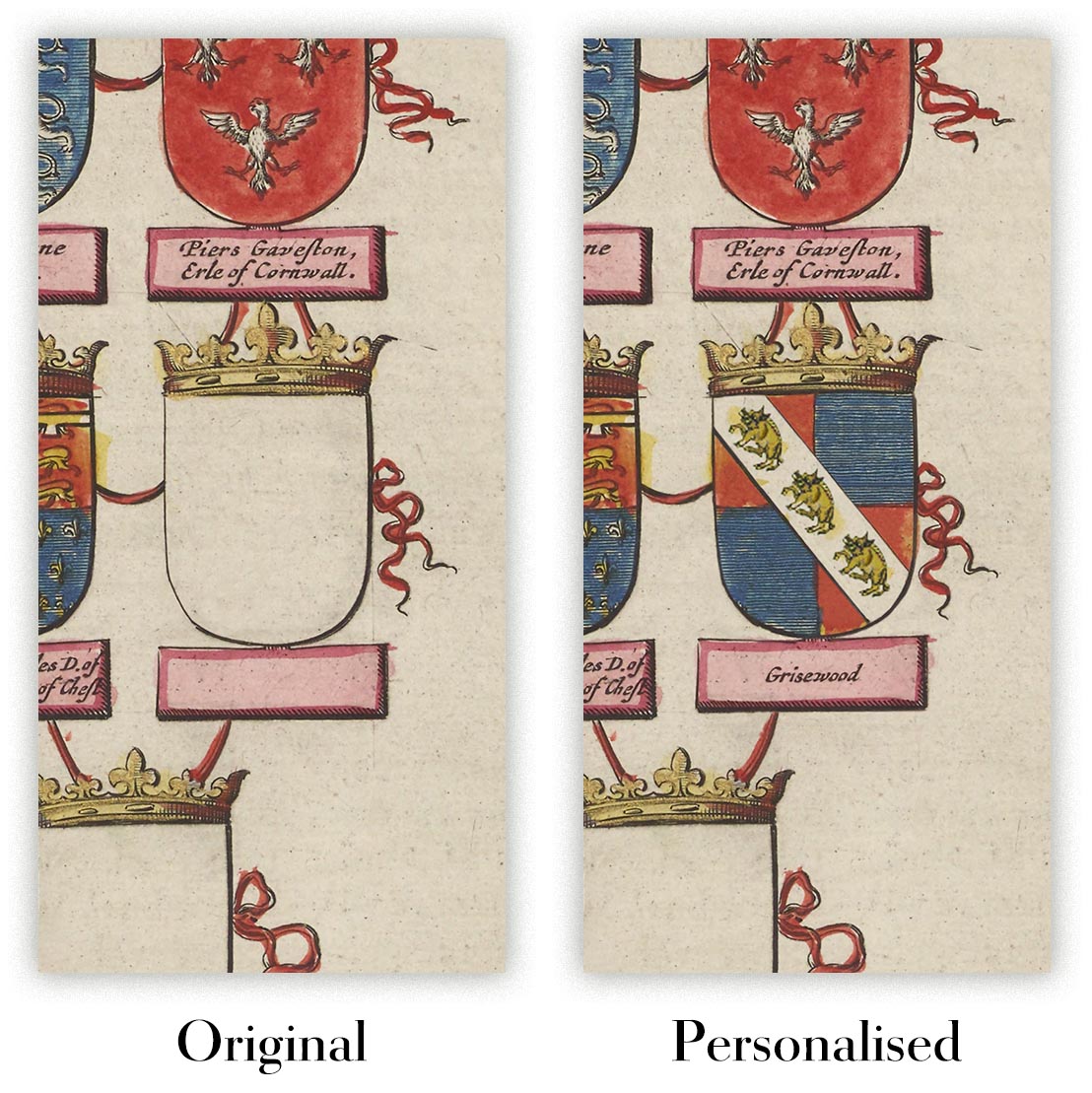
The fifth listing image shows an example of my map personalisation service.
If you’re looking for something slightly different, check out my collection of the best old maps to see if something else catches your eye.
Please contact me to check if a certain location, landmark or feature is shown on this map.
This would make a wonderful birthday, Christmas, Father's Day, work leaving, anniversary or housewarming gift for someone from the areas covered by this map.
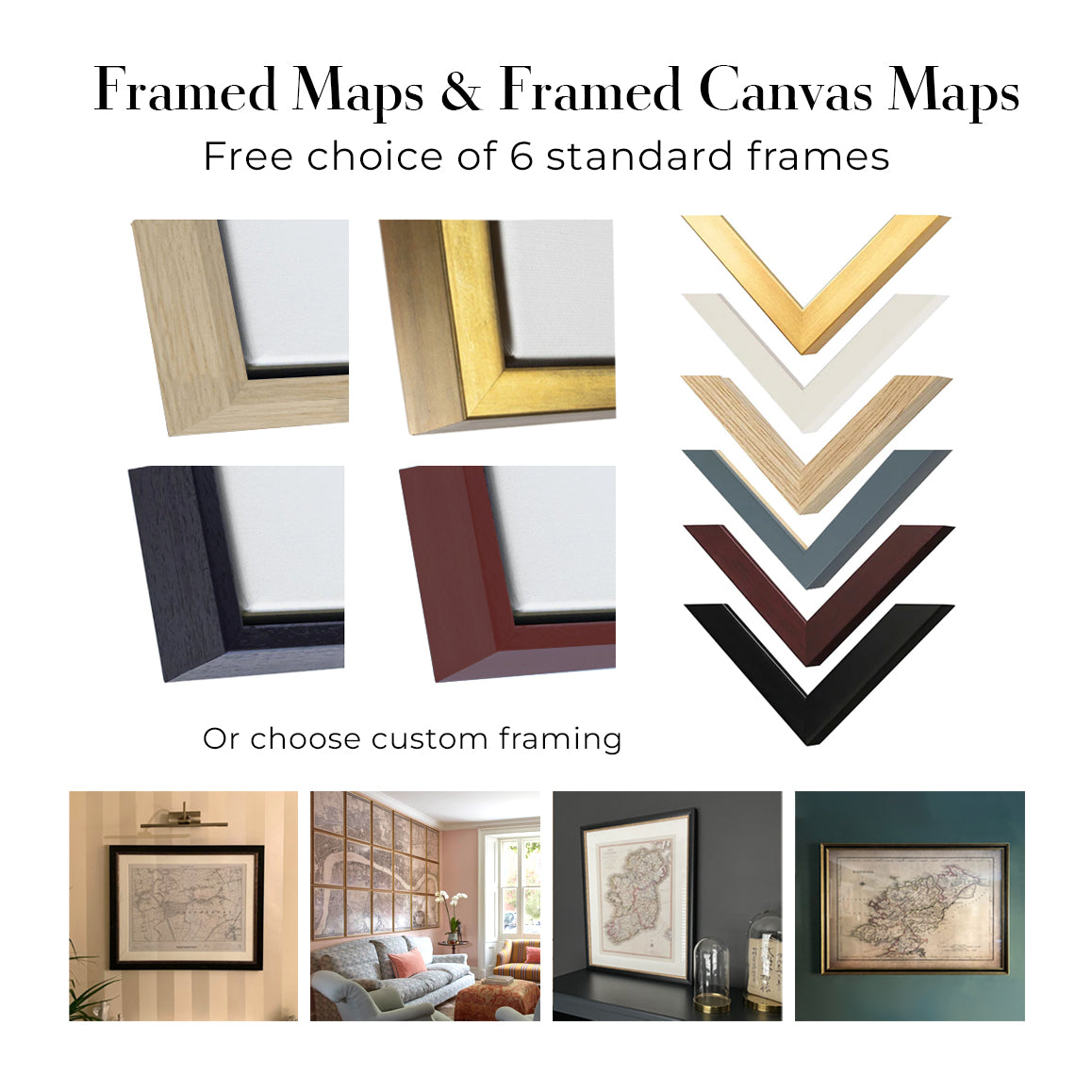
This map is available as a giclée print on acid free archival matte paper, or you can buy it framed. The frame is a nice, simple black frame that suits most aesthetics. Please get in touch if you'd like a different frame colour or material. My frames are glazed with super-clear museum-grade acrylic (perspex/acrylite), which is significantly less reflective than glass, safer, and will always arrive in perfect condition.
This map is also available as a float framed canvas, sometimes known as a shadow gap framed canvas or canvas floater. The map is printed on artist's cotton canvas and then stretched over a handmade box frame. We then "float" the canvas inside a wooden frame, which is available in a range of colours (black, dark brown, oak, antique gold and white). This is a wonderful way to present a map without glazing in front. See some examples of float framed canvas maps and explore the differences between my different finishes.
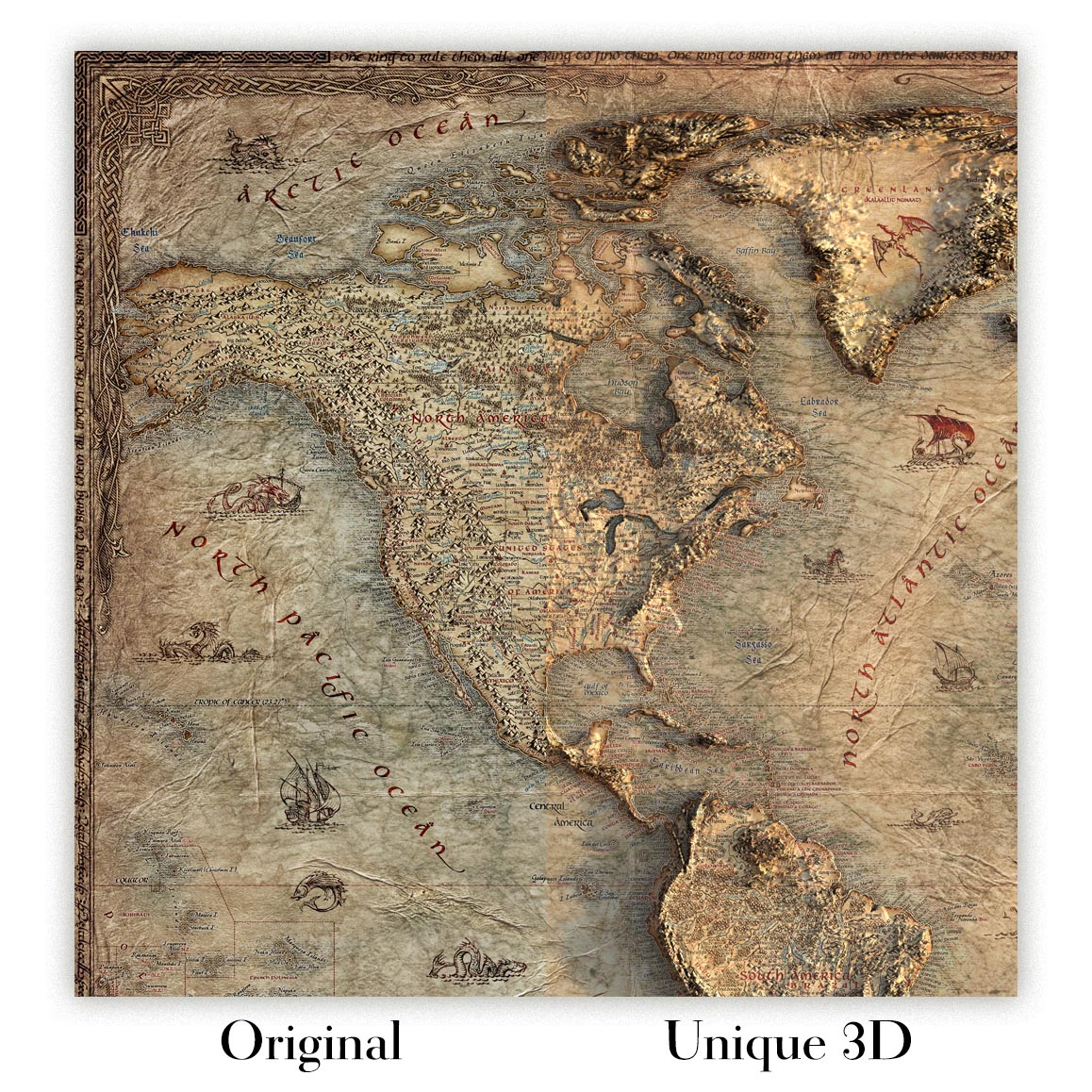
For something truly unique, this map is also available in "Unique 3D", our trademarked process that dramatically transforms the map so that it has a wonderful sense of depth. We combine the original map with detailed topography and elevation data, so that mountains and the terrain really "pop". For more info and examples of 3D maps, check my Unique 3D page.
Step into a pivotal moment in colonial history with "The Australian Colonies," an exquisite 1859 map crafted by the renowned Edward Stanford for the Society for the Diffusion of Useful Knowledge (SDUK). This rare cartographic gem captures Australia at a fleeting crossroads, just before the birth of Queensland and during a period of intense debate and evolution in the continent’s internal boundaries. Each colony is rendered in vibrant hues, delineating a landscape in flux and offering a unique window into the ambitions and uncertainties of mid-19th-century empire.
Edward Stanford, whose name would soon become synonymous with the finest maps of the British Empire, was uniquely positioned to create such a work. His privileged access to the Colonial Office and the Royal Geographic Society allowed him to incorporate the latest intelligence from the frontiers of exploration and governance. This map stands as Stanford’s inaugural depiction of Australia, reflecting both his technical mastery and his ability to capture the geopolitical pulse of the era.
The map’s political boundaries are among its most compelling features, displaying the so-called “ghost boundary” at 26° South latitude—an ephemeral demarcation that existed for only a matter of months. Here, New South Wales stretches northward in orange, while a vast yellow expanse wraps around South Australia, forming a slender corridor between South Australia and Western Australia. This arrangement, both irregular and impractical, would soon vanish as Queensland was proclaimed and South Australia’s western border shifted, making this map a rare record of a vanished administrative landscape.
Beyond its political intrigue, the map is a celebration of Australia’s dramatic geography. It meticulously charts the sweep of the Great Australian Bight, the intricate waterways of the Murray and Darling Rivers, and the rugged contours of the Blue Mountains and Australian Alps. The insets and main map alike highlight Tasmania—recently renamed from Van Diemen’s Land—alongside the prominent islands of Kangaroo, King, and Flinders, and the distant promontories of Cape York and Arnhem Land. These natural features, paired with the careful delineation of peninsulas, gulfs, and straits, evoke both the challenges and the allure of the Australian continent.
Scattered across this landscape are the burgeoning settlements and port towns that would grow into today’s great cities: Sydney, Melbourne, Brisbane, Adelaide, Perth, and Hobart, alongside early outposts such as Geelong, Launceston, Newcastle, and Fremantle. Each is meticulously plotted, bearing witness to the spread of colonial enterprise and the forging of new societies on ancient land. For the discerning collector, this map is more than a historical document—it is a testament to the dynamism, complexity, and beauty of Australia at a moment of profound transformation.
Cities and towns on this map
- Sydney
- Melbourne
- Brisbane
- Adelaide
- Perth
- Hobart
- Geelong
- Launceston
- Newcastle
- Bathurst
- Goulburn
- Maitland
- Parramatta
- Windsor
- Ipswich
- Port Macquarie
- Moreton Bay (now Brisbane region)
- Port Phillip (now Melbourne region)
- Portland
- Albany
- Swan River (now Perth region)
- Fremantle
- Port Adelaide
- Port Lincoln
- Port Augusta
- Rockhampton
- Townsville
- Bowen
- Maryborough
- Mackay
- Toowoomba
- Ballarat
- Bendigo
- Port Arthur (Tasmania)
- George Town (Tasmania)
Notable Features & Landmarks
- Inset map of Tasmania (formerly Van Diemen's Land)
- Colonial borders for New South Wales, South Australia, Western Australia, and the yellow region representing northern and central Australia
- The "ghost boundary" at 26° South latitude marking the northern limit of New South Wales
- The narrow yellow strip of territory wrapping around South Australia, forming a border between South Australia and Western Australia
- Great Australian Bight
- Bass Strait
- Gulf of Carpentaria
- Spencer Gulf
- Gulf St Vincent
- Torres Strait
- The Australian Alps
- Blue Mountains
- Flinders Range
- Kangaroo Island
- King Island
- Flinders Island
- Melville Island
- Murray River
- Darling River
- Murrumbidgee River
- Lachlan River
- Cape York Peninsula
- Arnhem Land
- Eyre Peninsula
- Yorke Peninsula
- Nullarbor Plain
Historical and design context
- Name of the map: The Australian Colonies
- Date of creation: 1859
- Mapmaker/publisher: SDUK (Society for the Diffusion of Useful Knowledge), published by Edward Stanford
- Edward Stanford was a leading British mapmaker with privileged access to the Colonial Office and the Royal Geographic Society, producing his first map of Australia with this edition.
- The map captures a rare and short-lived period in the territorial evolution of Australia, just before the creation of Queensland in June 1859.
- Shows a unique arrangement of colonial boundaries, including the ephemeral "ghost boundary" at 26° South latitude.
- Depicts New South Wales with a northern boundary at 26° South and a yellow region wrapping around South Australia, forming a narrow strip between South Australia and Western Australia.
- The arrangement shown on the map was soon replaced by new boundaries as colonies were established and borders adjusted.
- Features a large inset of Tasmania, which had only recently been renamed from Van Diemen’s Land in 1856.
- The map is considered rare, with no known examples appearing on the market since 1990.
- Uses bright colors to distinguish between different colonial jurisdictions and includes detailed labeling of physical and political features.
Please double check the images to make sure that a specific town or place is shown on this map. You can also get in touch and ask us to check the map for you.
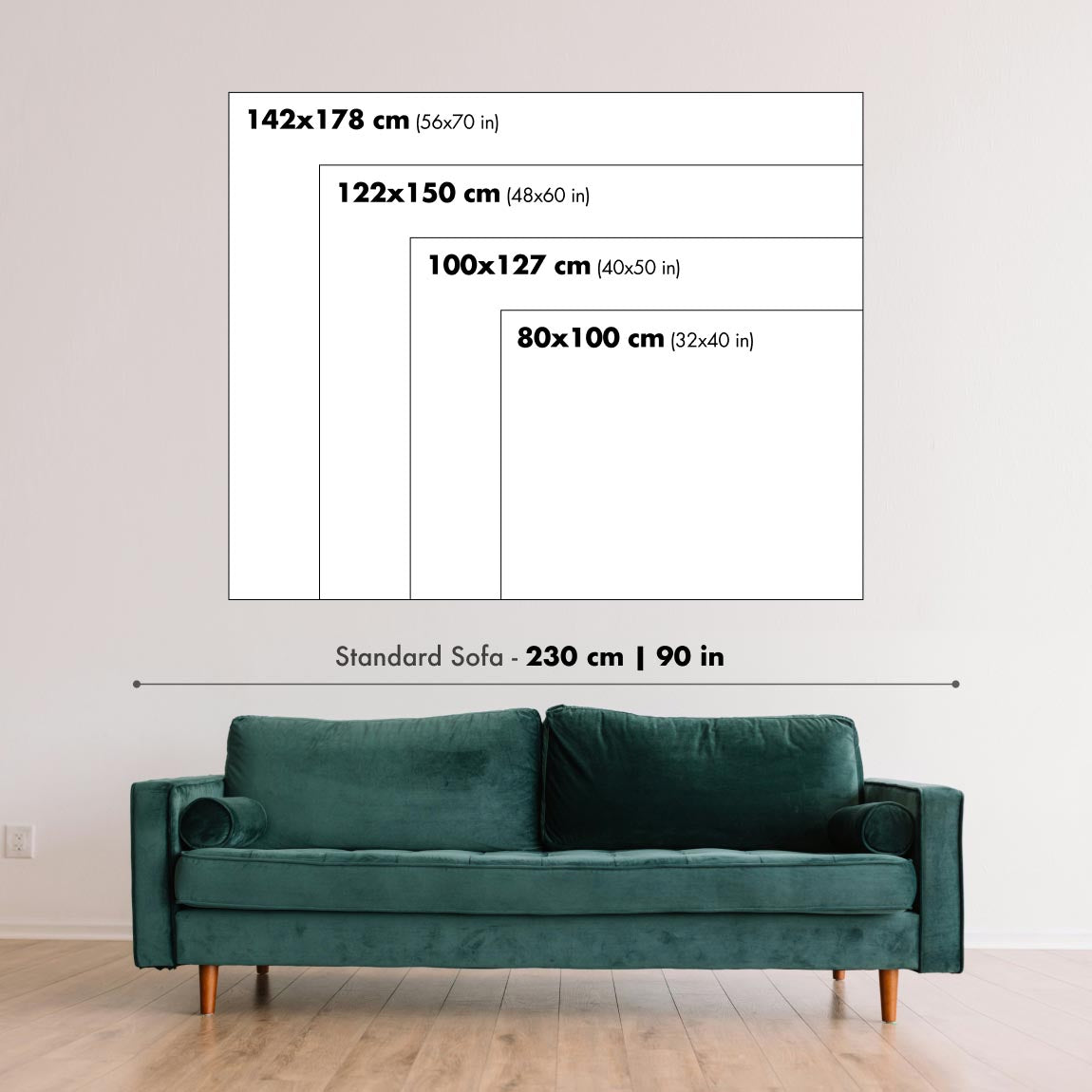
This map looks great at every size, but I always recommend going for a larger size if you have space. That way you can easily make out all of the details.
This map looks amazing at sizes all the way up to 100in (250cm). If you are looking for a larger map, please get in touch.
Please note: the labels on this map are hard to read if you order a map that is 20in (50cm) or smaller. The map is still very attractive, but if you would like to read the map easily, please buy a larger size.
The model in the listing images is holding the 36x20in (90x50cm) version of this map.
The fifth listing image shows an example of my map personalisation service.
If you’re looking for something slightly different, check out my collection of the best old maps to see if something else catches your eye.
Please contact me to check if a certain location, landmark or feature is shown on this map.
This would make a wonderful birthday, Christmas, Father's Day, work leaving, anniversary or housewarming gift for someone from the areas covered by this map.
This map is available as a giclée print on acid free archival matte paper, or you can buy it framed. The frame is a nice, simple black frame that suits most aesthetics. Please get in touch if you'd like a different frame colour or material. My frames are glazed with super-clear museum-grade acrylic (perspex/acrylite), which is significantly less reflective than glass, safer, and will always arrive in perfect condition.
This map is also available as a float framed canvas, sometimes known as a shadow gap framed canvas or canvas floater. The map is printed on artist's cotton canvas and then stretched over a handmade box frame. We then "float" the canvas inside a wooden frame, which is available in a range of colours (black, dark brown, oak, antique gold and white). This is a wonderful way to present a map without glazing in front. See some examples of float framed canvas maps and explore the differences between my different finishes.
For something truly unique, this map is also available in "Unique 3D", our trademarked process that dramatically transforms the map so that it has a wonderful sense of depth. We combine the original map with detailed topography and elevation data, so that mountains and the terrain really "pop". For more info and examples of 3D maps, check my Unique 3D page.
Many of our maps and art prints are chosen as thoughtful gifts for homes, offices, studies and meaningful places.
Choose a framed option for the easiest ready-to-hang gift, or choose an unframed print if the recipient may prefer to select their own frame.
We make orders locally in 24 countries around the world, so gifts can often be produced close to the recipient. This helps them arrive faster, travel more safely, and avoid customs or import duty surprises.
- We can deliver directly to the recipient
- Framed pieces arrive ready to hang
- Unframed prints are carefully packed in a strong protective tube
- Almost every order is made locally, for faster, safer gifting
- 90-day returns give the recipient time to decide
If you are not sure what to choose, please contact us. We can help you pick the right map, size, finish or delivery option.
Most orders are made locally and delivered in around 2–3 working days, depending on the product, size and destination.
We print and frame maps and artwork in 24 countries around the world, so your order is usually made close to you or your recipient. That means faster delivery, less time in transit, and no customs or import duty surprises.
Personalised and customised pieces usually take an extra 1–2 working days, because we prepare your design and send it to you for approval before printing.
Very large framed orders can take a little longer, as they need extra care in production and delivery.
Every order is carefully packaged: unframed prints are sent in a strong protective tube, while framed pieces are securely packed with protective materials around the frame.
If you need your order by a particular date, please contact us before ordering. We’ll check the best production route and delivery option for your location.
Express delivery is available at checkout for most countries. Next-day delivery is available in the UK, US, Singapore and the UAE.
Your order is covered by our 90-day returns policy and 10-year guarantee.
Our standard frame is a gallery-style black ash hardwood frame, with a simple, modern look. It is approximately 20mm (0.8in) wide. You can also view some lovely customer photos of framed maps and art.
We use super-clear acrylic glazing, also known as Perspex or Acrylite, instead of traditional glass. It is lighter, safer, and has lower reflectivity, giving the artwork a clearer, cleaner appearance.
Six standard frame colours are available at no extra cost: black, dark brown, dark grey, oak, white, and antique gold. Custom framing and mounting/matting is also available for customers looking for something more specific.
Most maps, art prints, and illustrations are also available as a framed canvas. We use matte cotton canvas, stretch it over a sustainably sourced wooden box frame, and then float the piece within a wooden outer frame. The finished result is beautifully presented, with no glazing between you and the artwork.
All frames are supplied ready to hang, with either string or brackets fitted to the back. Very large frames will include heavy-duty hanging plates and/or a mounting baton. If you have any questions, please get in touch.
We can also supply old maps and artwork on canvas, foam board, cotton rag, and other materials.
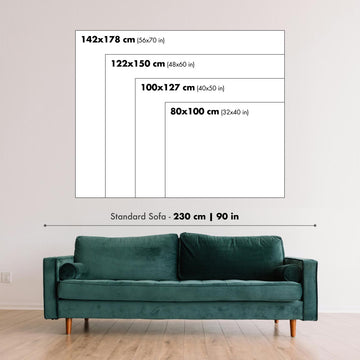
If you would prefer to frame your map or artwork yourself, please read our size guide before ordering.
We work with interior designers, hospitality businesses, property professionals, offices and corporate buyers on individual pieces and larger coordinated projects.
This map can be adapted for a particular wall, room or project, and our workshop can help coordinate the dimensions, material and framing before production.
- Exact, oversized and made-to-measure dimensions
- Custom framing, mounting and alternative materials
- Coordinated pieces for several rooms or locations
- Map personalisation, to mark important locations or add extra details
- Map and framing guidance from our workshop
- Local production for projects around the world
Every Unique Maps piece begins with an authentic cartographic source or an original design from our London studio.
For our historic maps, we source rare originals from libraries, archives, auction houses and private collections around the world. We carefully restore each map for print—repairing age-related damage, balancing colour and improving clarity while preserving its original detail, texture and character.
Once restored, the map is prepared for your chosen size and finish. Your piece is then printed and, where selected, framed close to its delivery destination.
Our map prints use acid-free 200gsm archival matte paper and fade-resistant pigment inks, creating a rich, non-glossy finish designed to last. Framed maps use crystal-clear optical acrylic and arrive ready to hang.
Canvas, cotton-rag and other specialist presentations are also available. Learn more about our materials and finishes.
Personalising your map
You can add a short title or dedication, mark one meaningful place, or request one considered visual detail. For personalised designs, we send a proof before printing and you can request changes before approval.
For more complex bespoke commissions, contact our design team.
Original or Aged
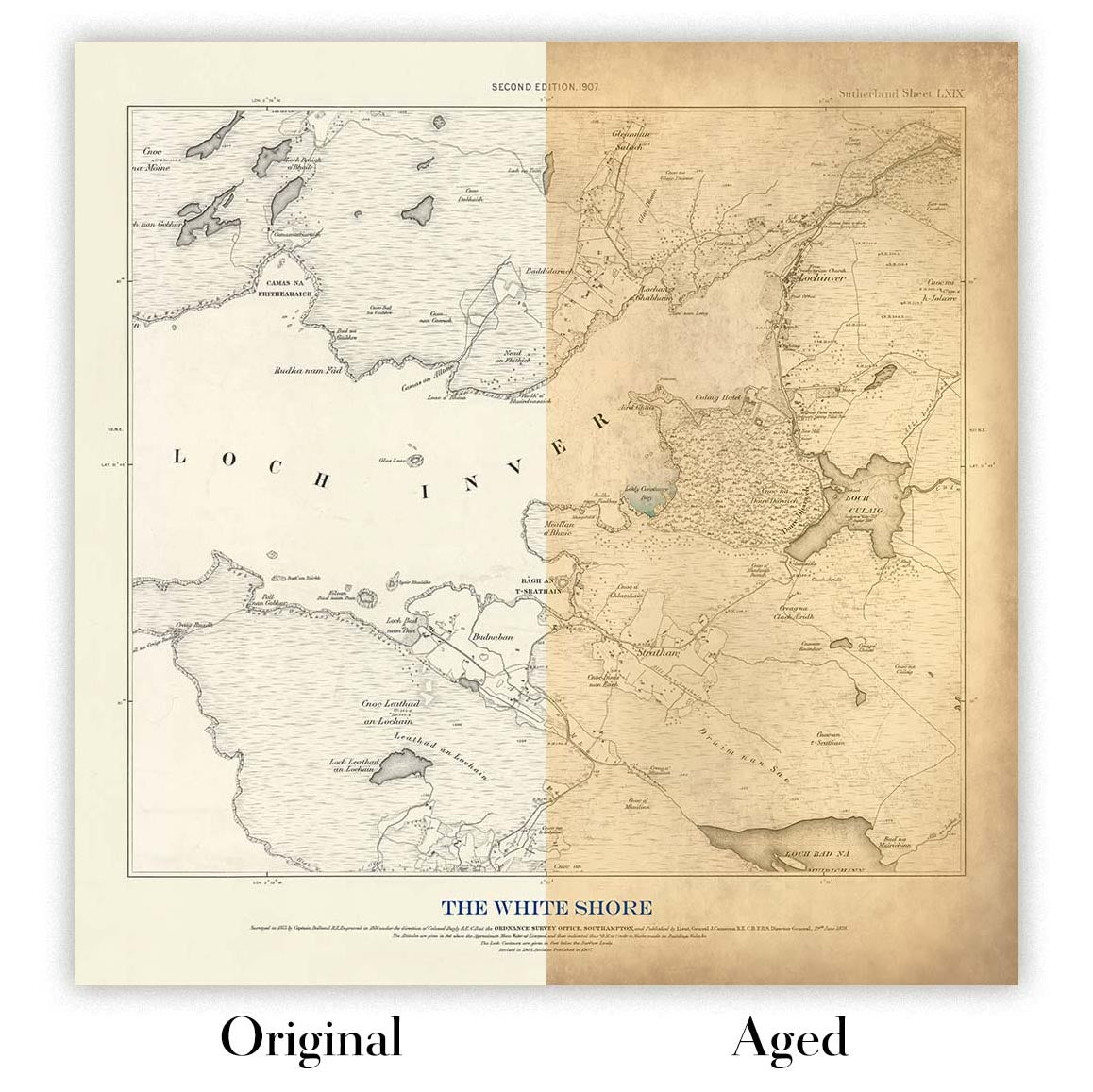
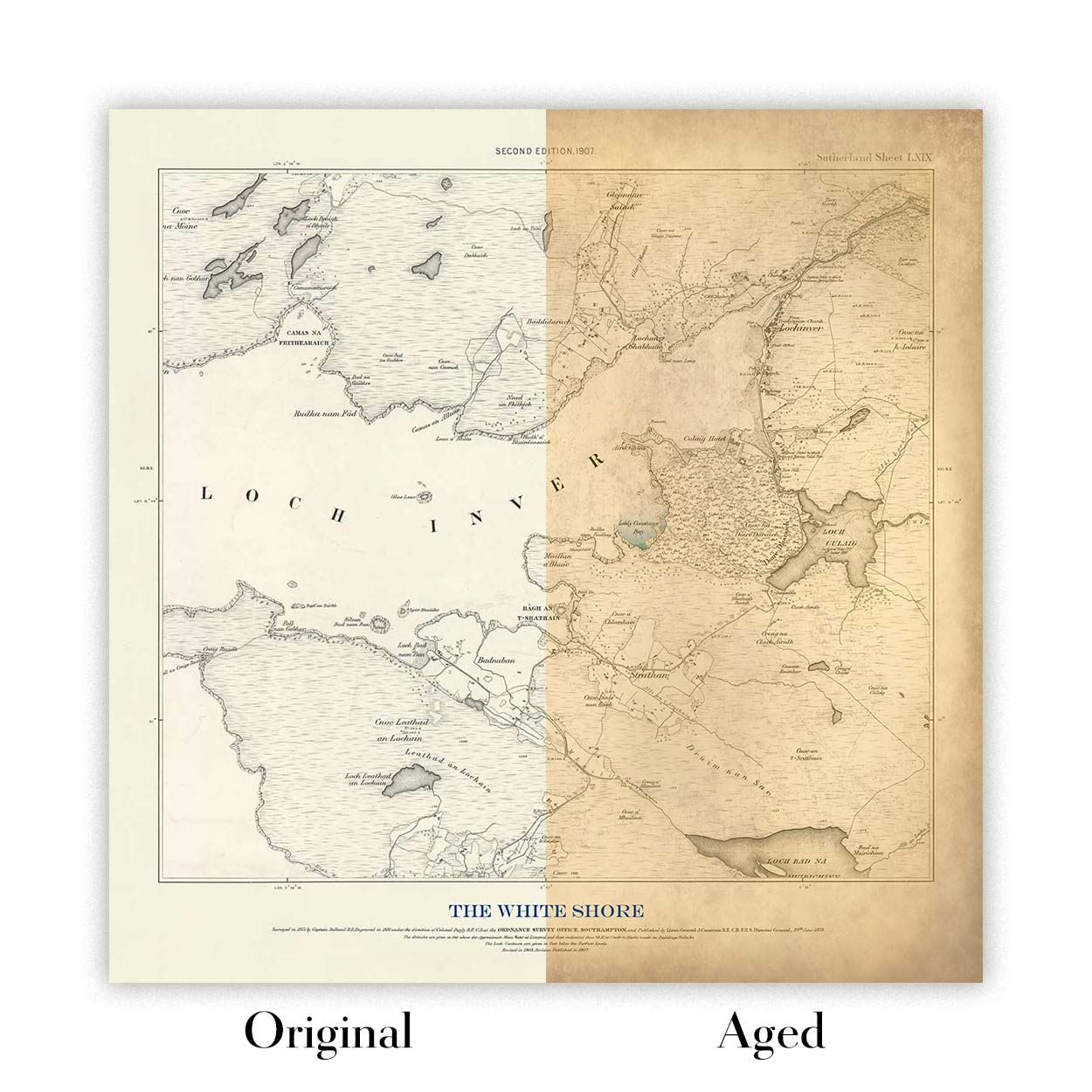
Choose Original for true-to-source colour, or Aged for a warmer, richer antique character created with our specialist ageing process. See examples of our Aged maps.
We’ve been restoring and producing maps and art prints since 1984, and we stand behind every piece.
Every order is covered by our 10-year guarantee and damage-free delivery guarantee. If your piece arrives damaged, we’ll replace or remake it free of charge. If anything else isn’t right, contact our workshop team and we’ll put it right promptly.
See our returns and refund policy for full details.
Or try searching for something!


